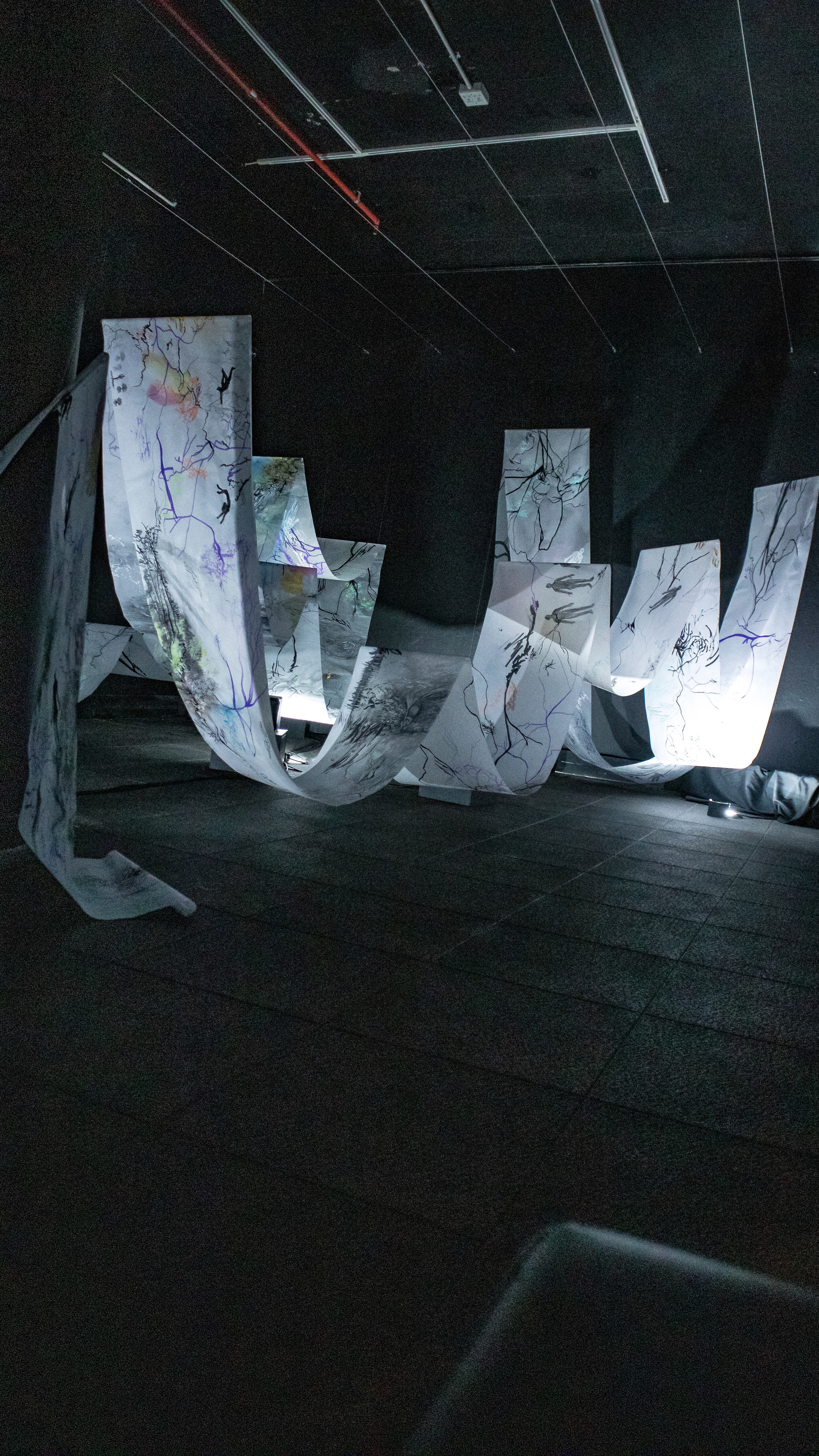
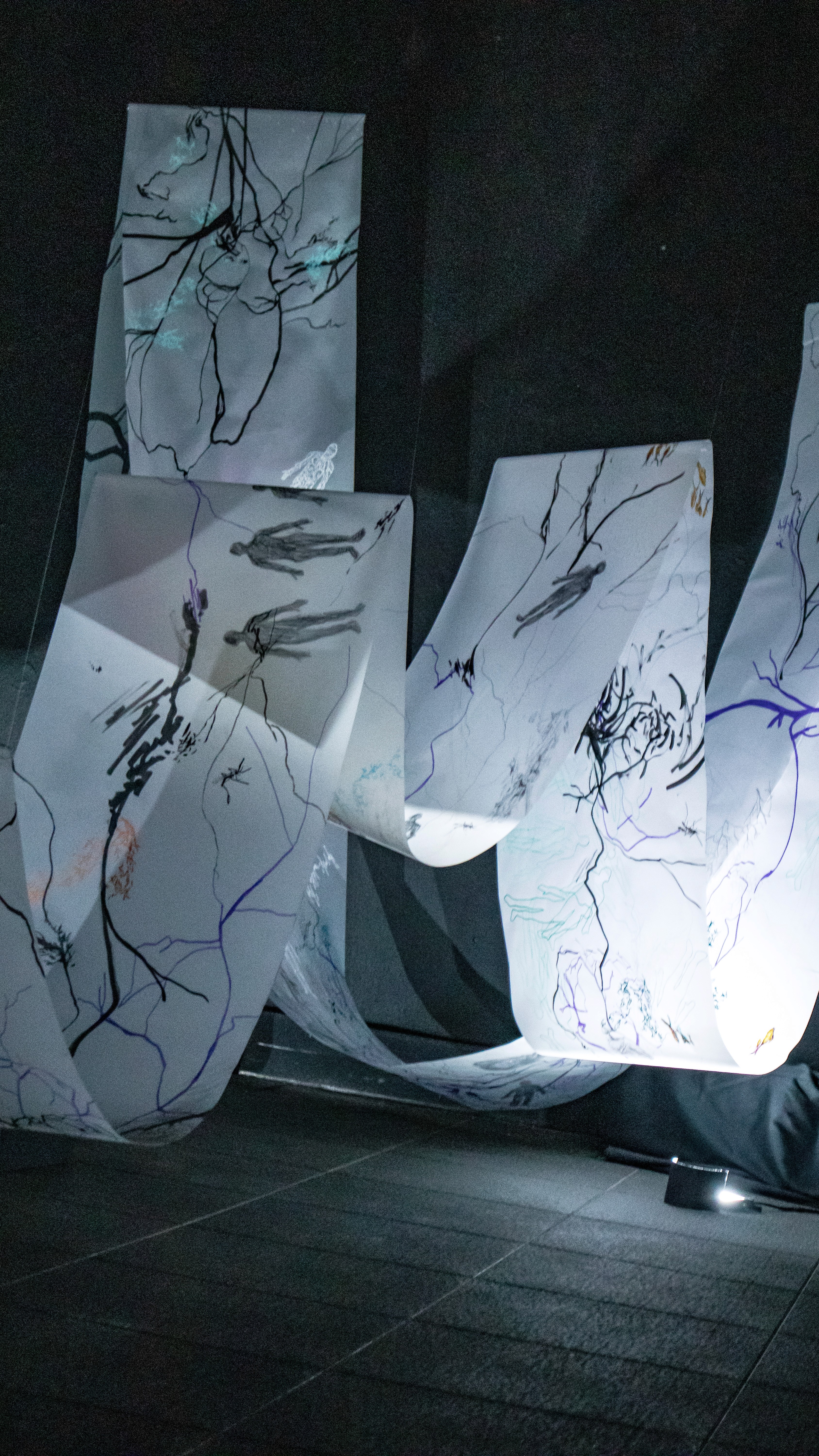
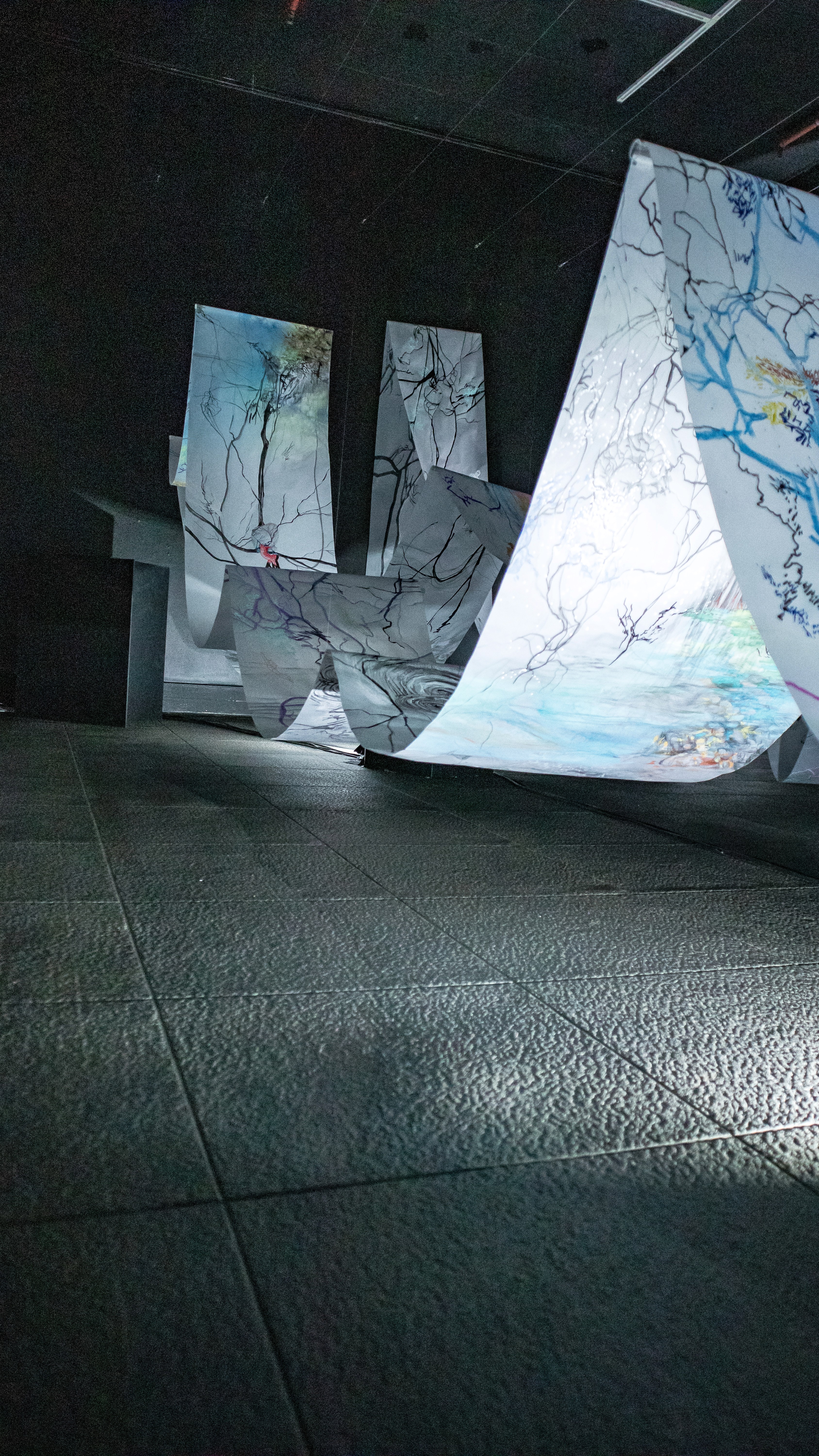
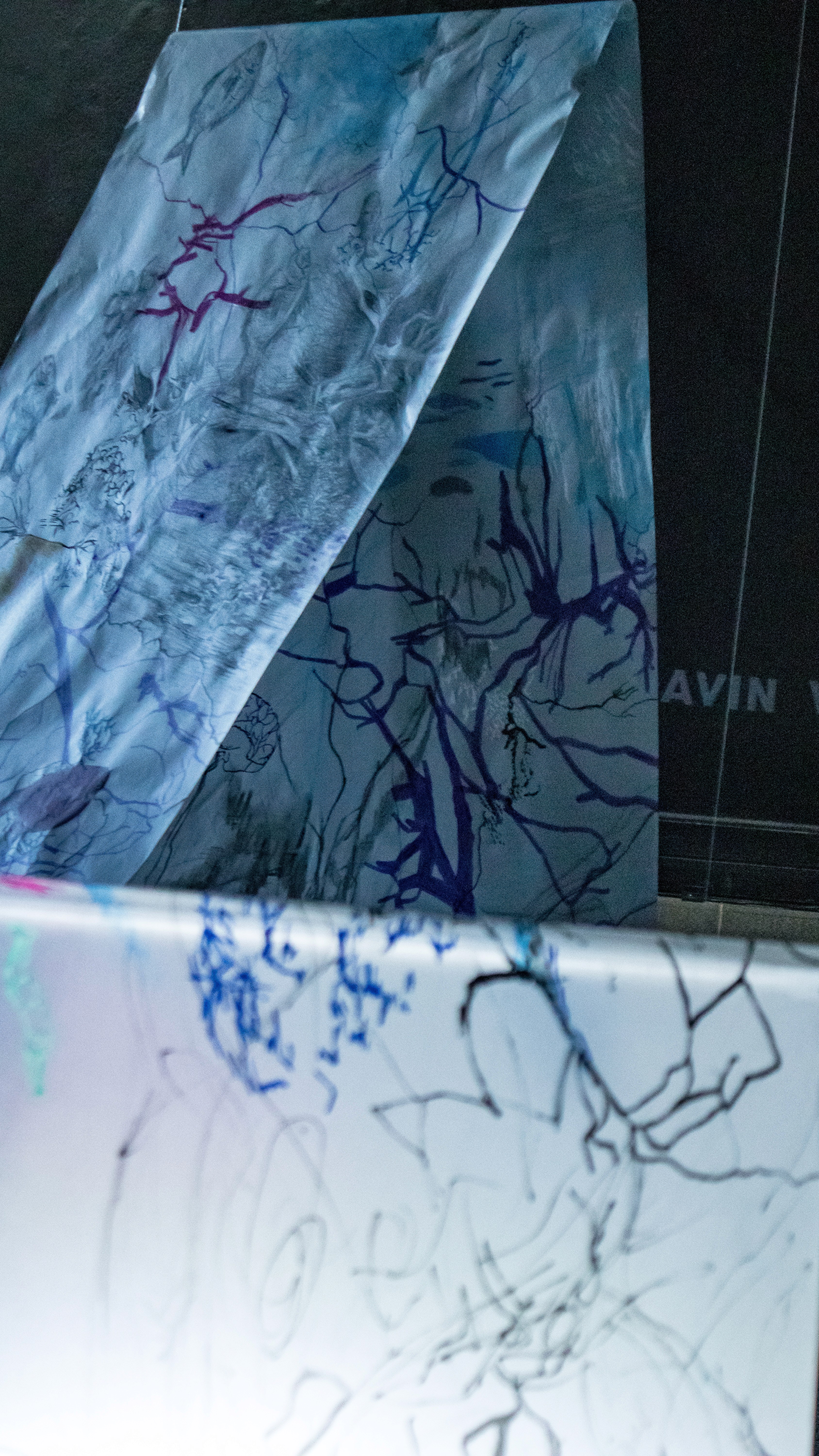
After our first collaborative project, “Out of Sound”, 2023, wherein Cameron Harris and I found a way to ‘un-silence’ the instruments in the art museum, by ‘playing’ several pedestal drums in the Wits Art Museum collection, without touching them, we formed the Sound Art Journeys Collective. Coming from our disciplines of visual art and music, we are interested in developing practice-led ways of working together to gather data and share our insights through producing sound-art works. Confluence is our fourth collaborative project.
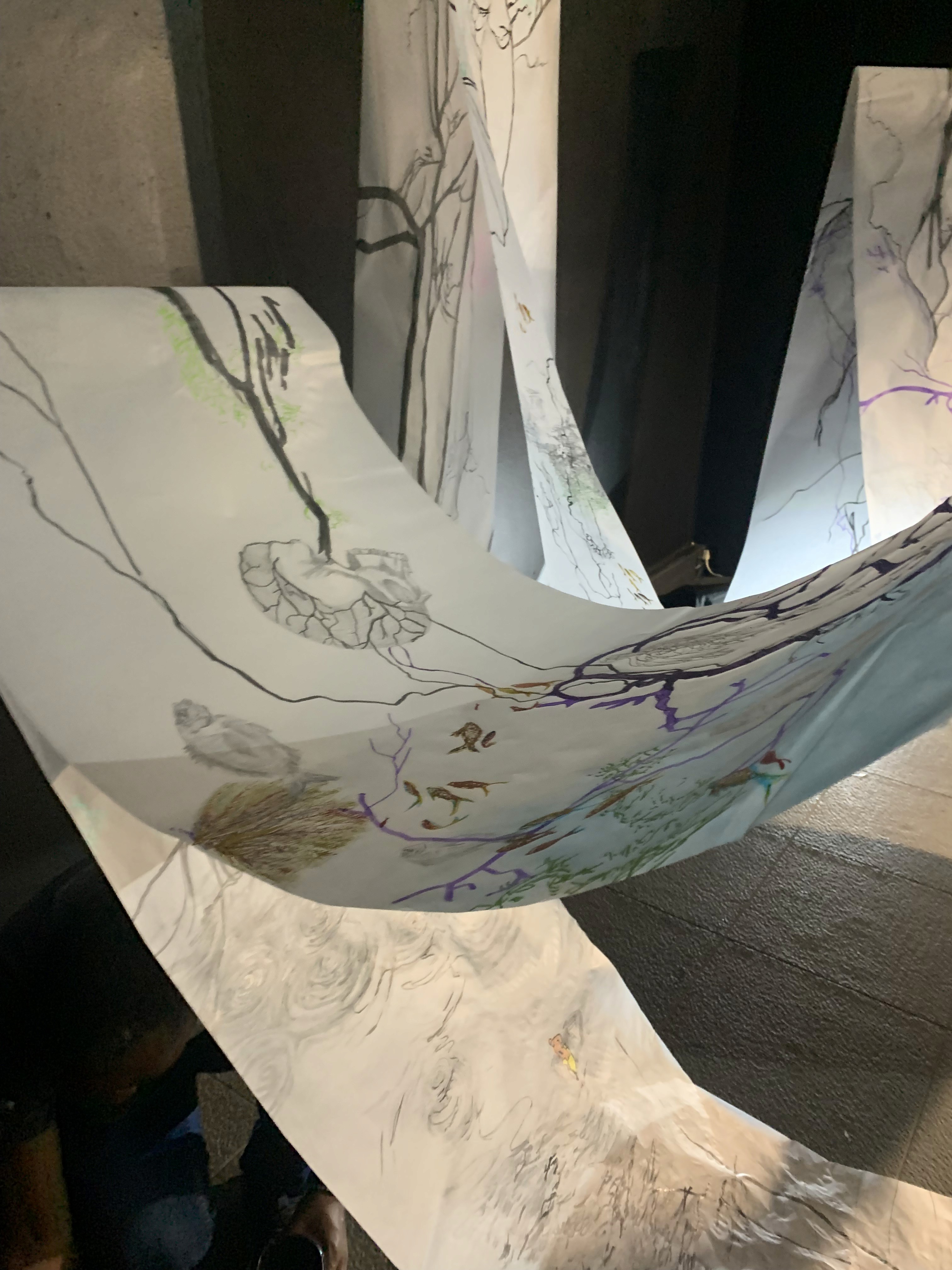
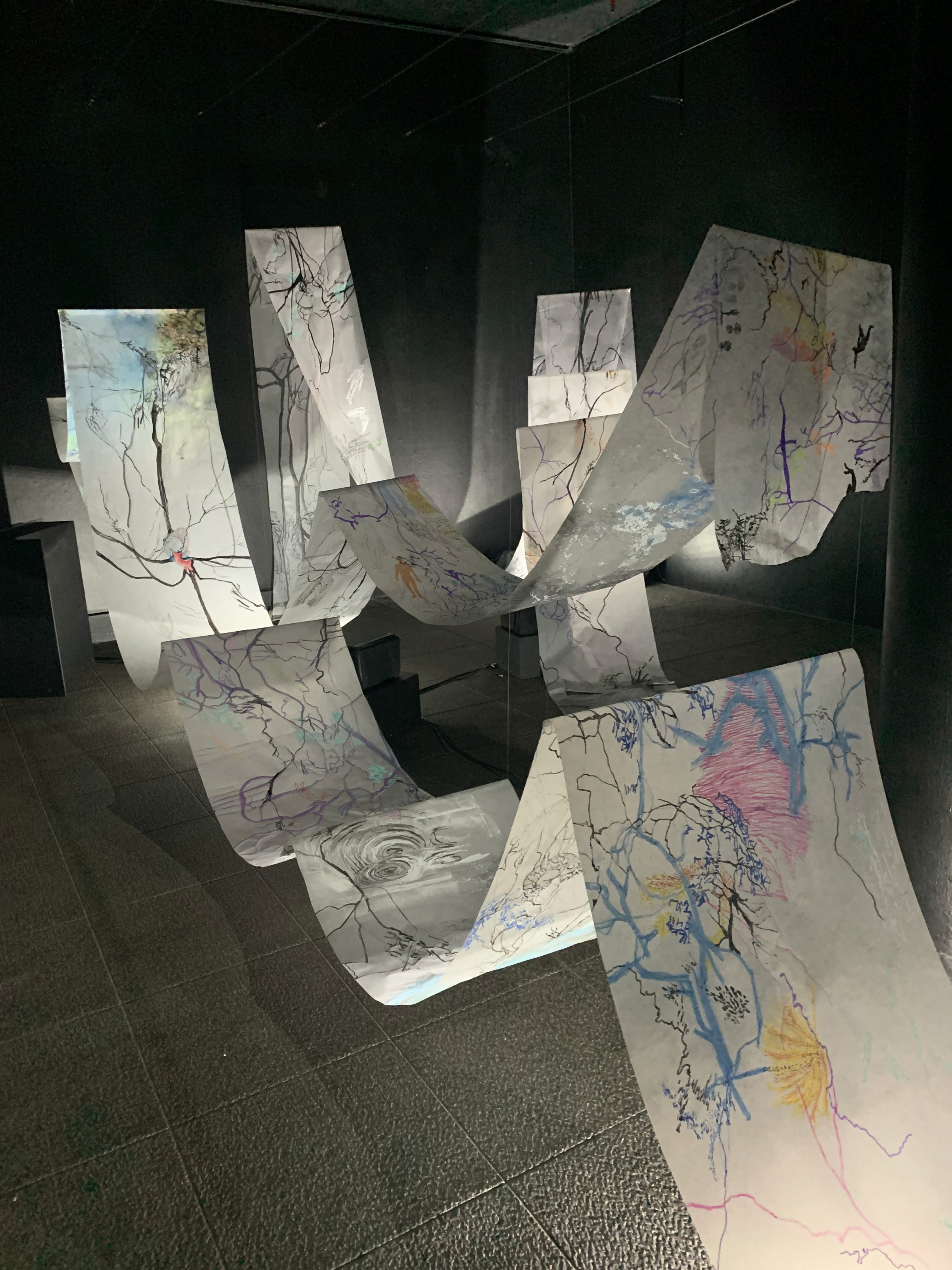
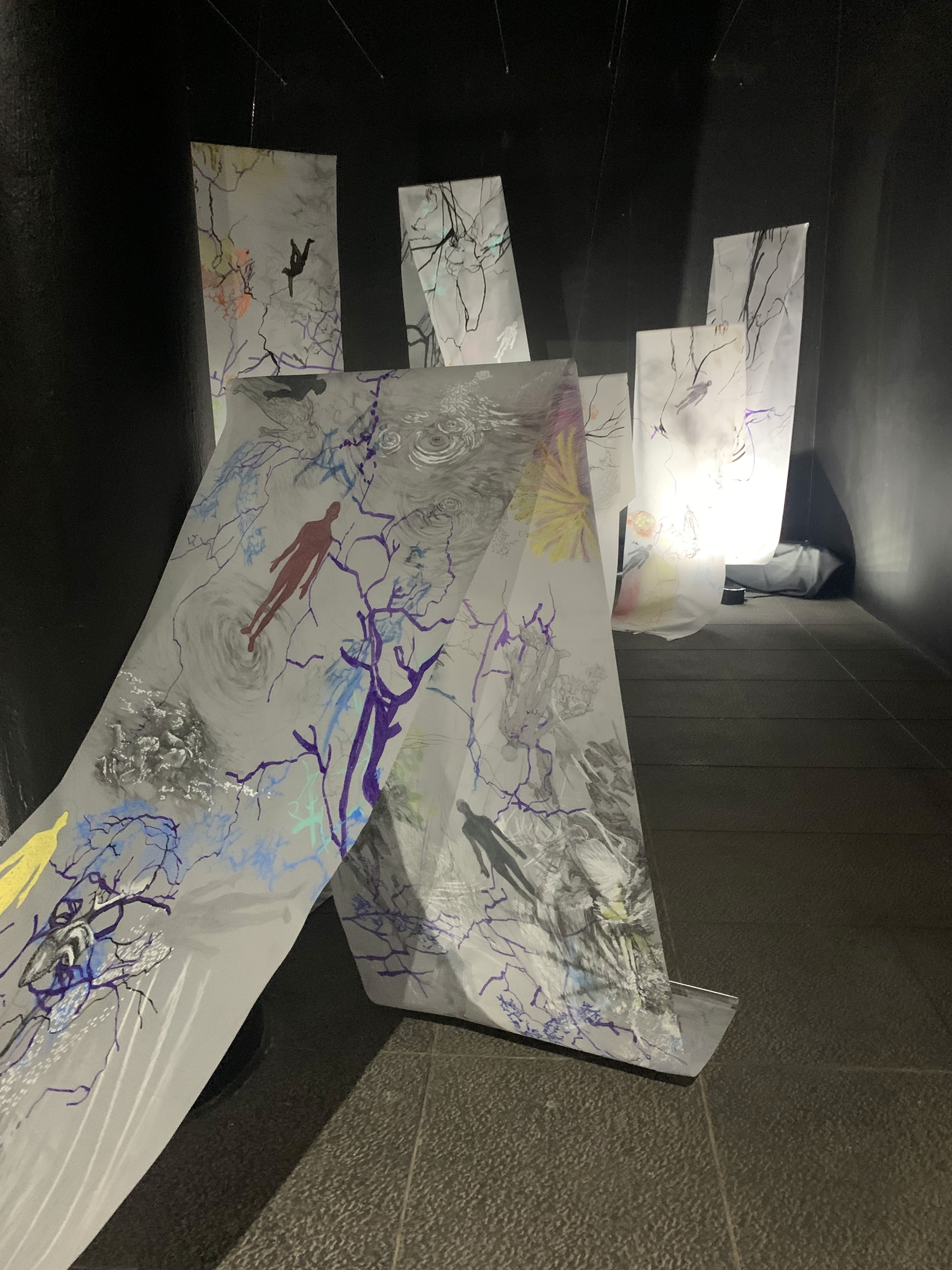
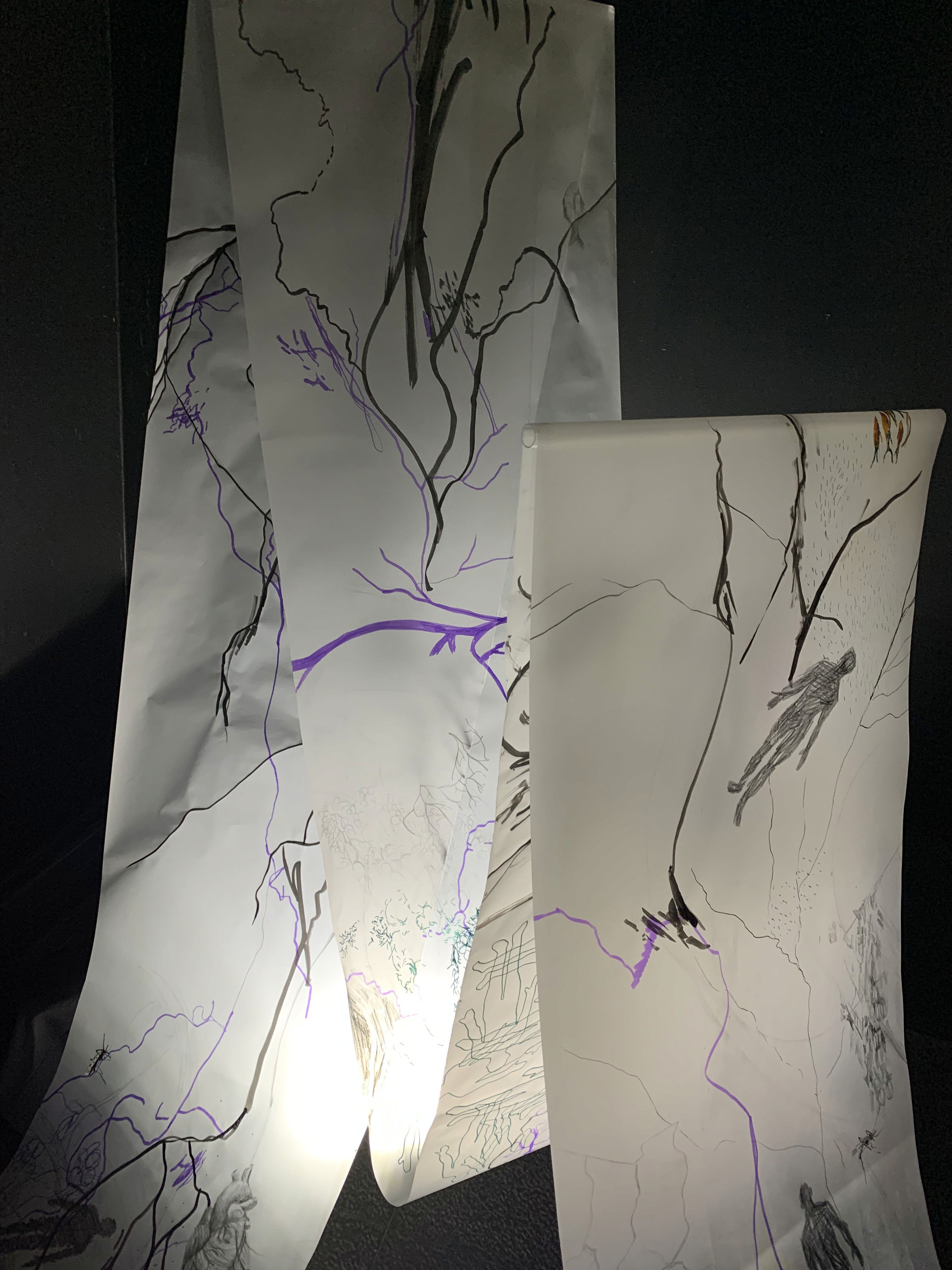
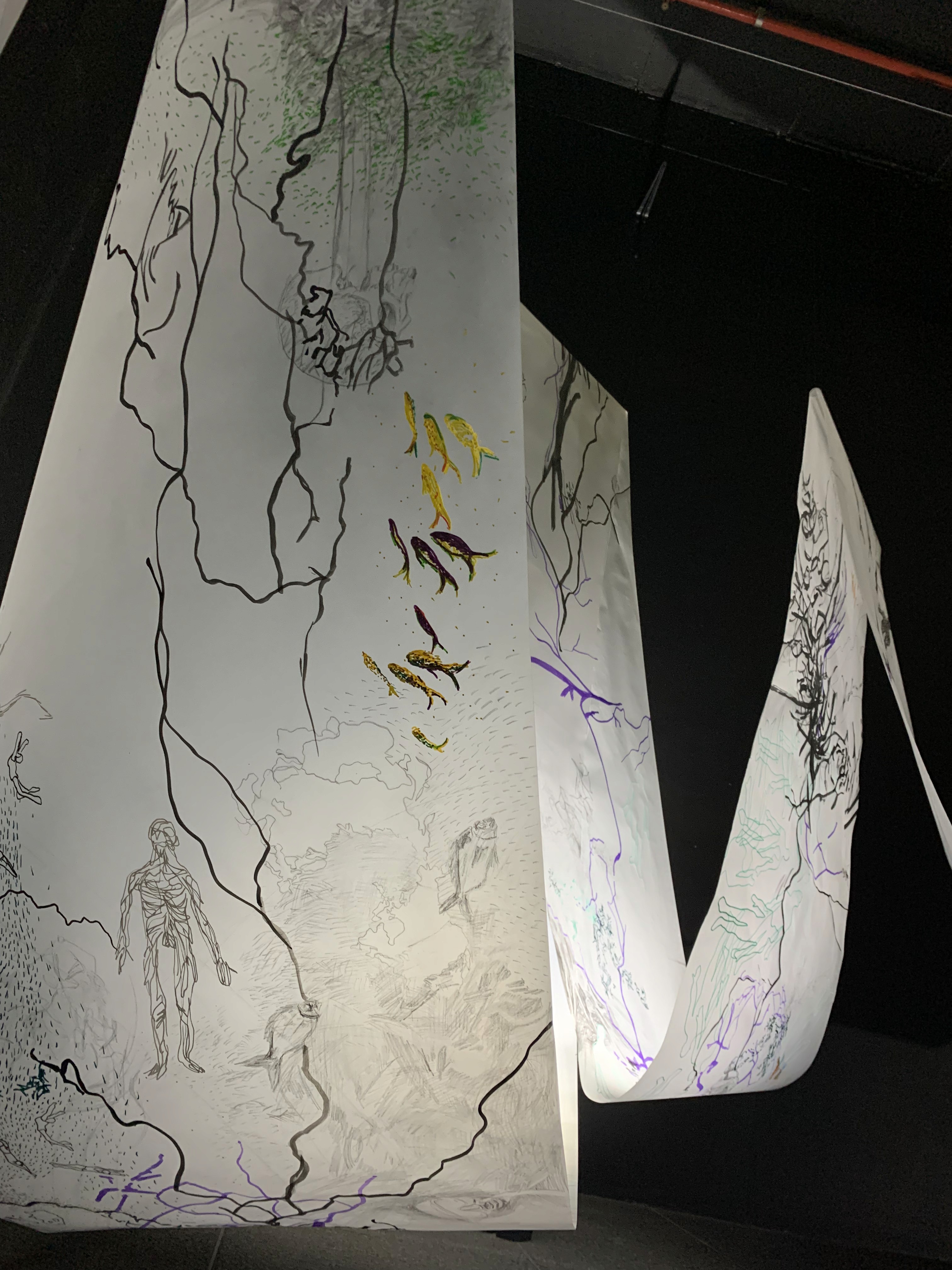
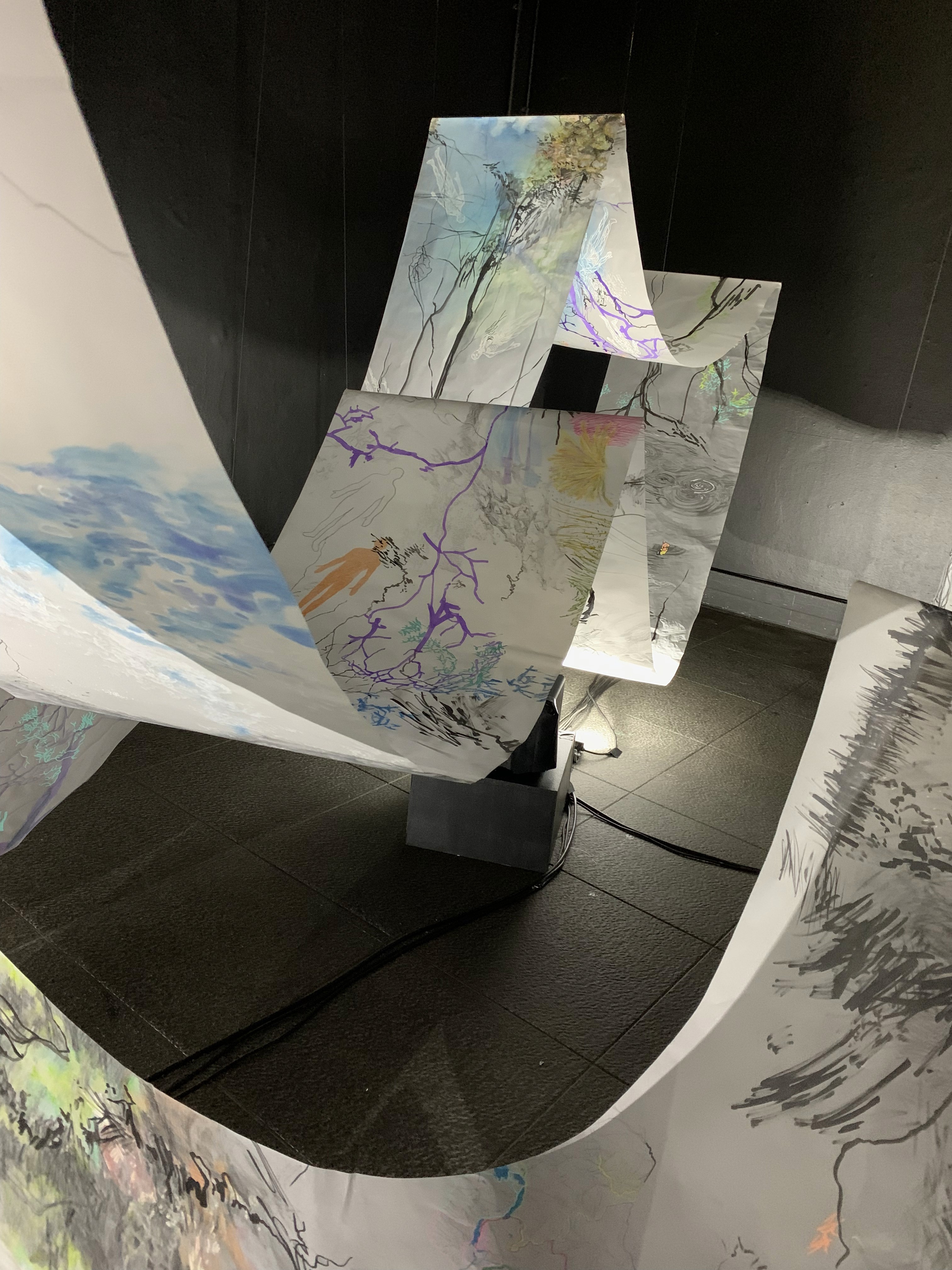
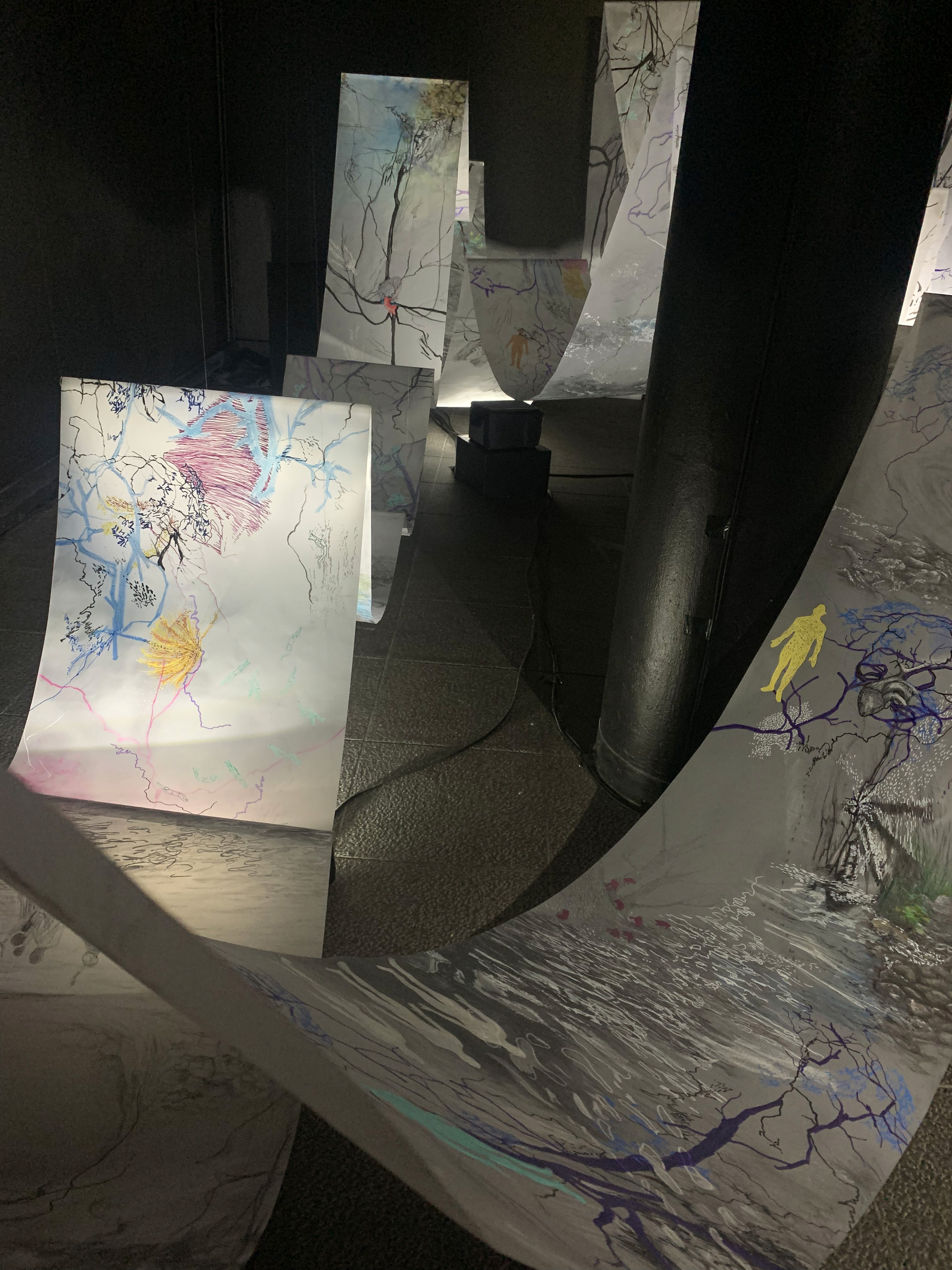
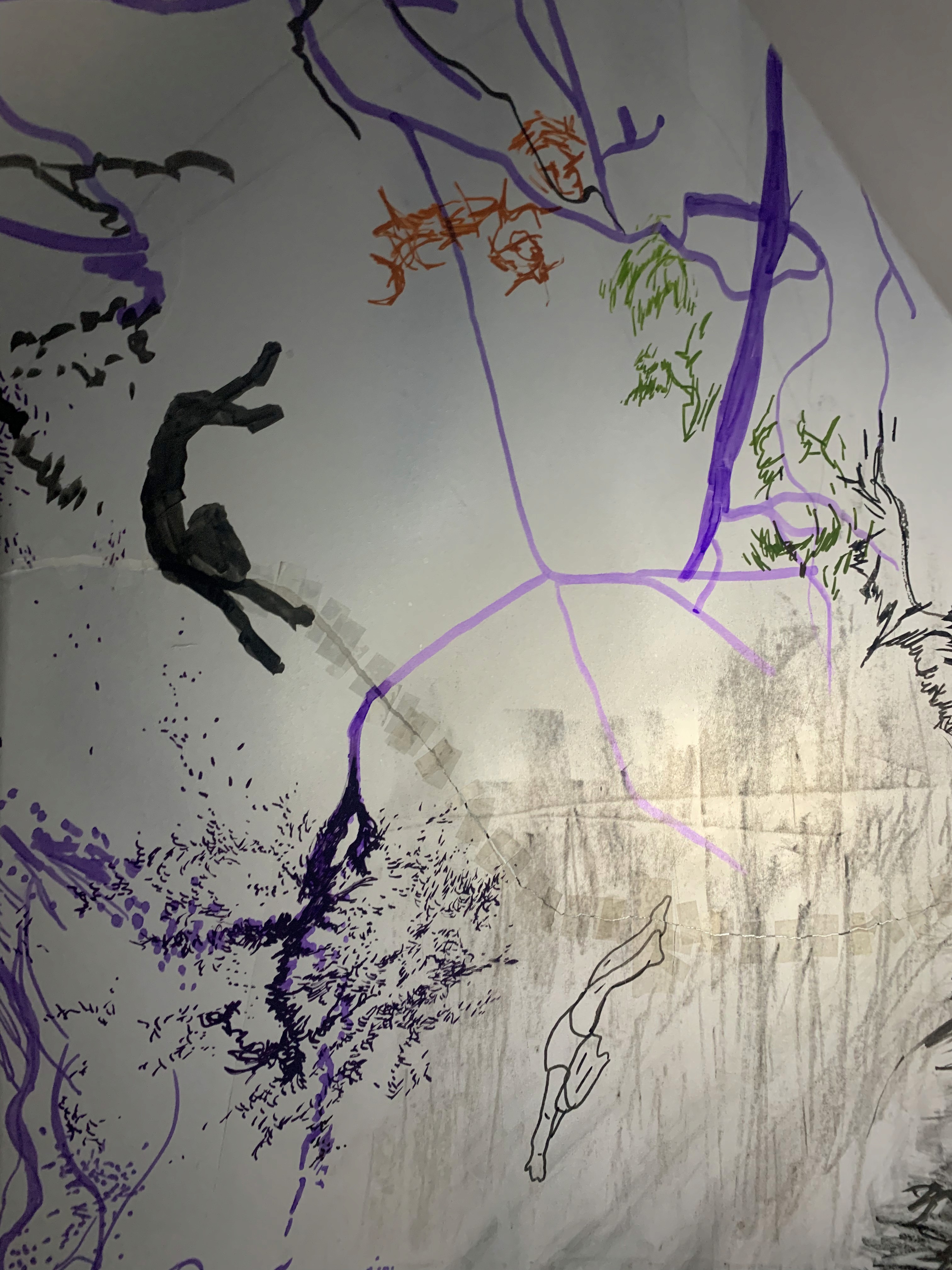
We invited Dr Gavin Wayte, who had already been working with music and bodies of water, to work with us to create “Confluence”. We chose to focus on two rivers, each within our own localities: the Jukskei, running roughly north from the centre of Johannesburg and the Tame, which runs southwards to the east of Manchester in the UK. Rivers are sites of exchange, of gathering, of transportation, sustenance, cleaning, healing and conduits to the spirit realm. explores the cultural/information/literary exchange that rivers facilitate/have facilitated. The three of us decided to gather information about the rivers geographically closest to us, by reading newspaper articles, books, engaging with art and music and histories of the rivers. We visited the rivers, took photos and made drawings and field recordings, flowing the flow and tributaries, so to speak. Different foci emerged for each of us, and we encouraged each other to respond to our findings from our different disciplinary lenses. We continued to share our work, and insights via google drive, and in our regular meetings. This is significant, because for me, the process was like working alongside each other: journeying together, without losing our specific disciplinary foci, and the collaborative sound-art installation work that emerged from our working process, formally resembles the process.
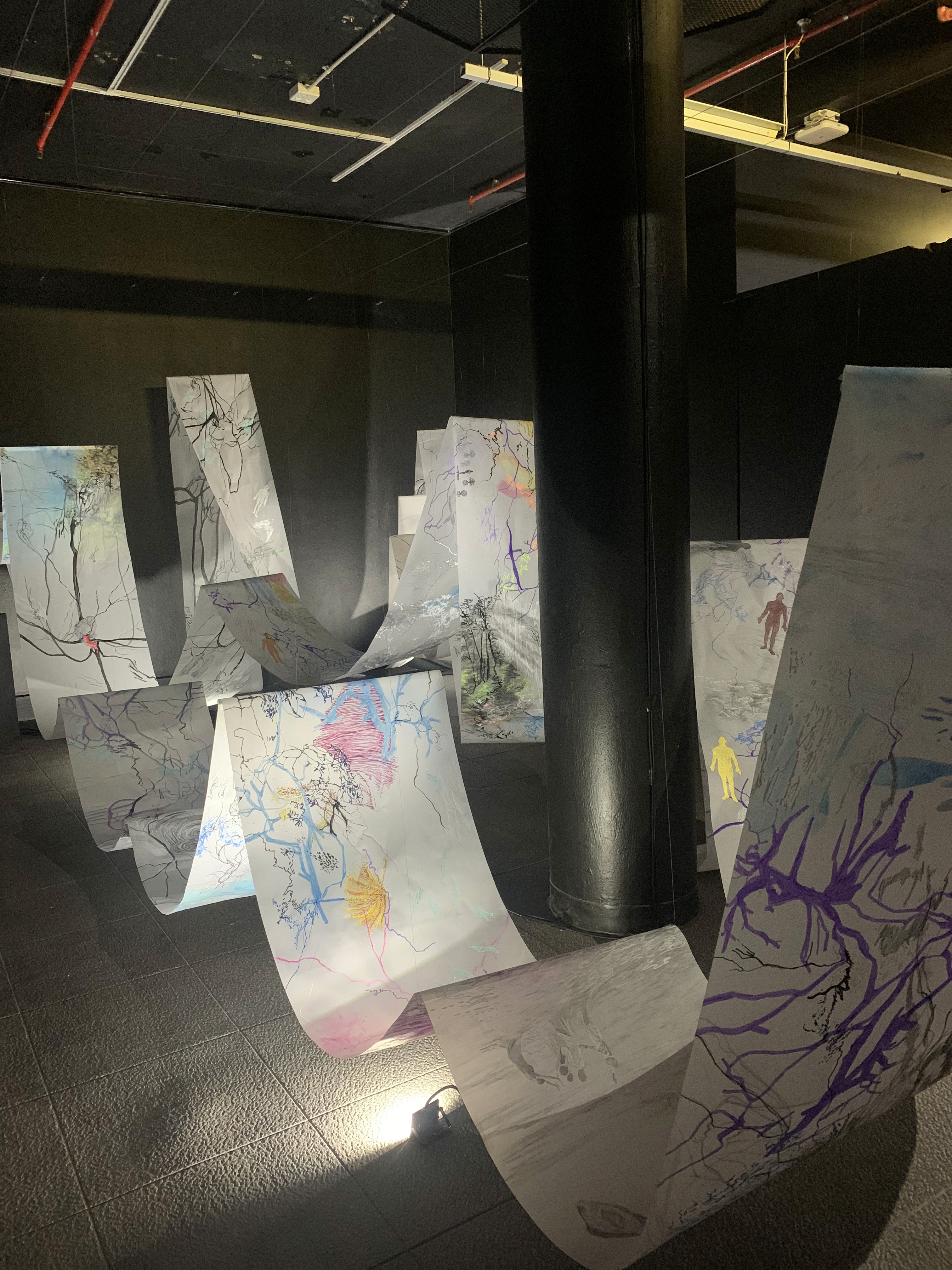
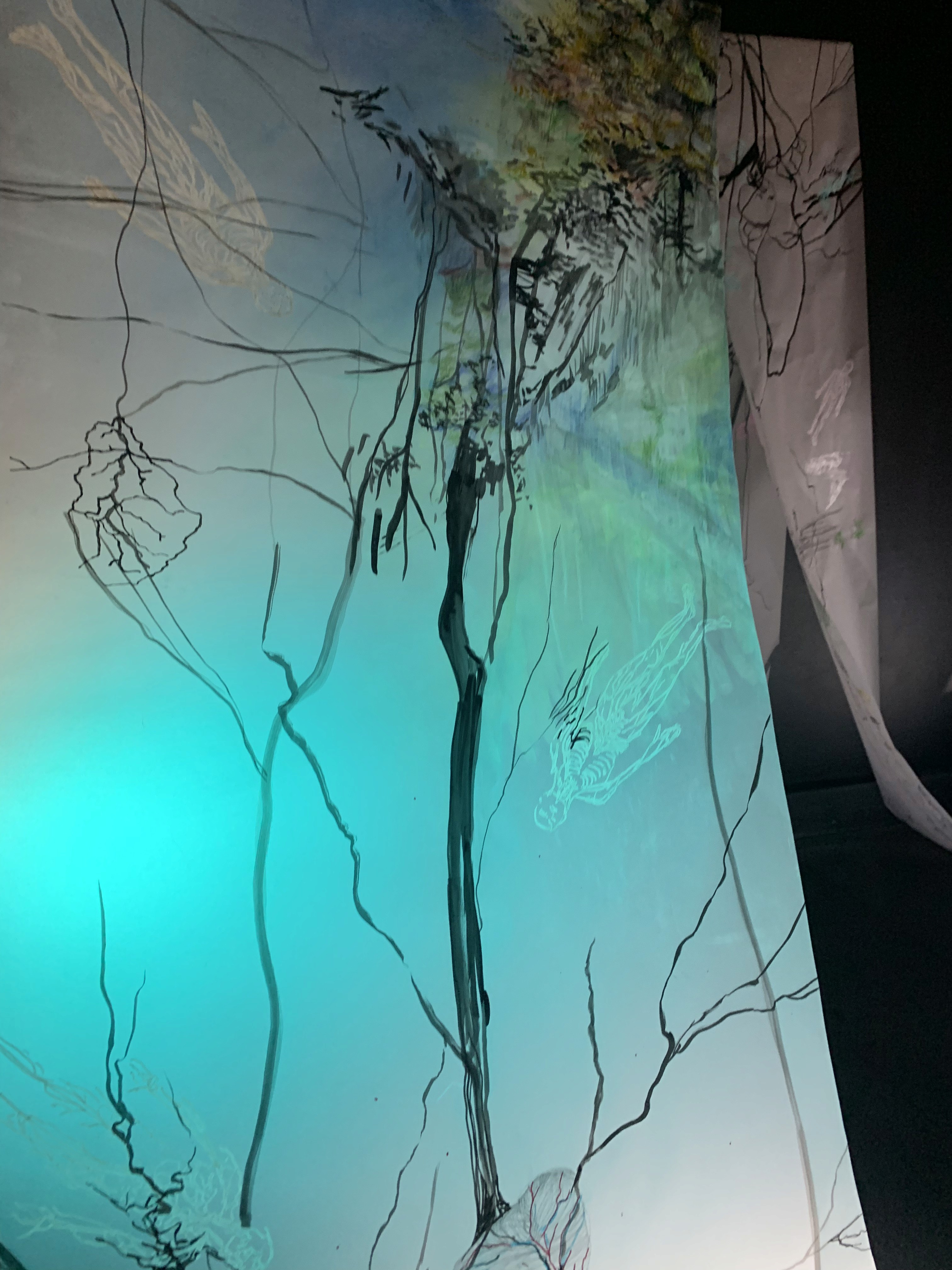
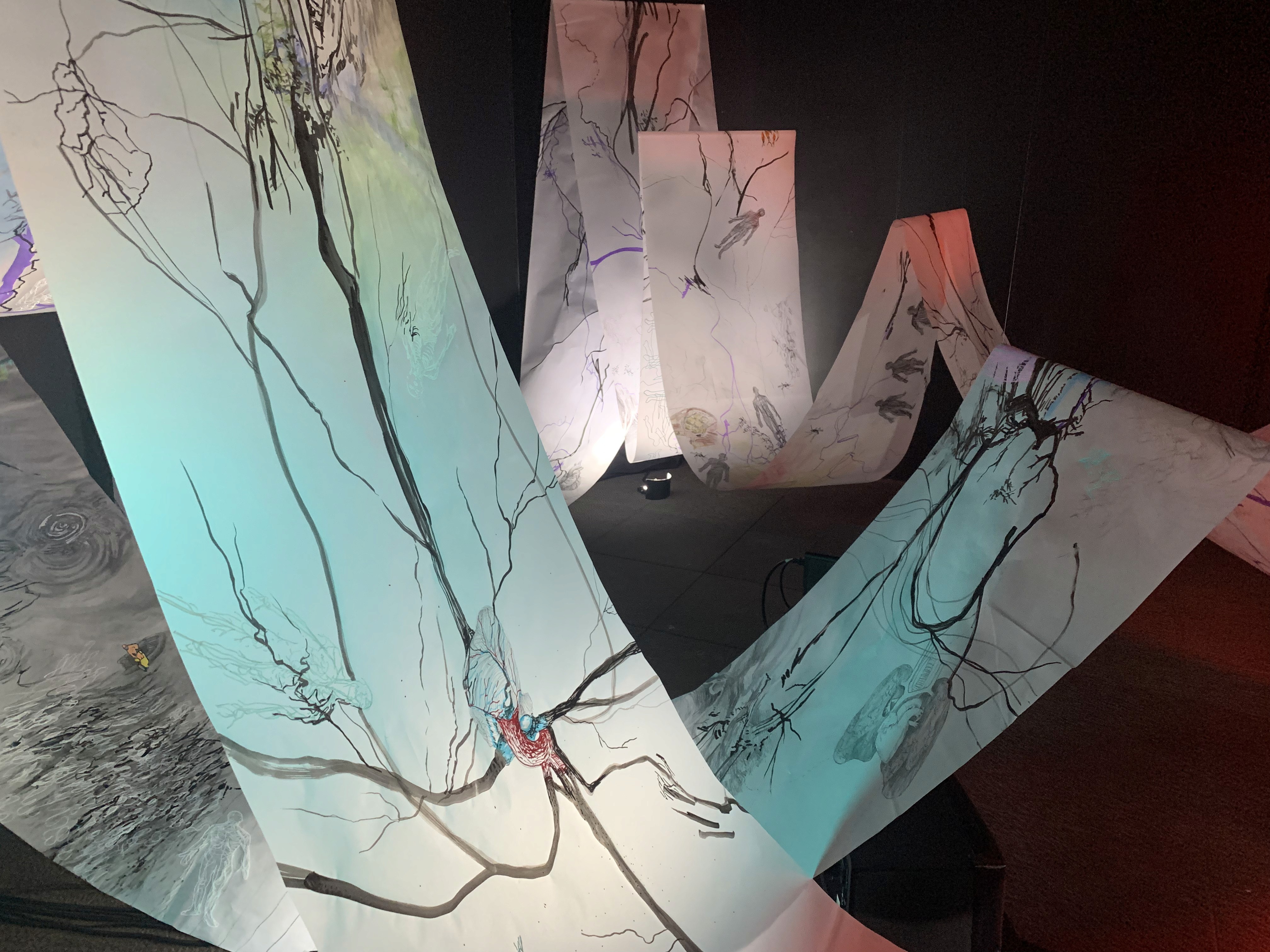
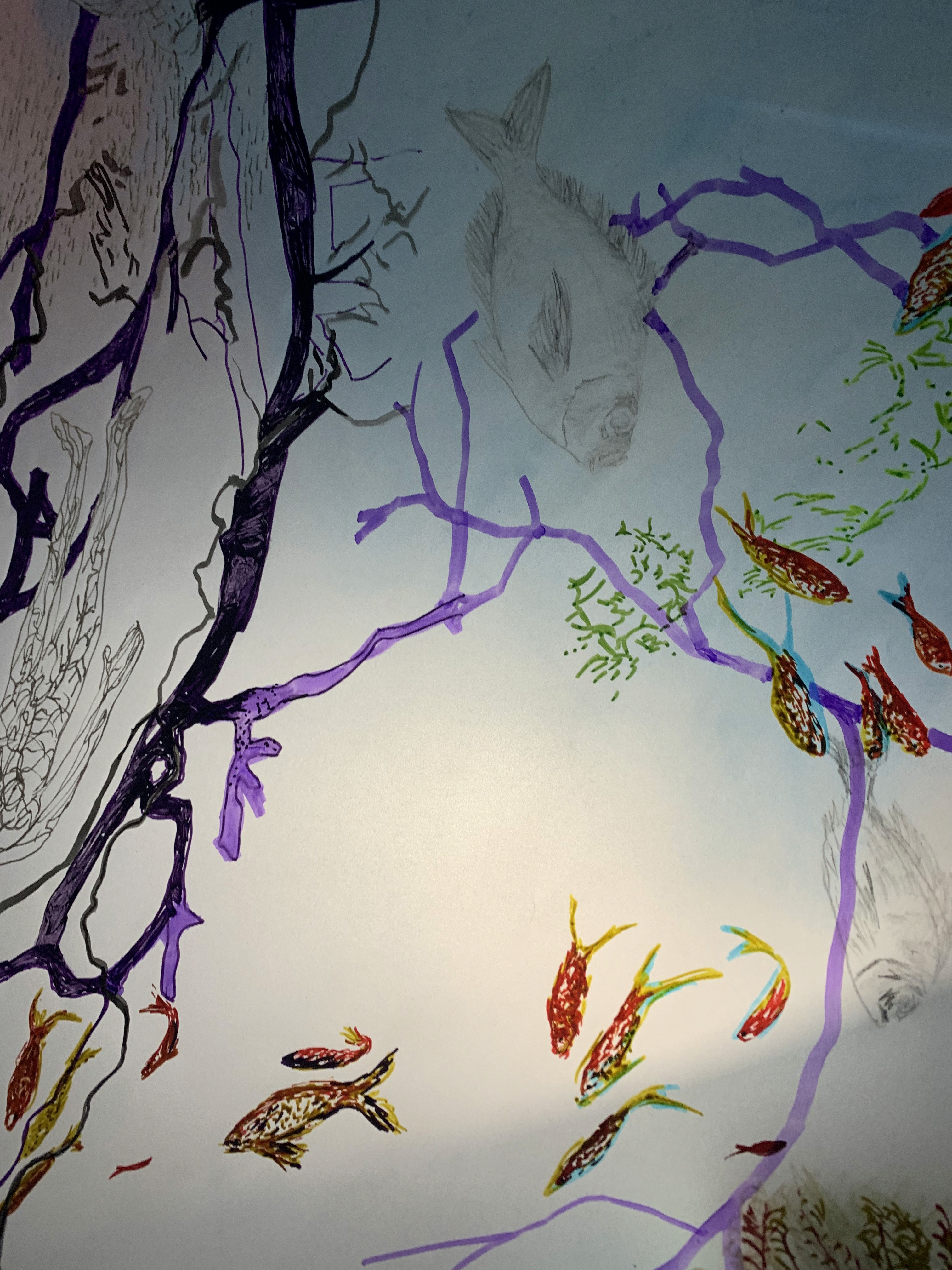
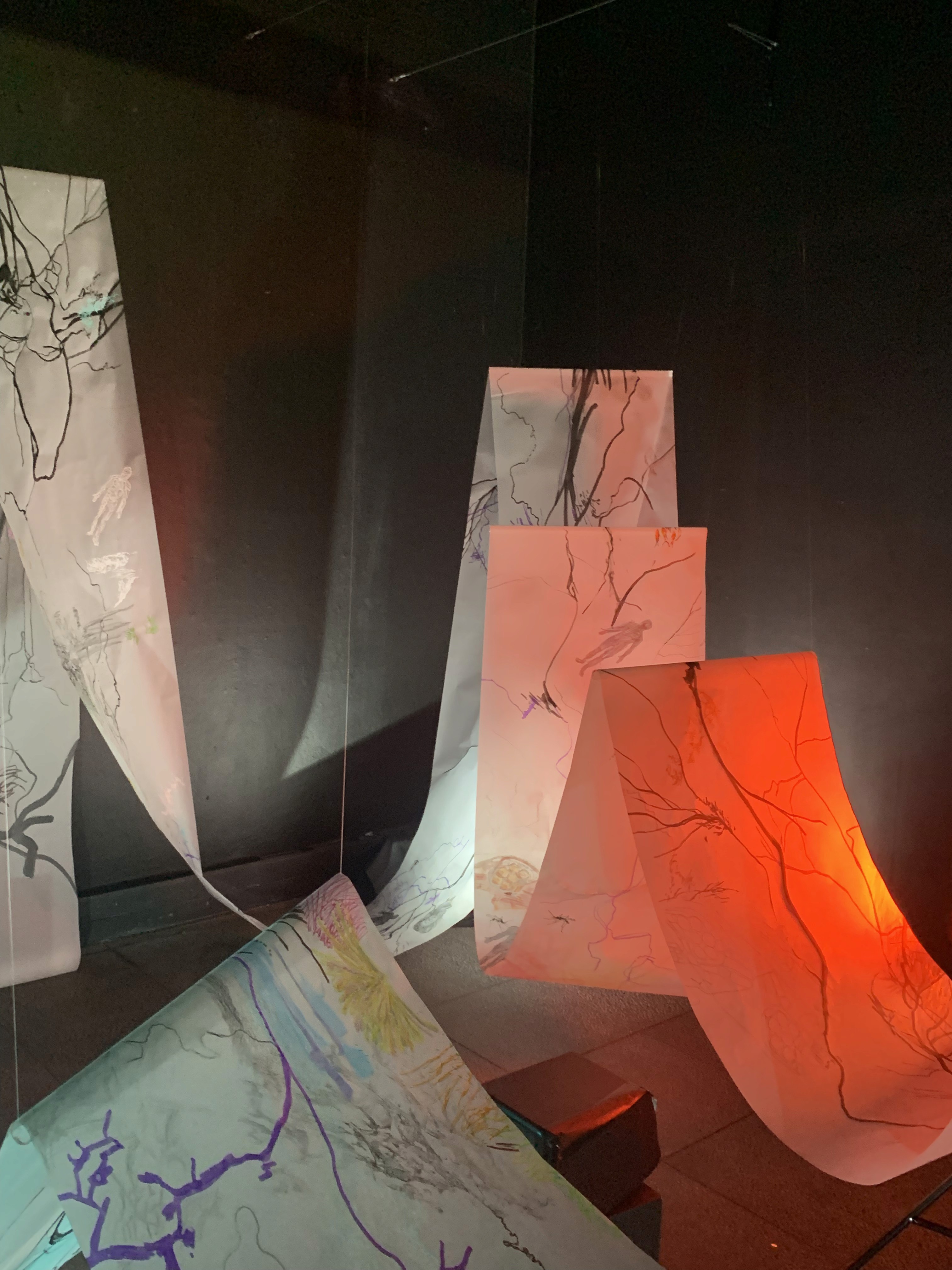
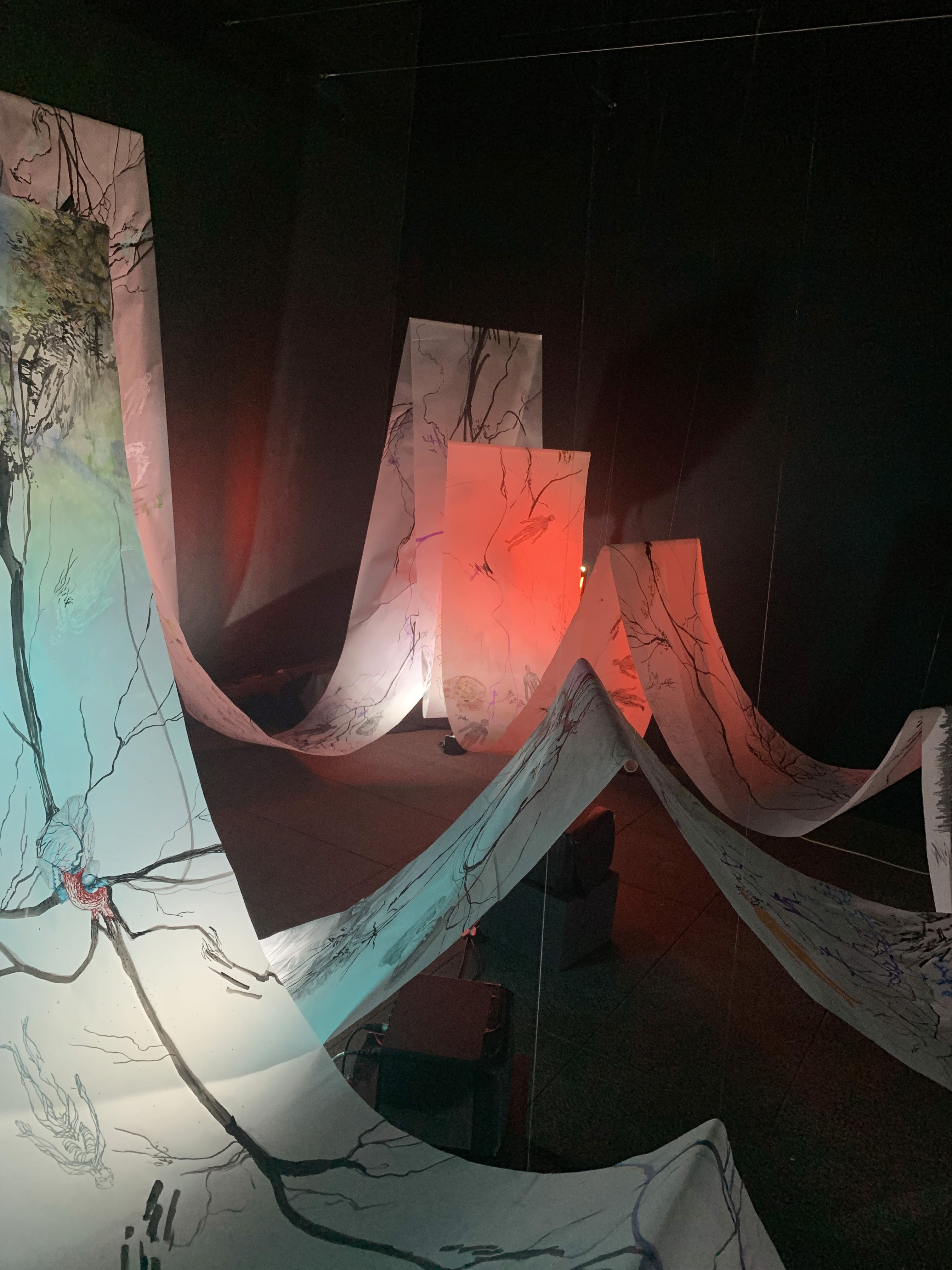
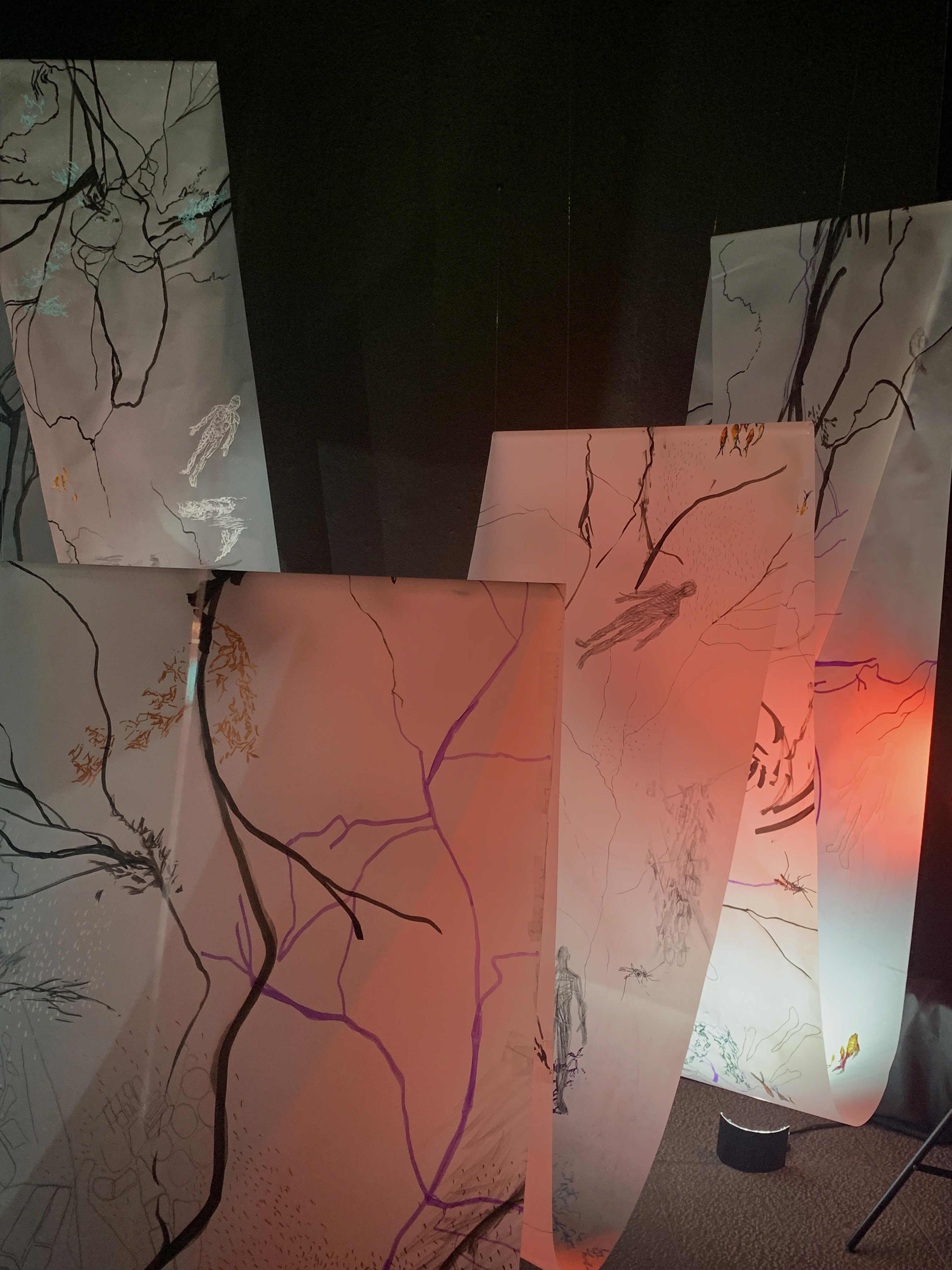
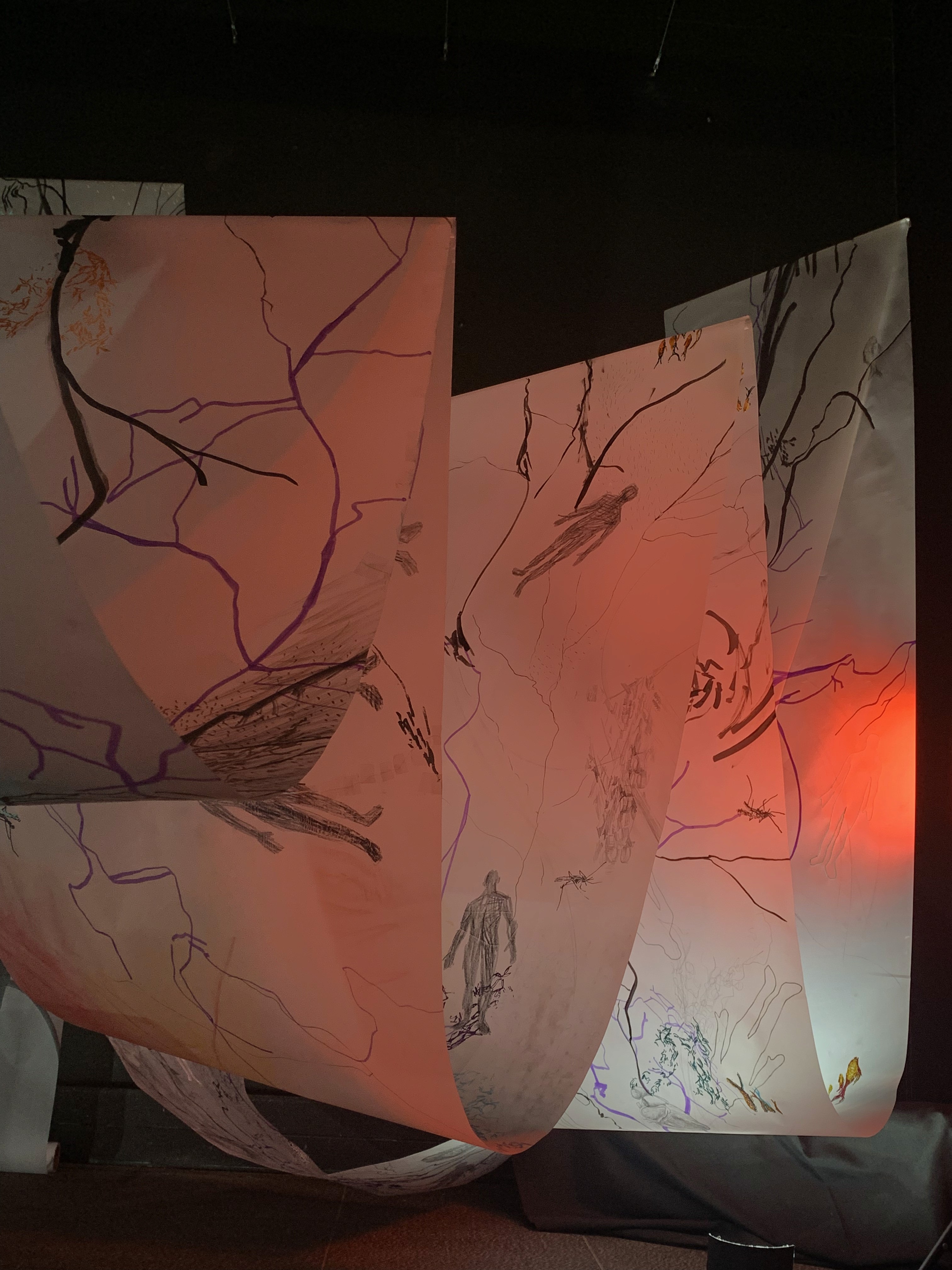
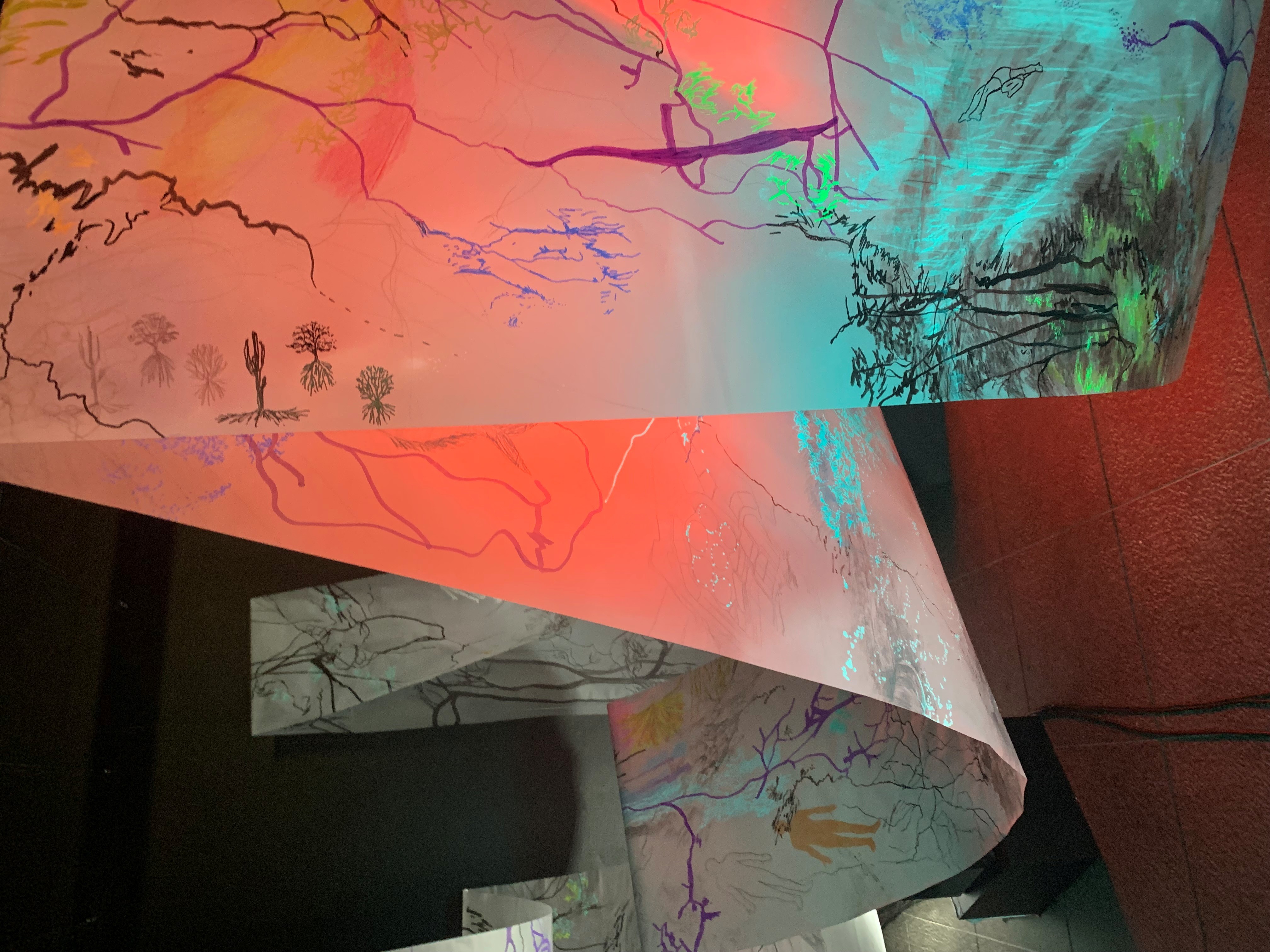
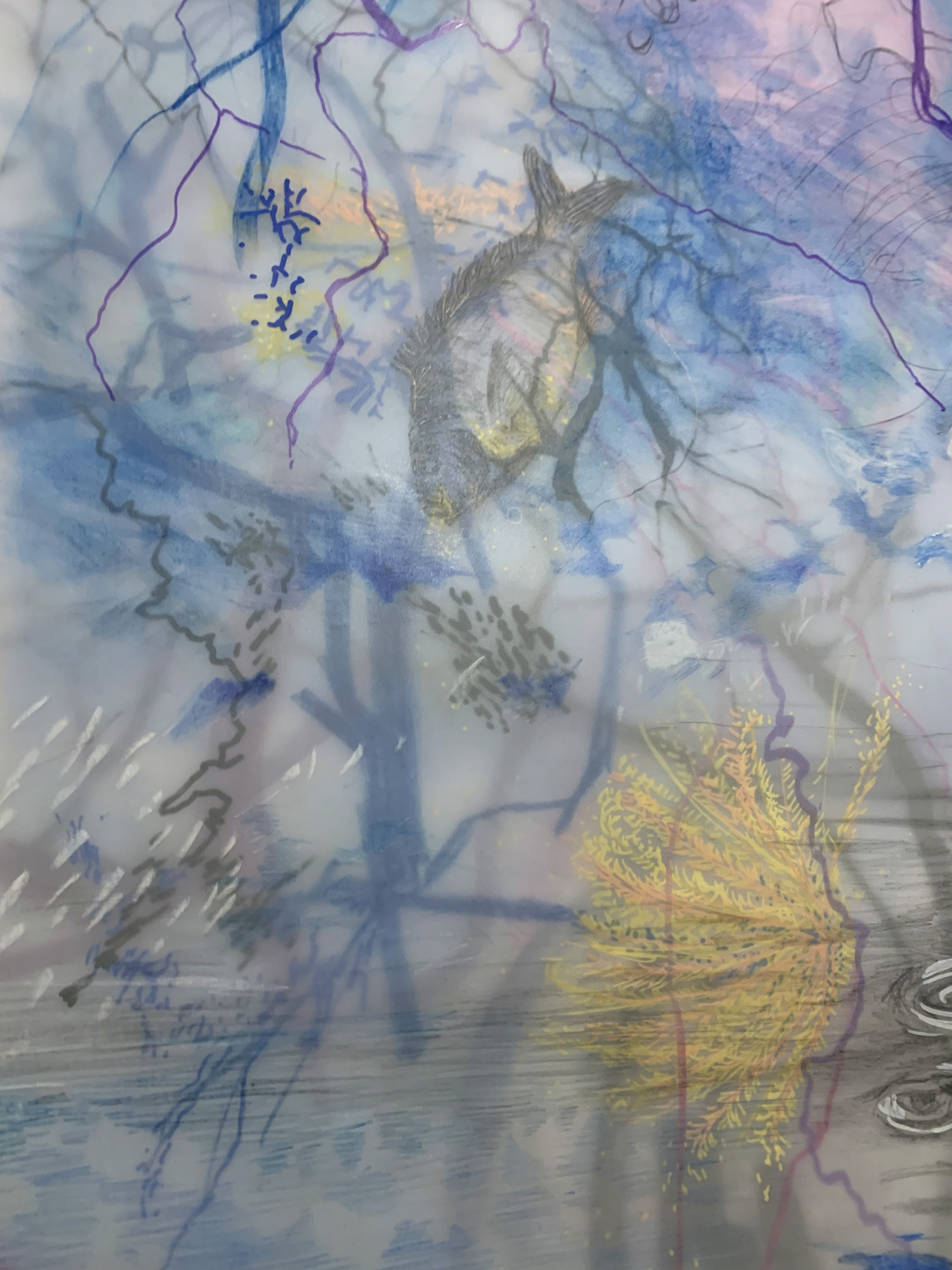
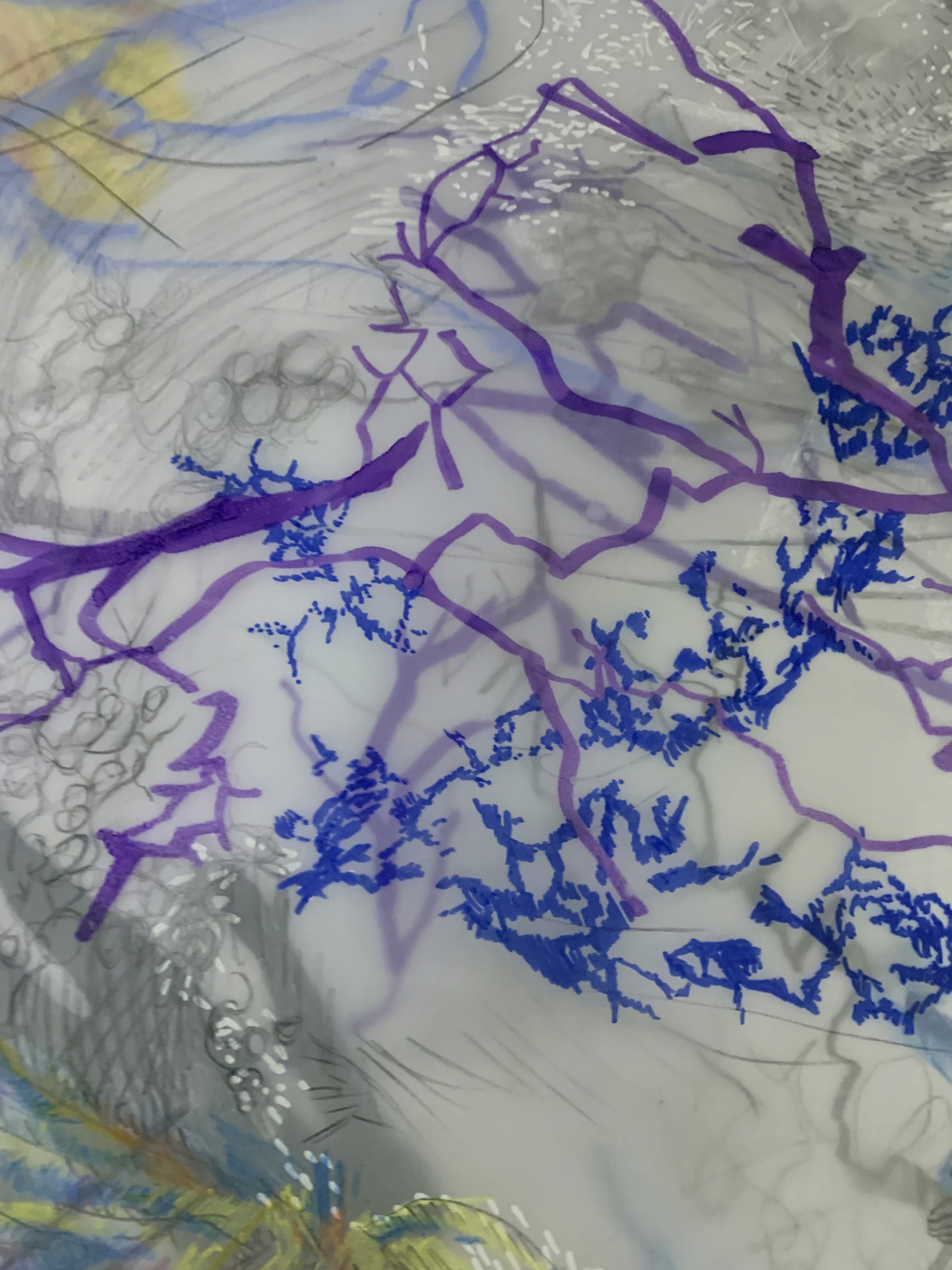
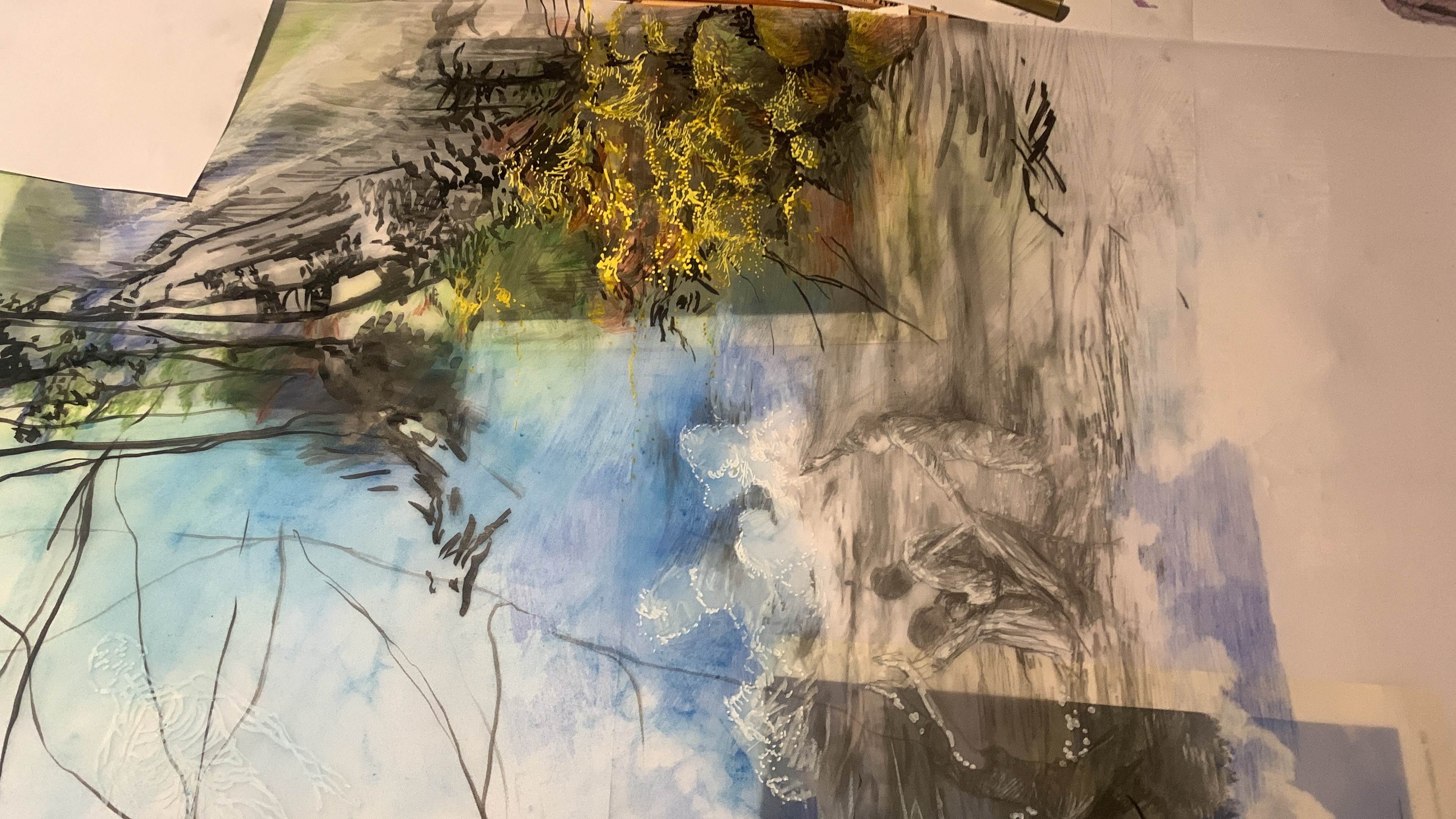
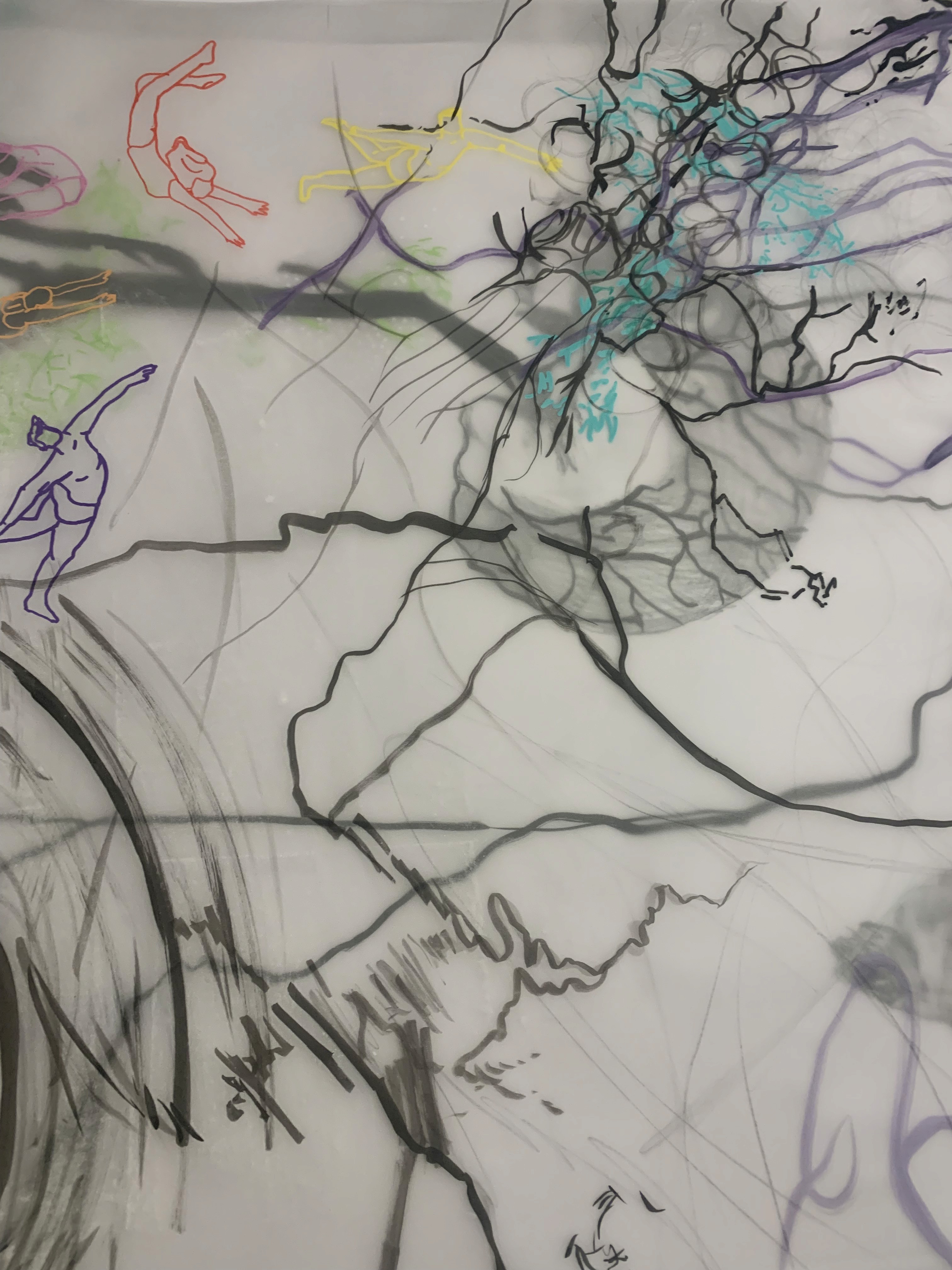
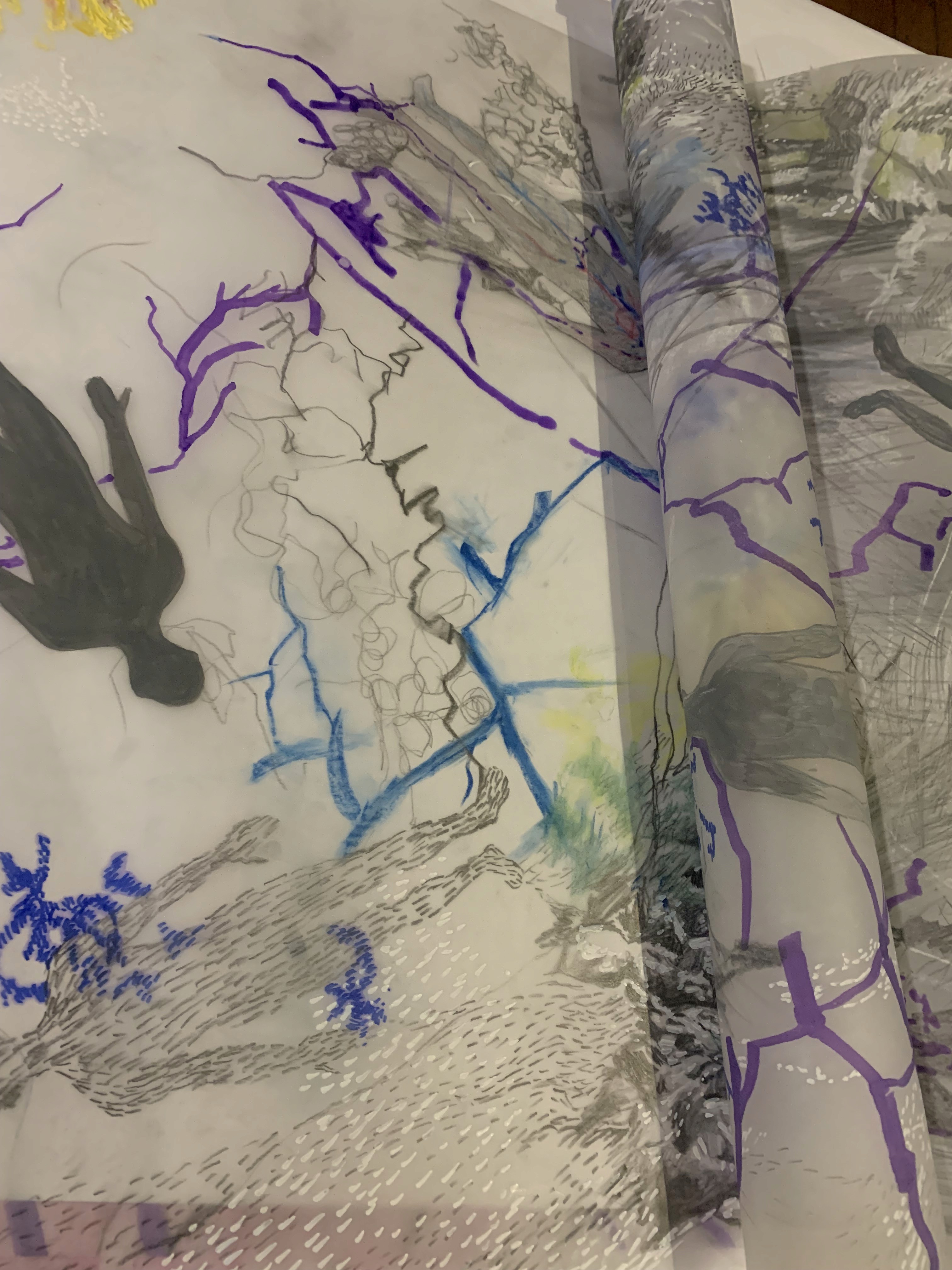
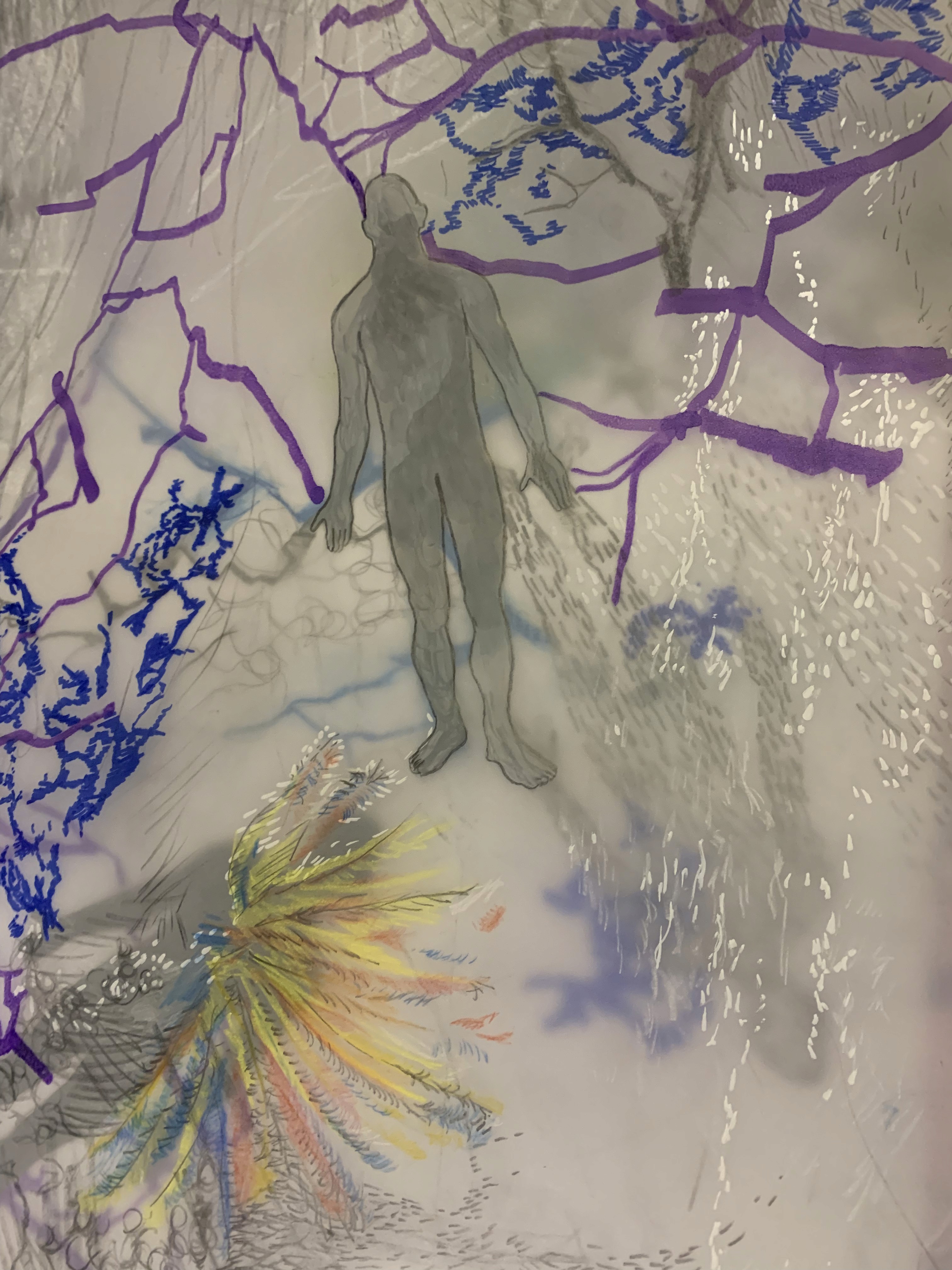
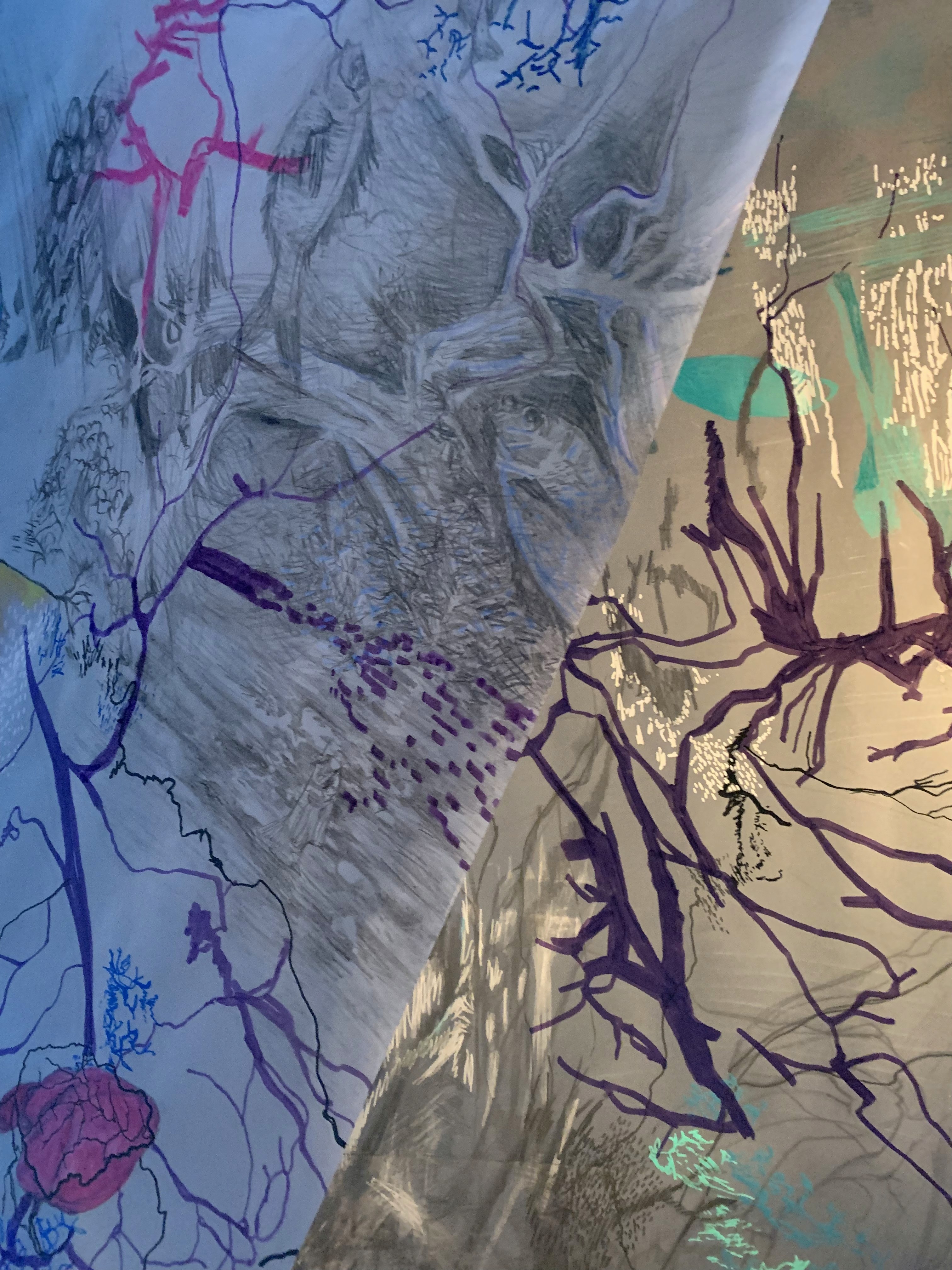
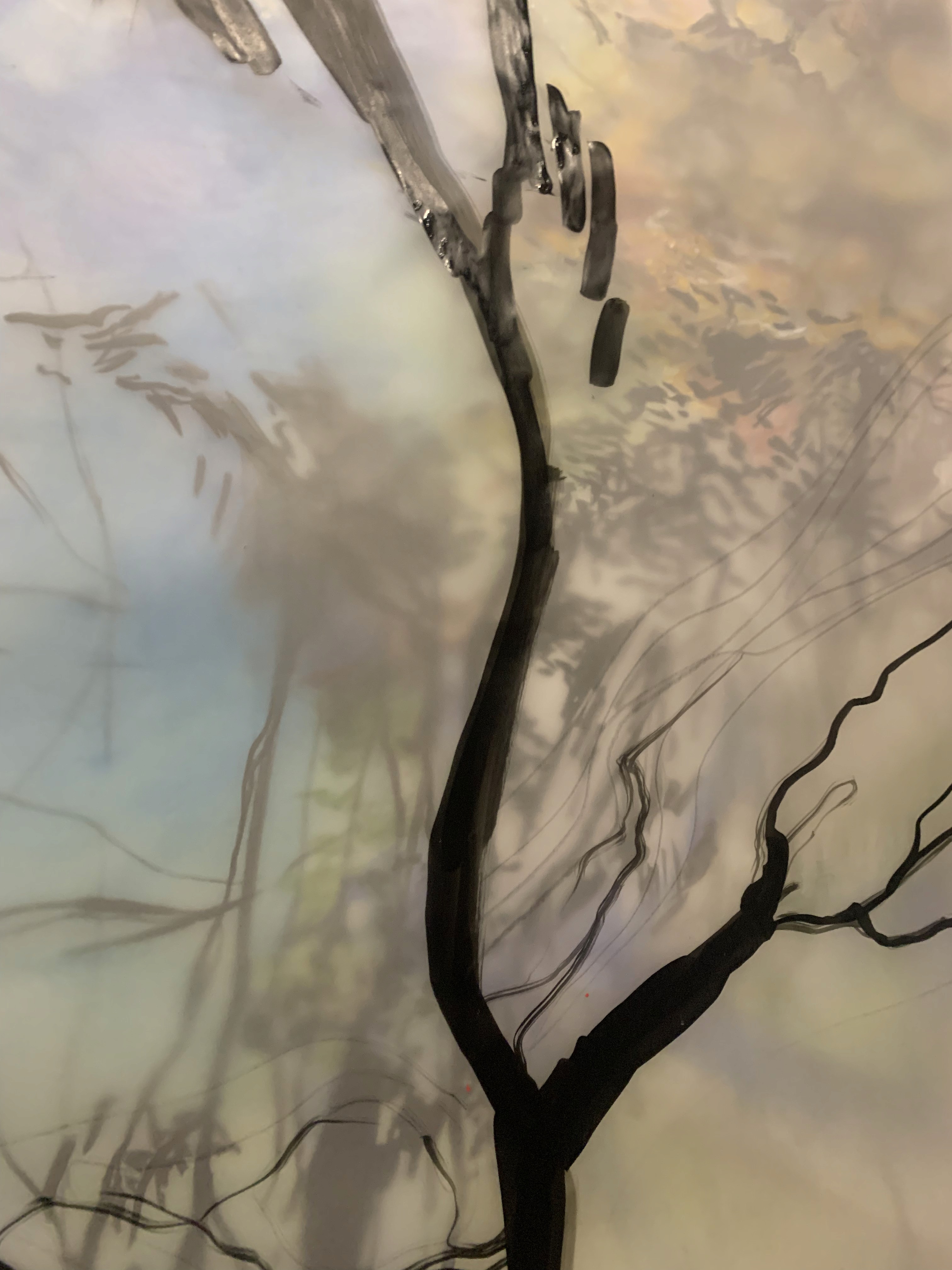
The 68 kilo-meter long Juksei, runs through the poorest and wealthiest parts of Johannesburg, is used for washing, ablutions, baptisms and recreation. I decided to create a drawing, with the scale of 1:2000m, mapping the social realities and cultural complexities of the Jukskei river. The length of the drawing is 34m. This was my first time working on such a large drawing. It took 6 months of drawing daily, to get to this length. I could only see 1.5m of the drawing, at a time, while working; the drawing literally unrolled, as the months passed. I used semi-transparent paper, and worked on both sides, to visually represent the process of reflecting, looking below the surface, to understand the complex dynamics and significance of the river, and the impact of humans on the ecosystem. The time and scale afforded me a chance to experiment with materials, symbolism, complexity, space, scale changes and repetition. The drawing is a portrait of sorts; homage and lamentation. I wanted it to be crazy: big, beautiful and glowing, but also horrific, not shying away from the floating pollution, and dead bodies that have been found there. I shared images and videos of work in progress, with Gavin and Cameron who worked on the sonic component of the installation. After months of working together, I see conceptual, material and formal links between the drawing and the sonic elements.
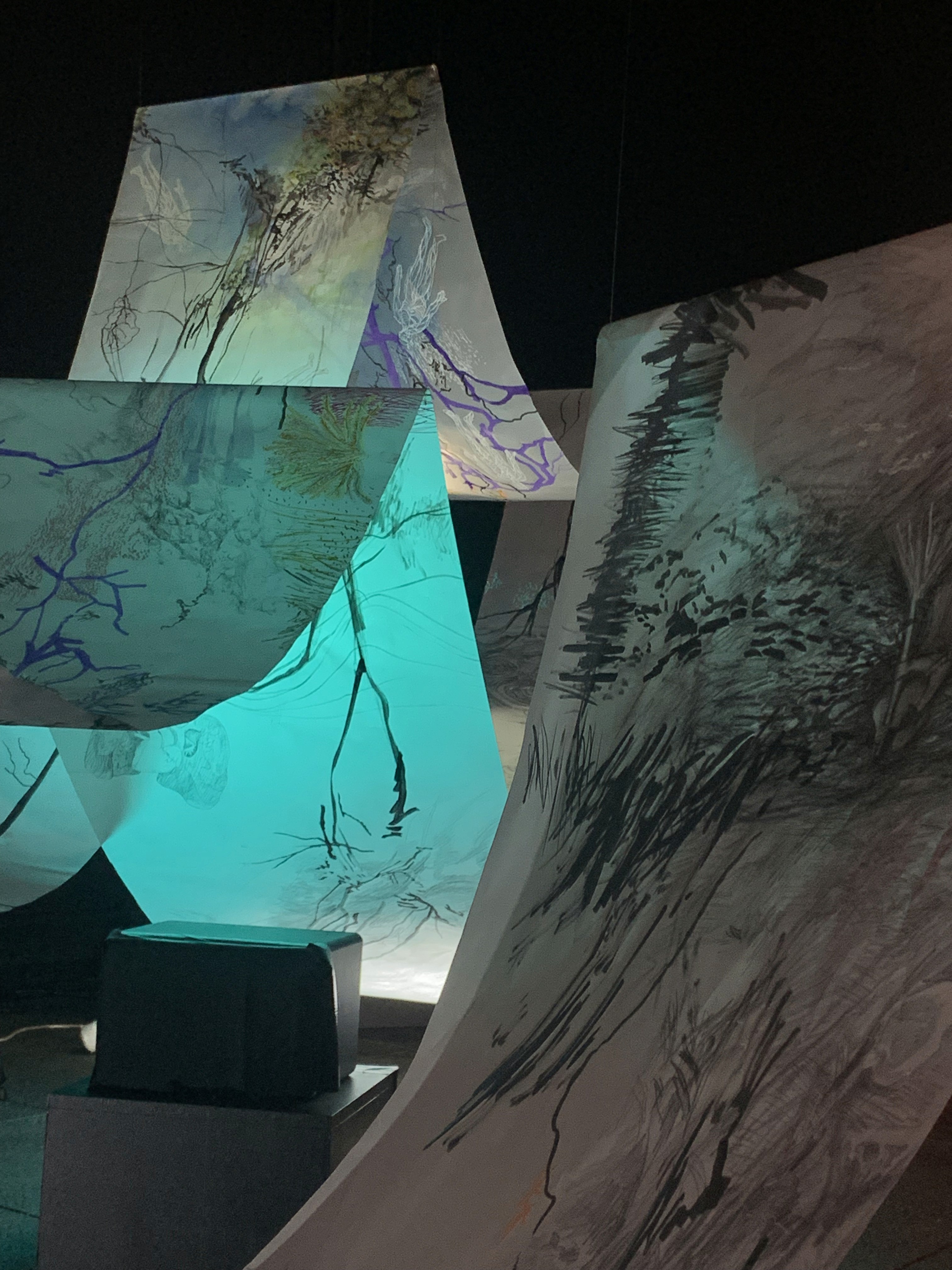
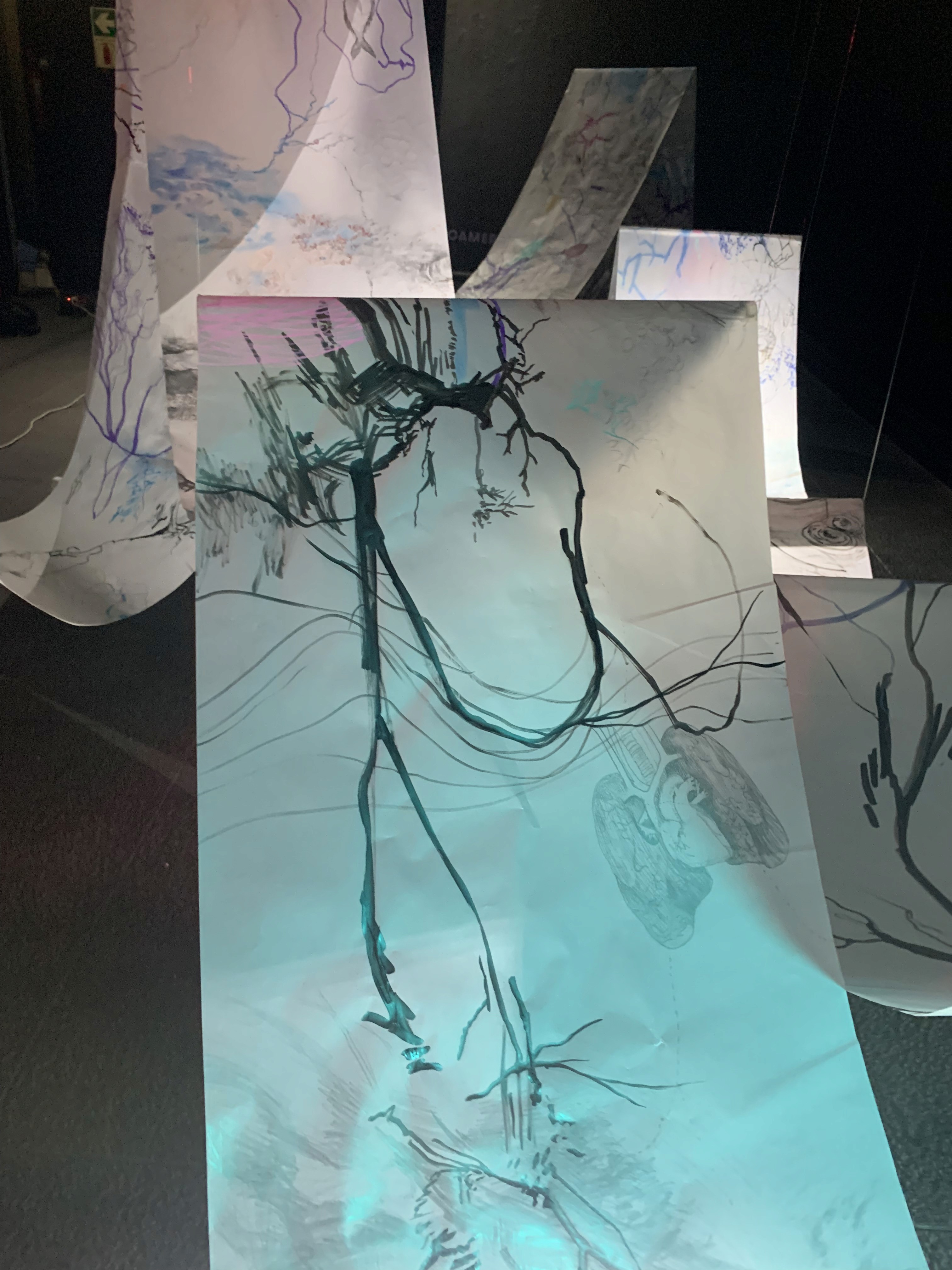
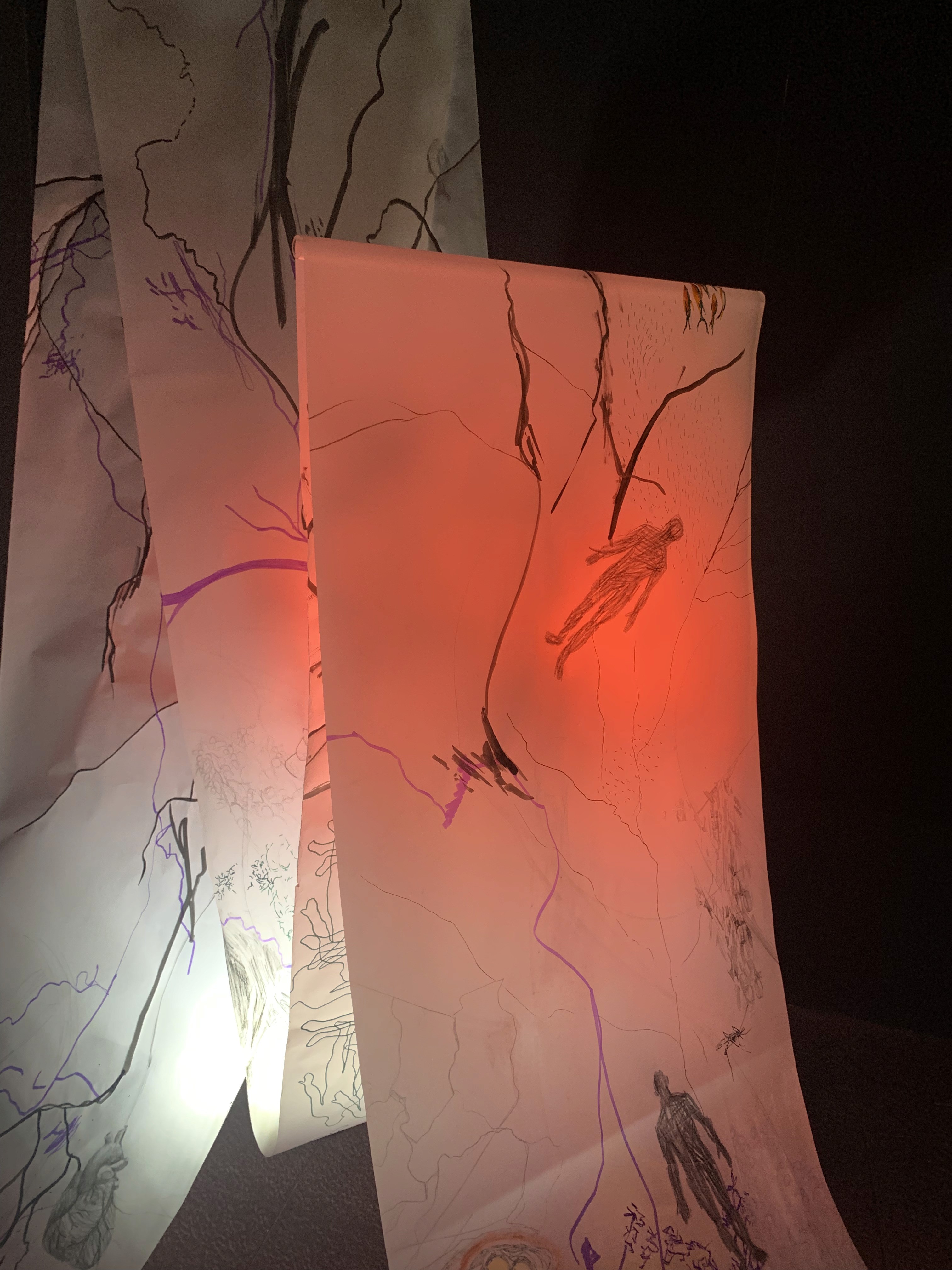
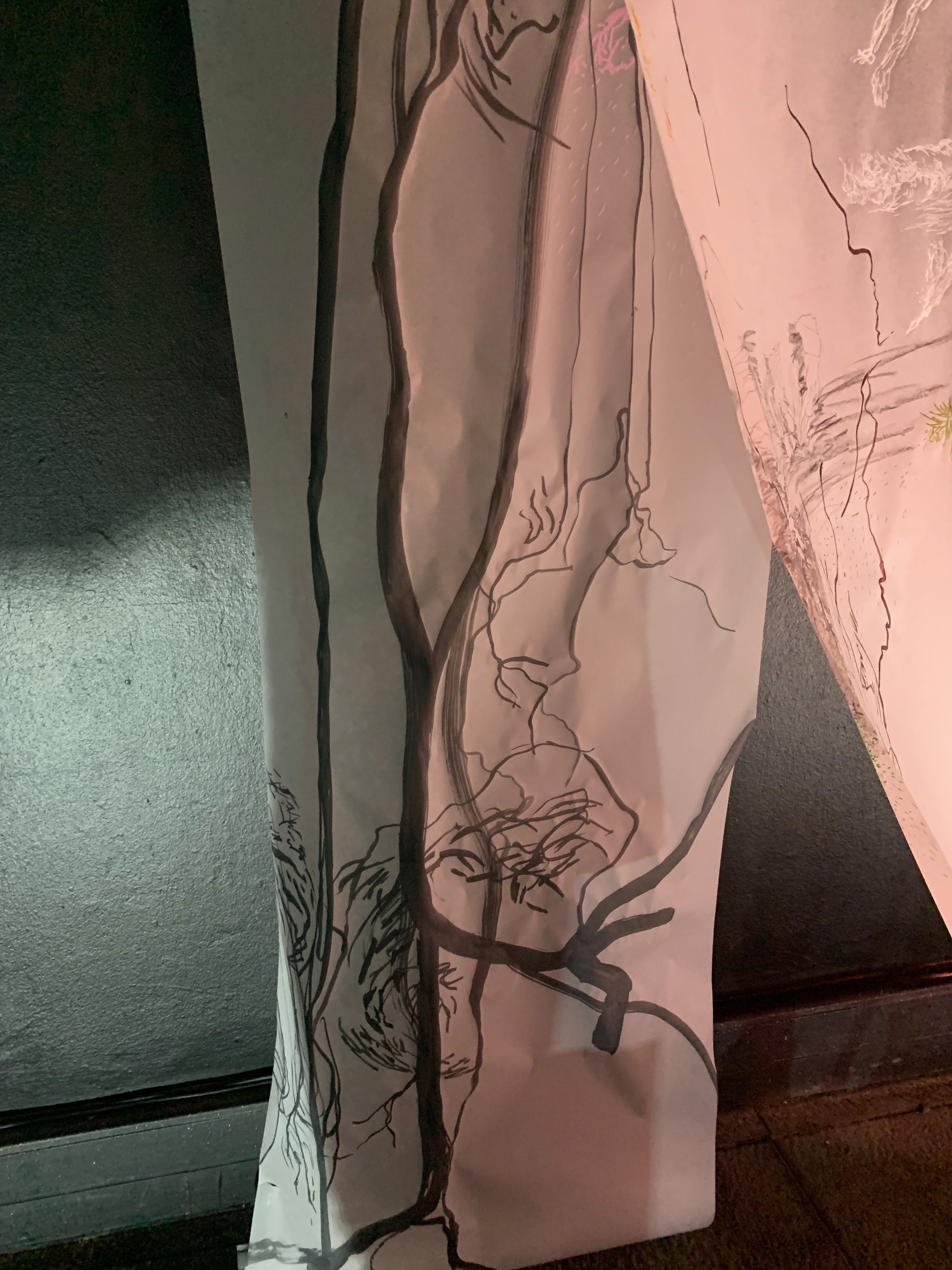
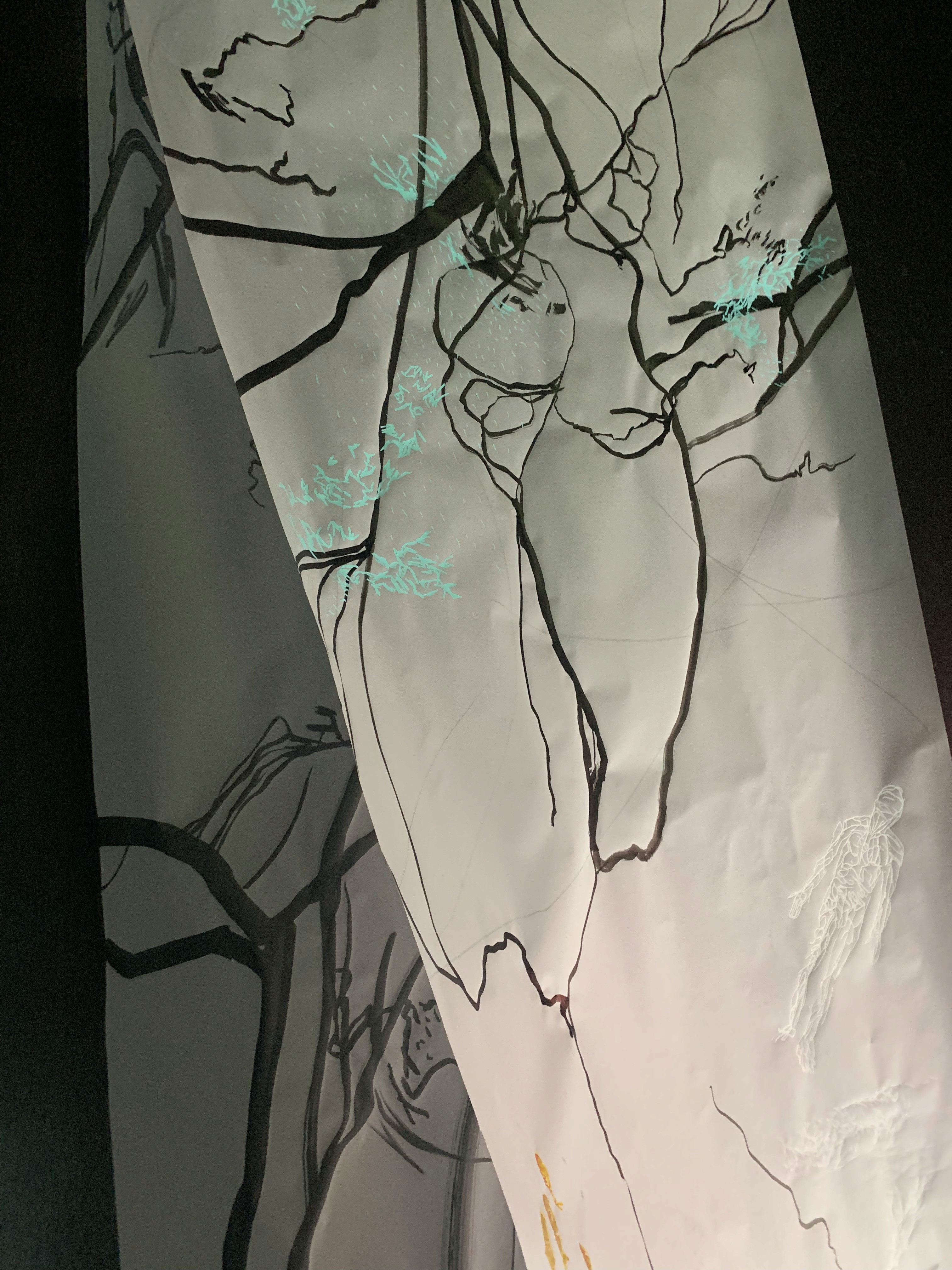
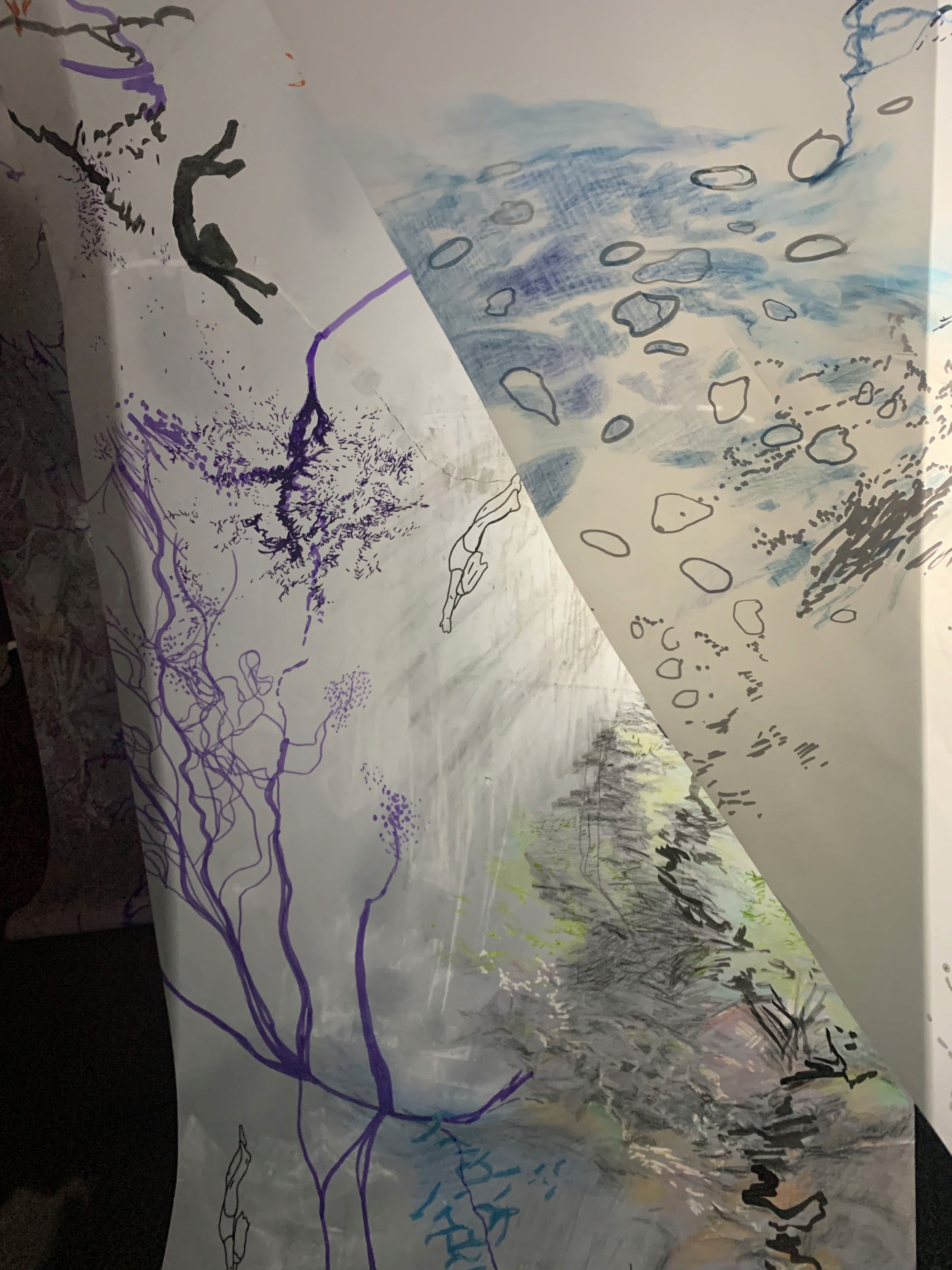
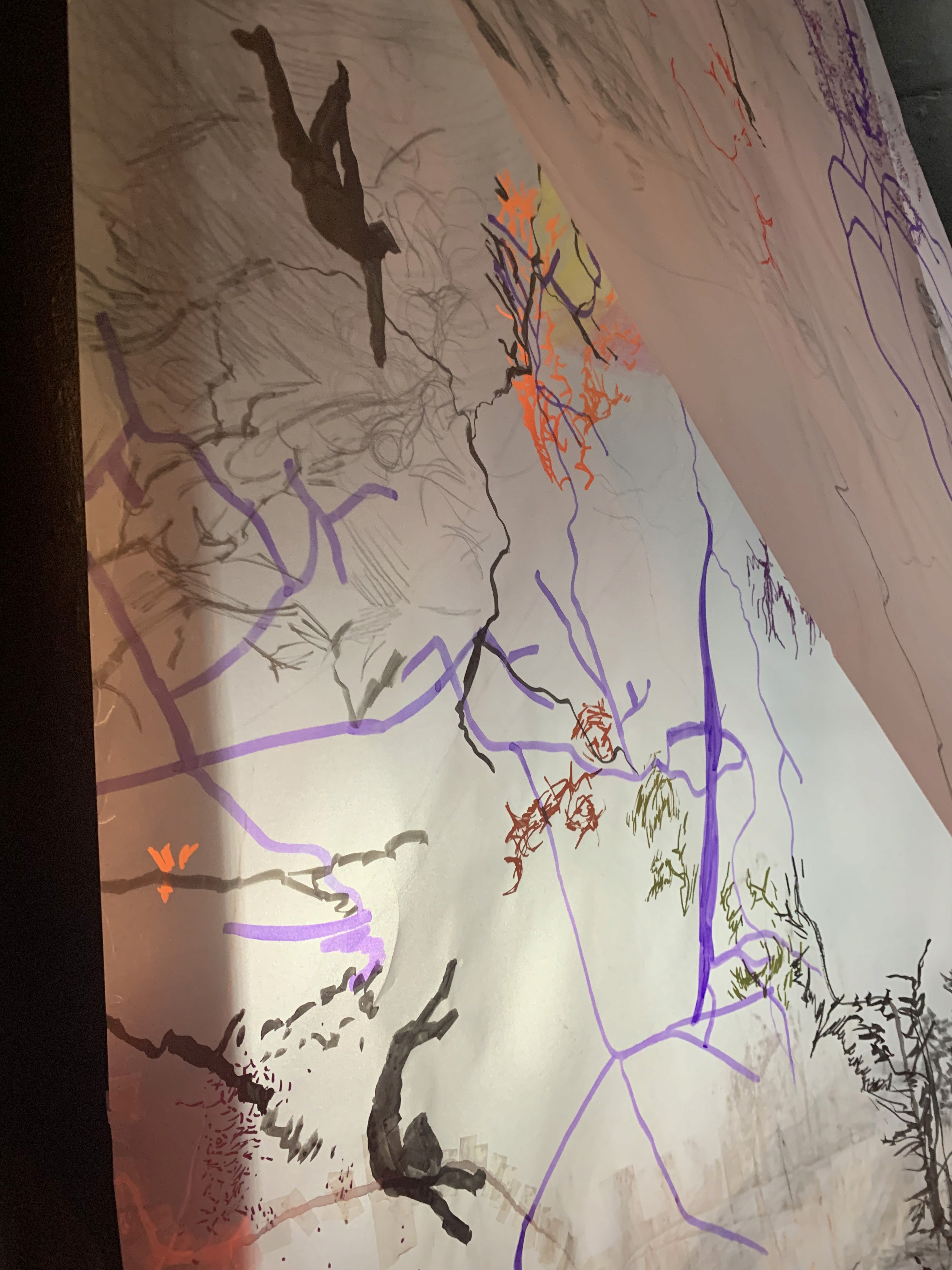
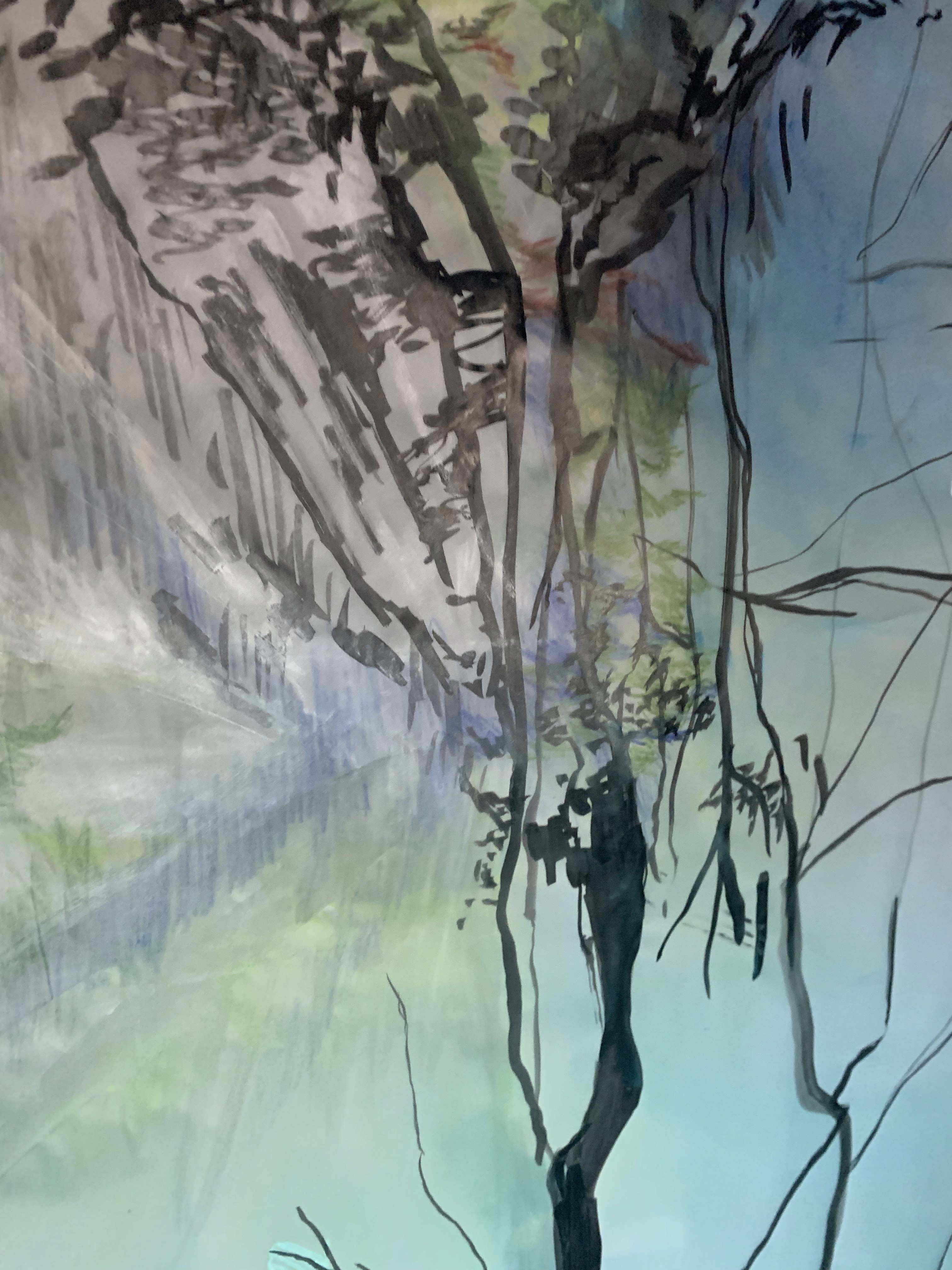
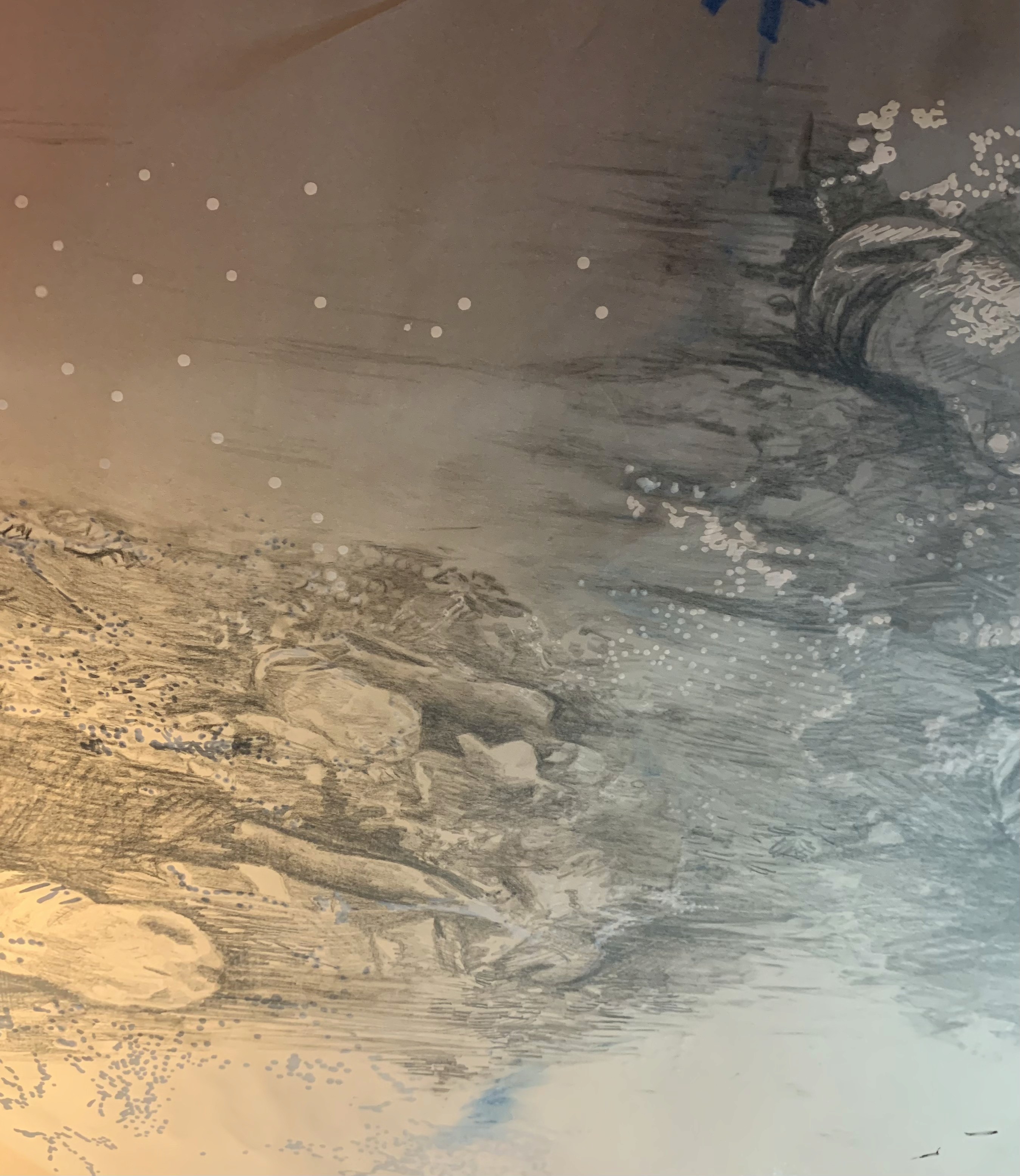
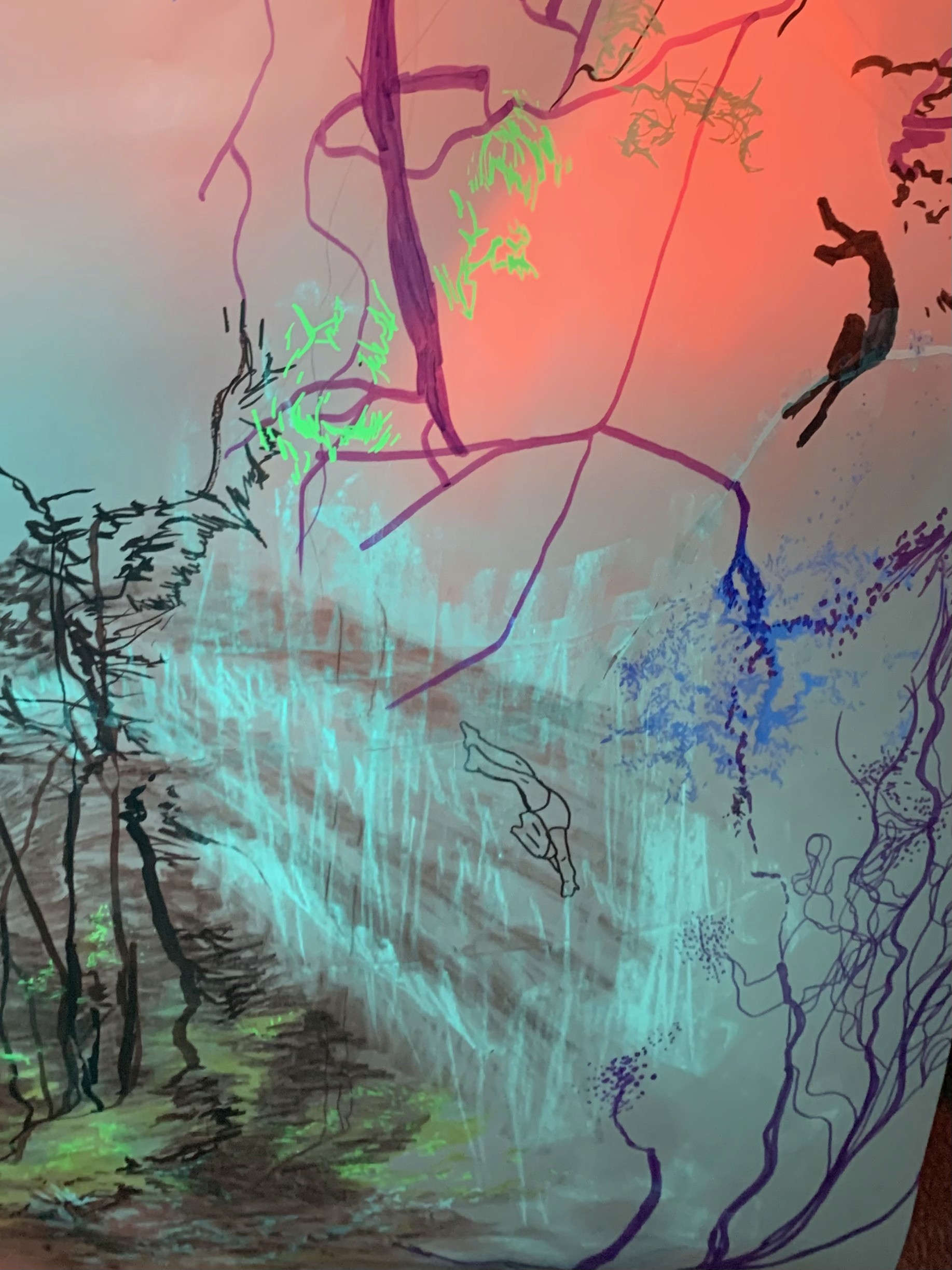
In terms of the work’s sonic elements, after much discussion concerning both the sound material and the structure of the piece over time, Gavin and Cameron created three sections: one section (by Gavin) is based on recordings from around the Tame, augmented by musically pitched sound. Another section, by Cameron, was primarily based on synthesising the sound of water from sounds of Alison drawing the river Juksei. These sounds were captured by literally recording the sounds of marks being made on the paper. A middle section of gestures and sound shapes was created by both Gavin and Cameron collaboratively. In the installation, the middle section is self-generating and therefore different every time it occurs. The sounds here are grouped into separate banks based on their characteristics. This provides some control over their resulting relationships, but exactly when and which sounds are called from these banks is decided by the system in real time, with new sequences and combinations continuously emerging. When creating the final installation, Cameron spatially arranged the sounds based on their sonic characteristics and their relationship to the environment. The result was three stereo sound points, at three different heights and positions in the space from which environmental and electronic sounds emerge.
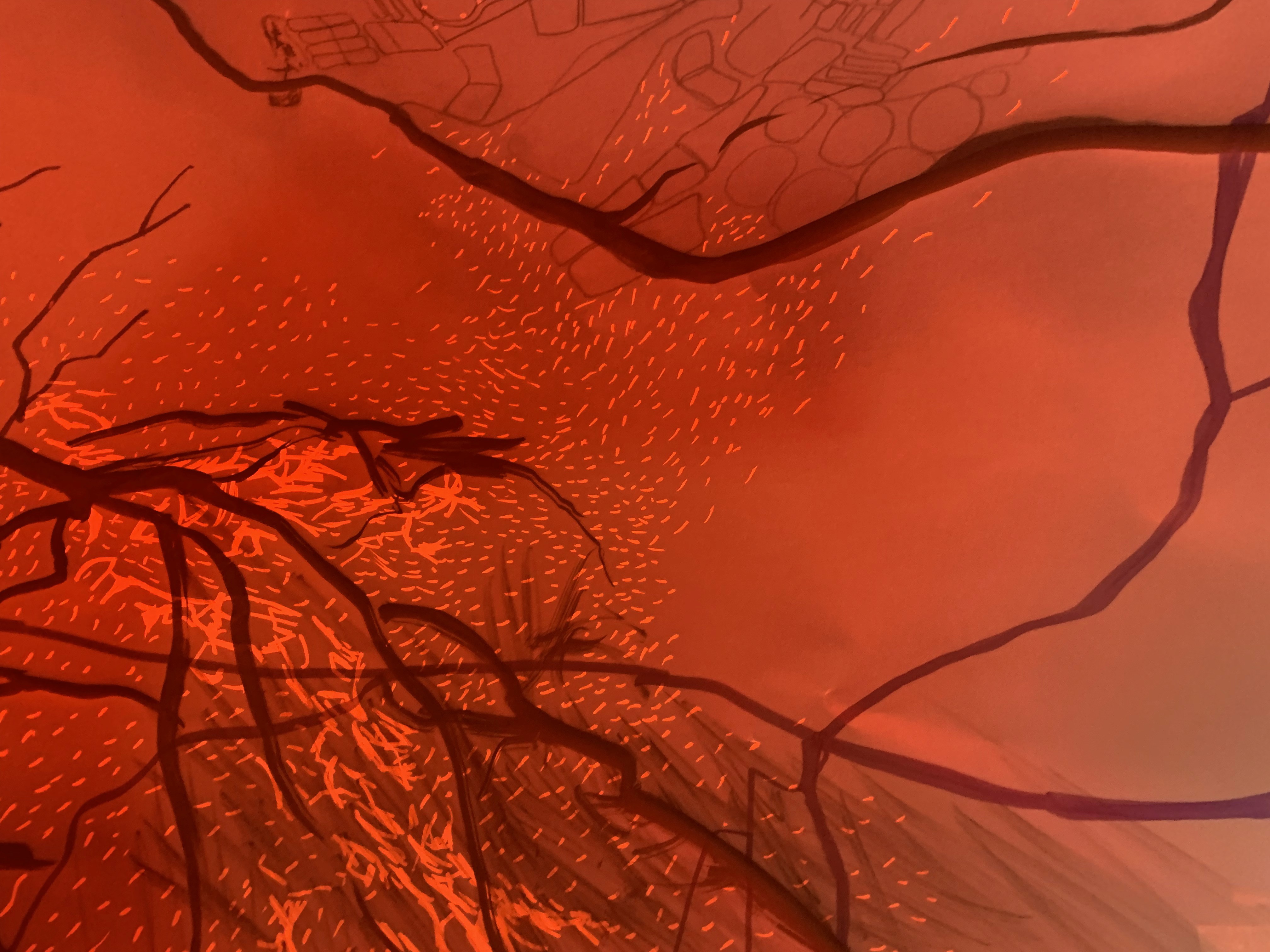
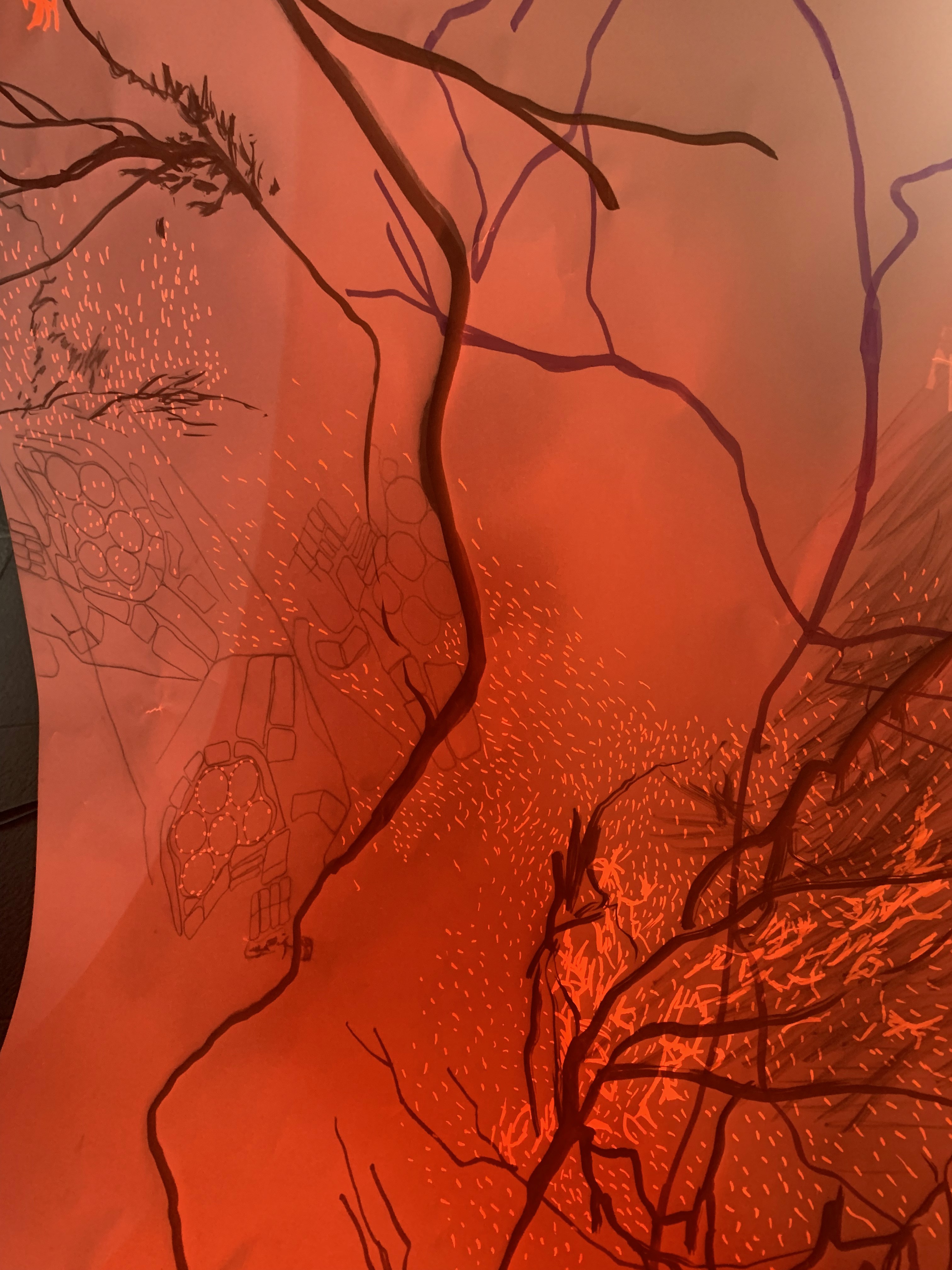
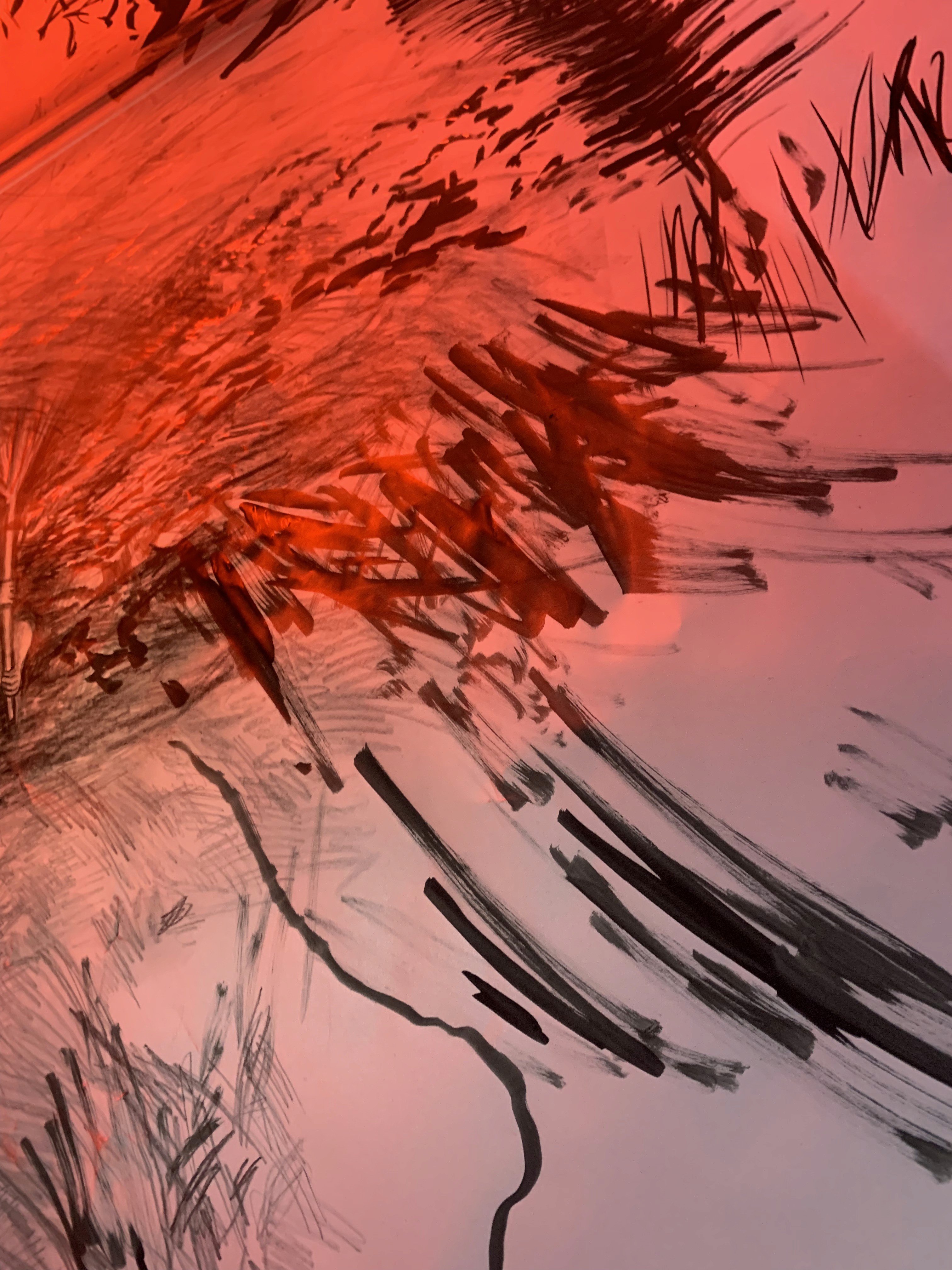
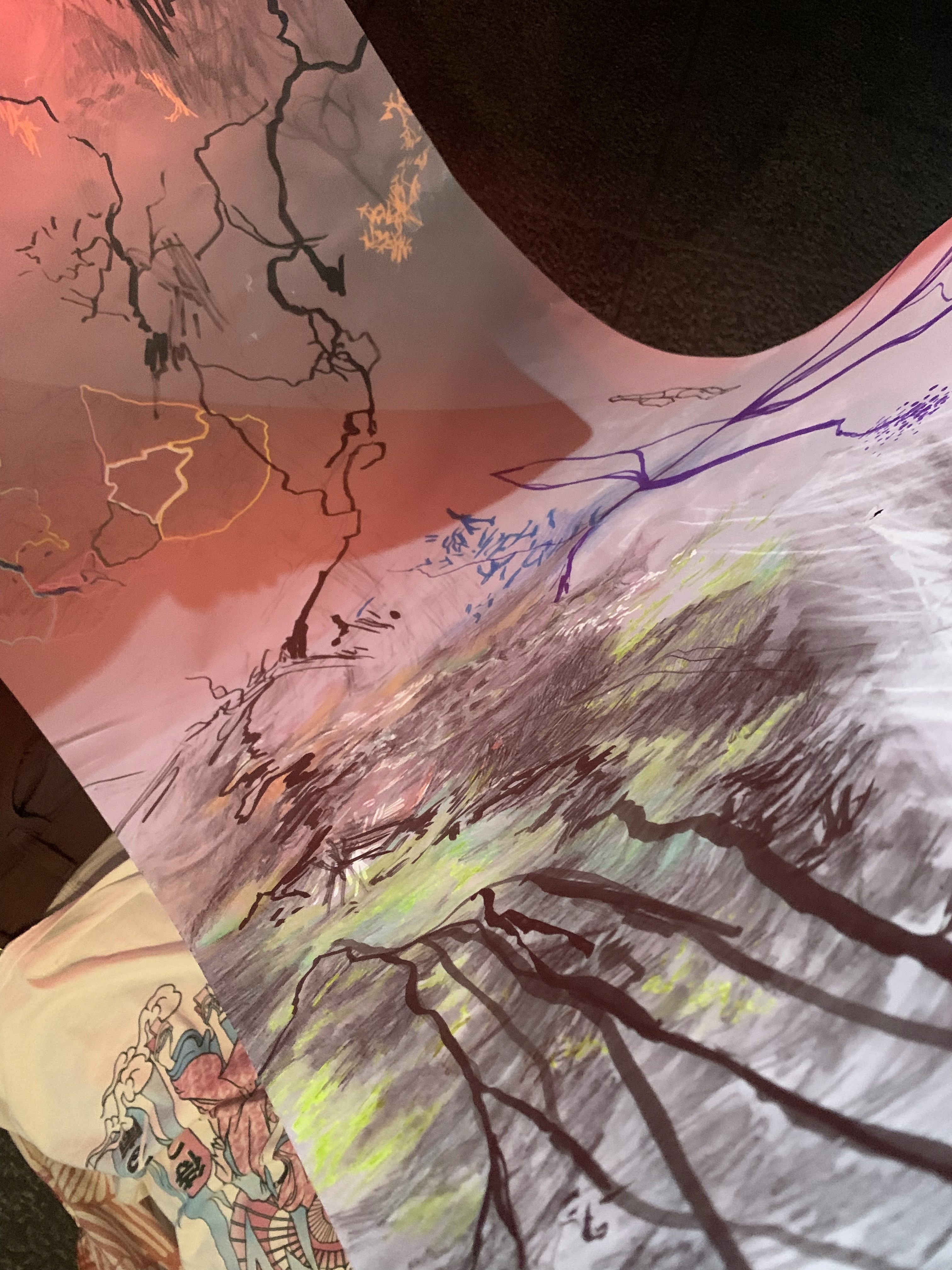
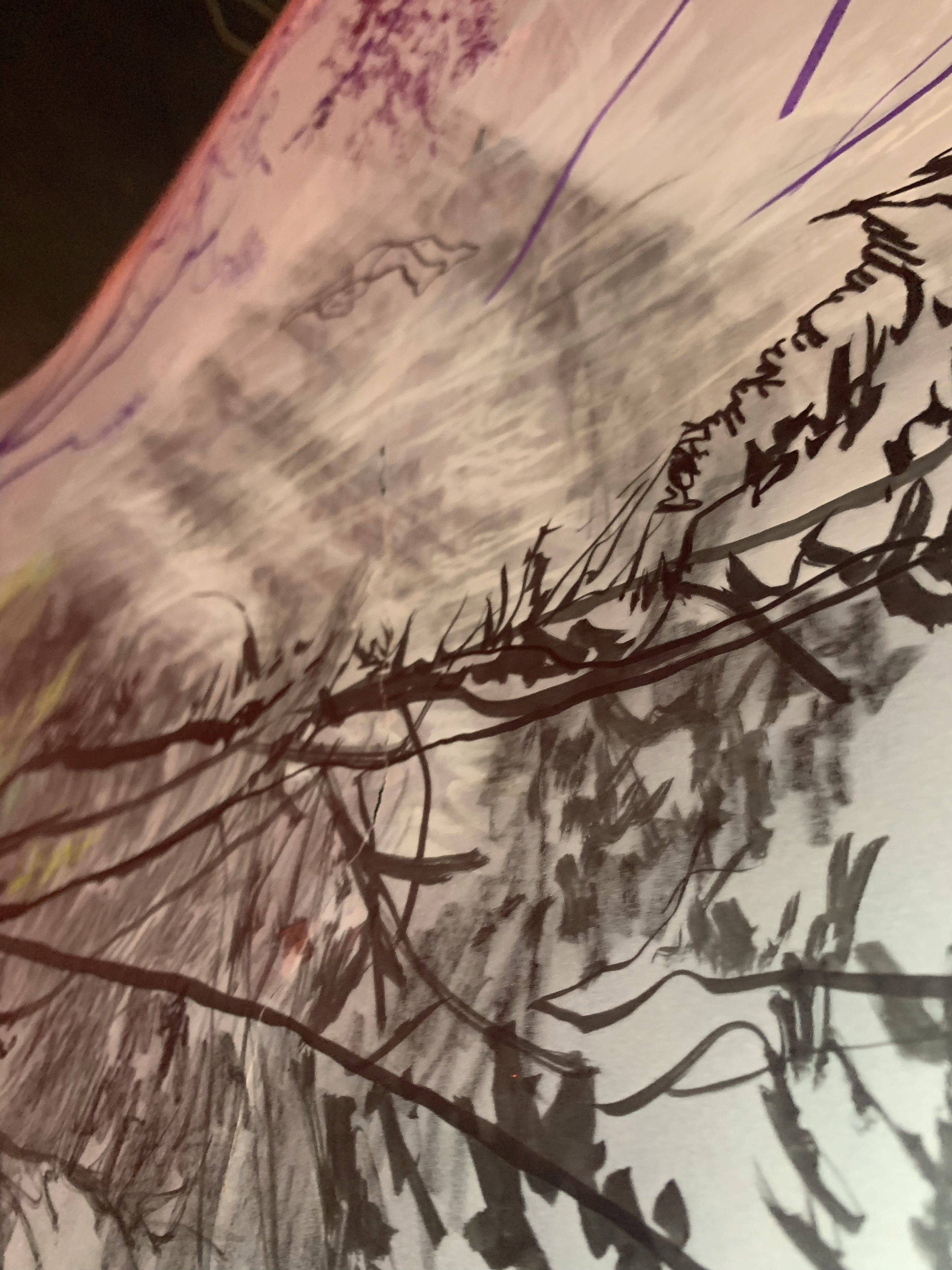
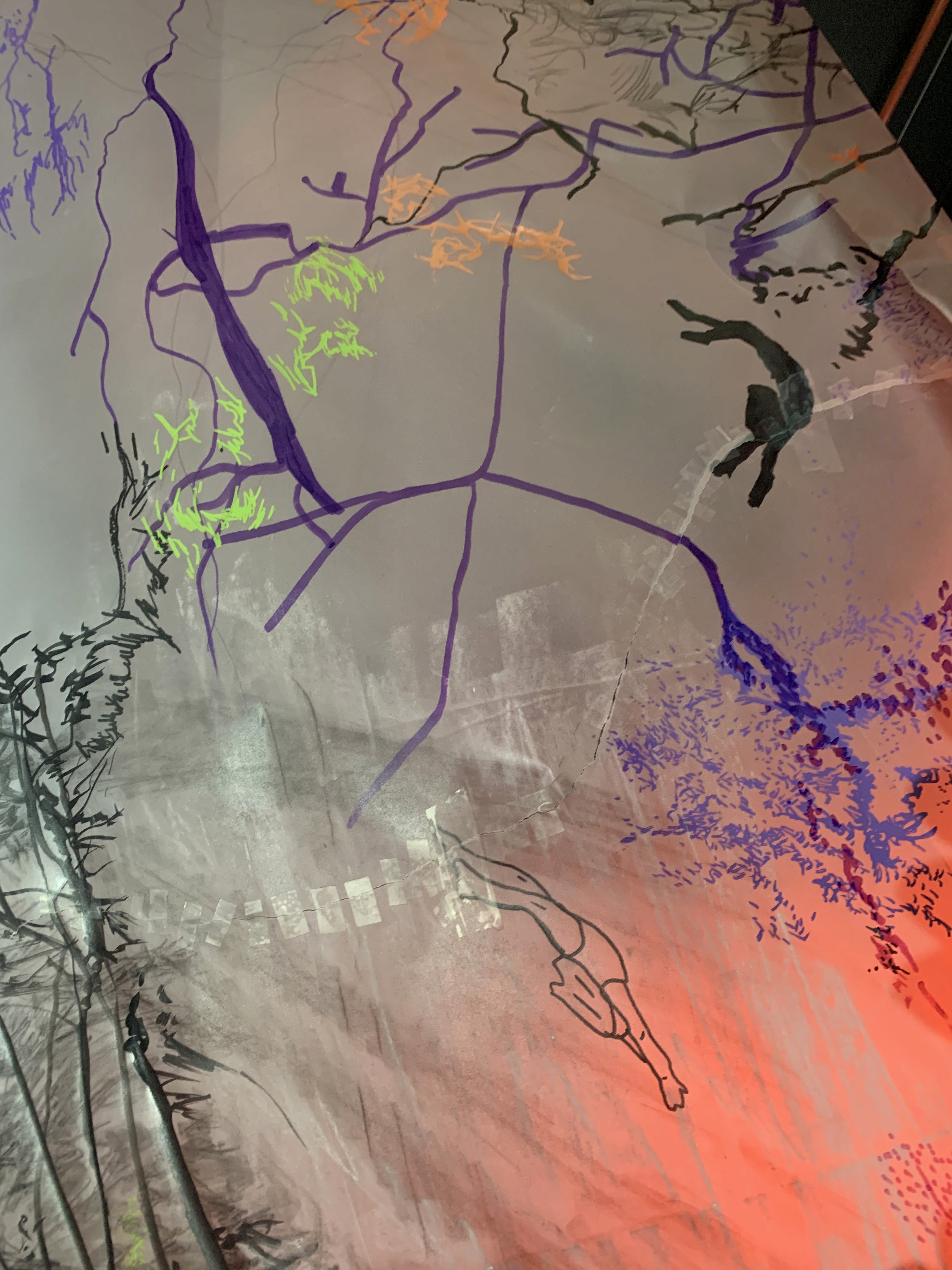
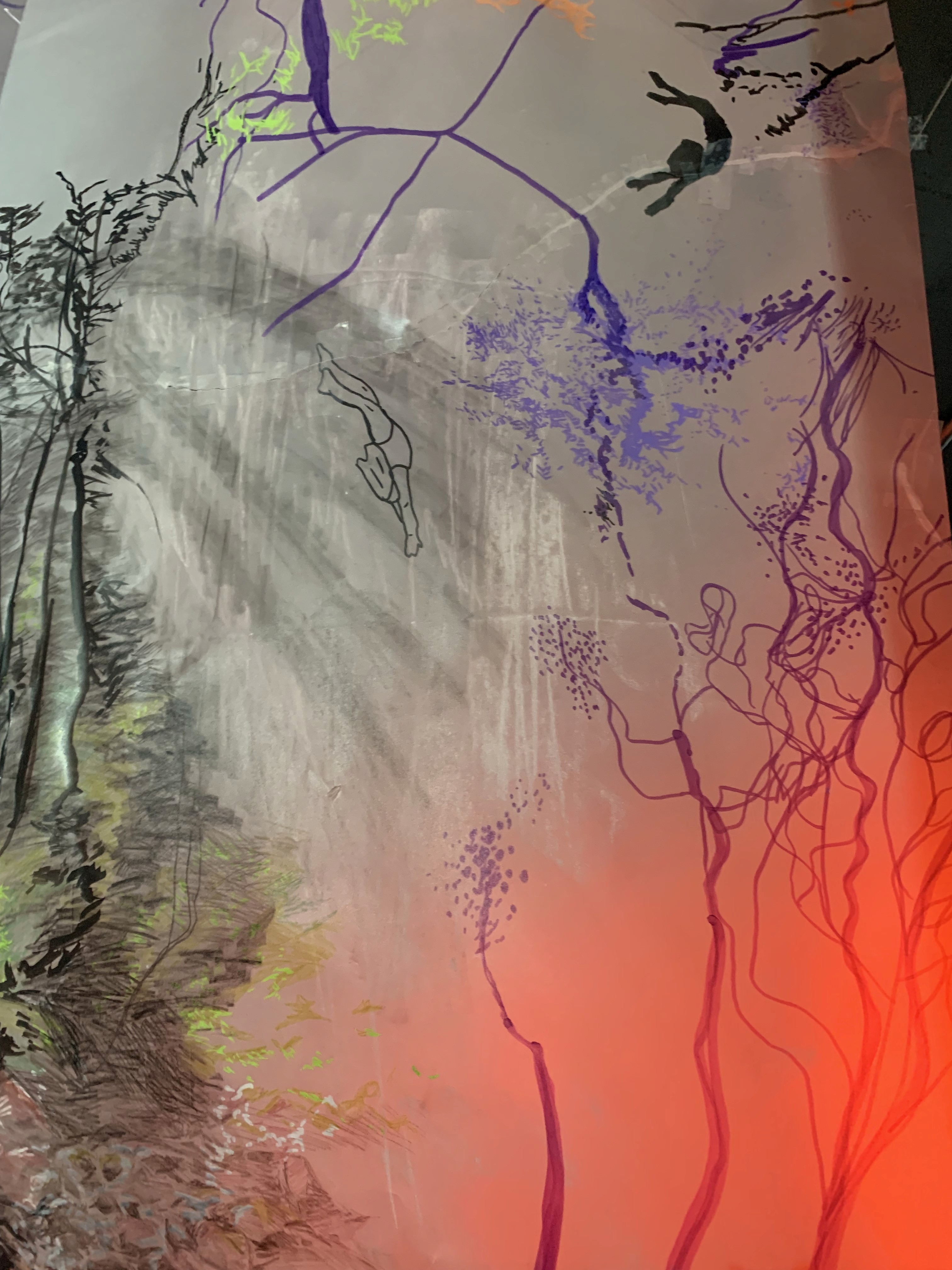
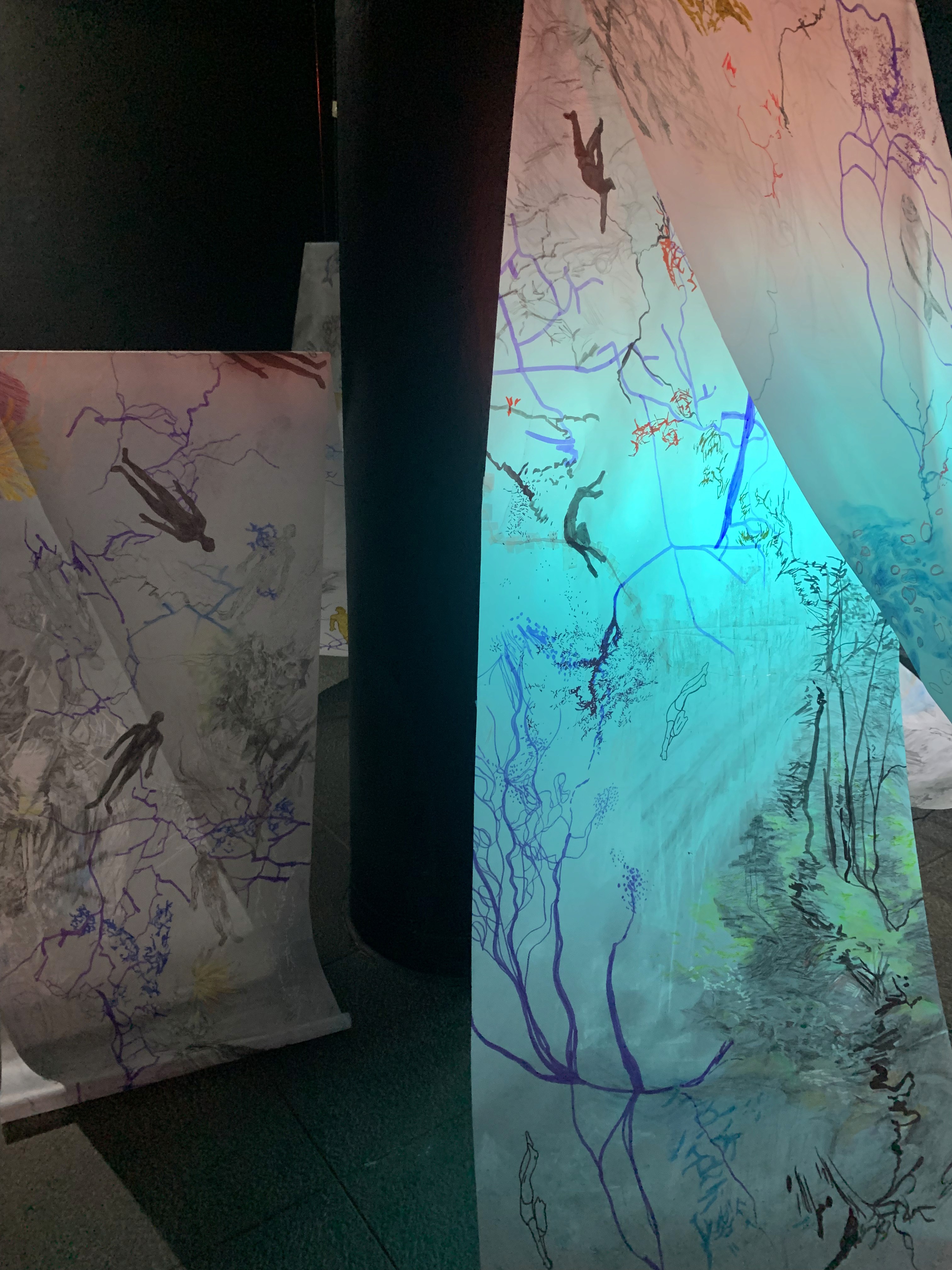
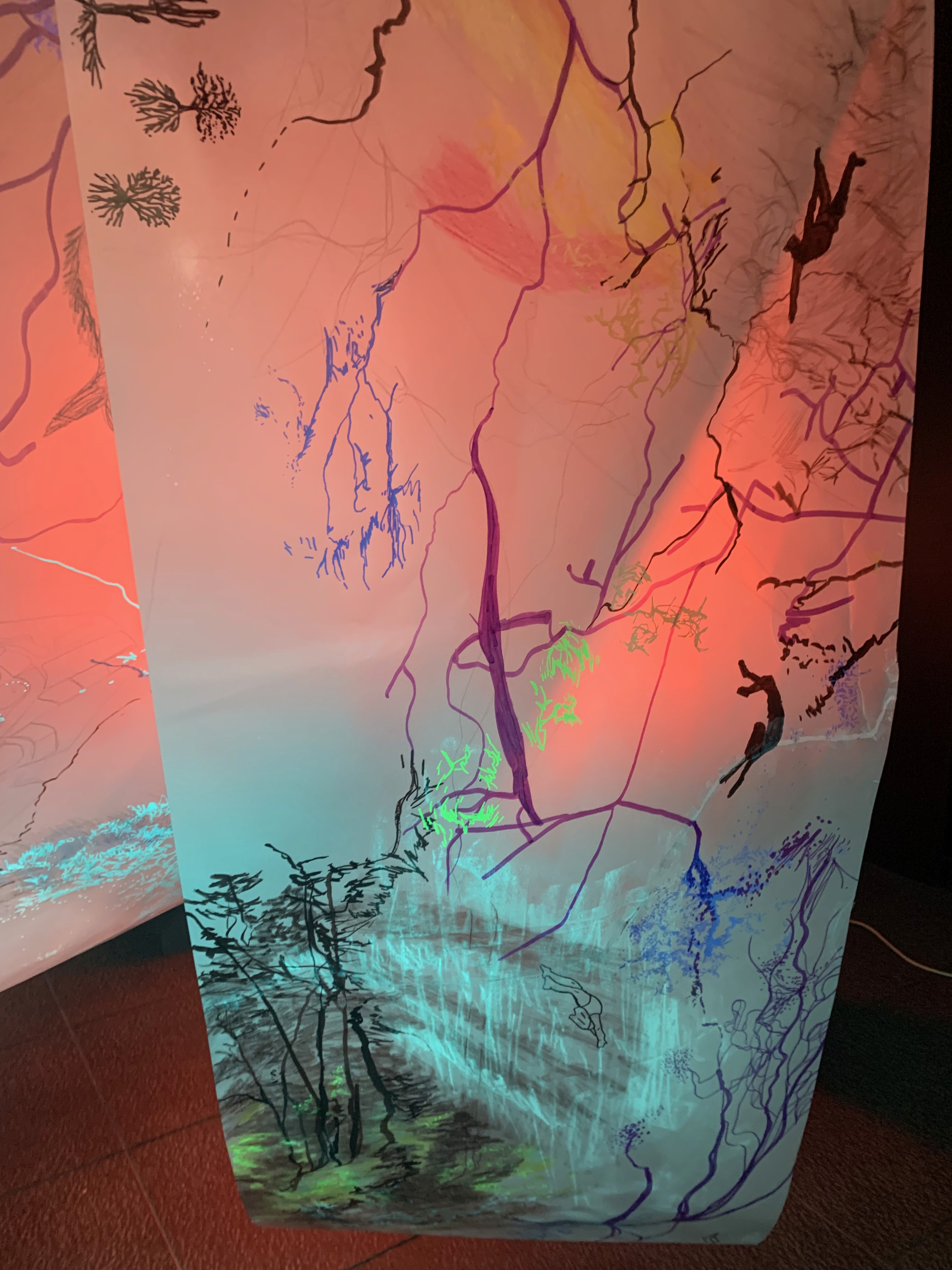
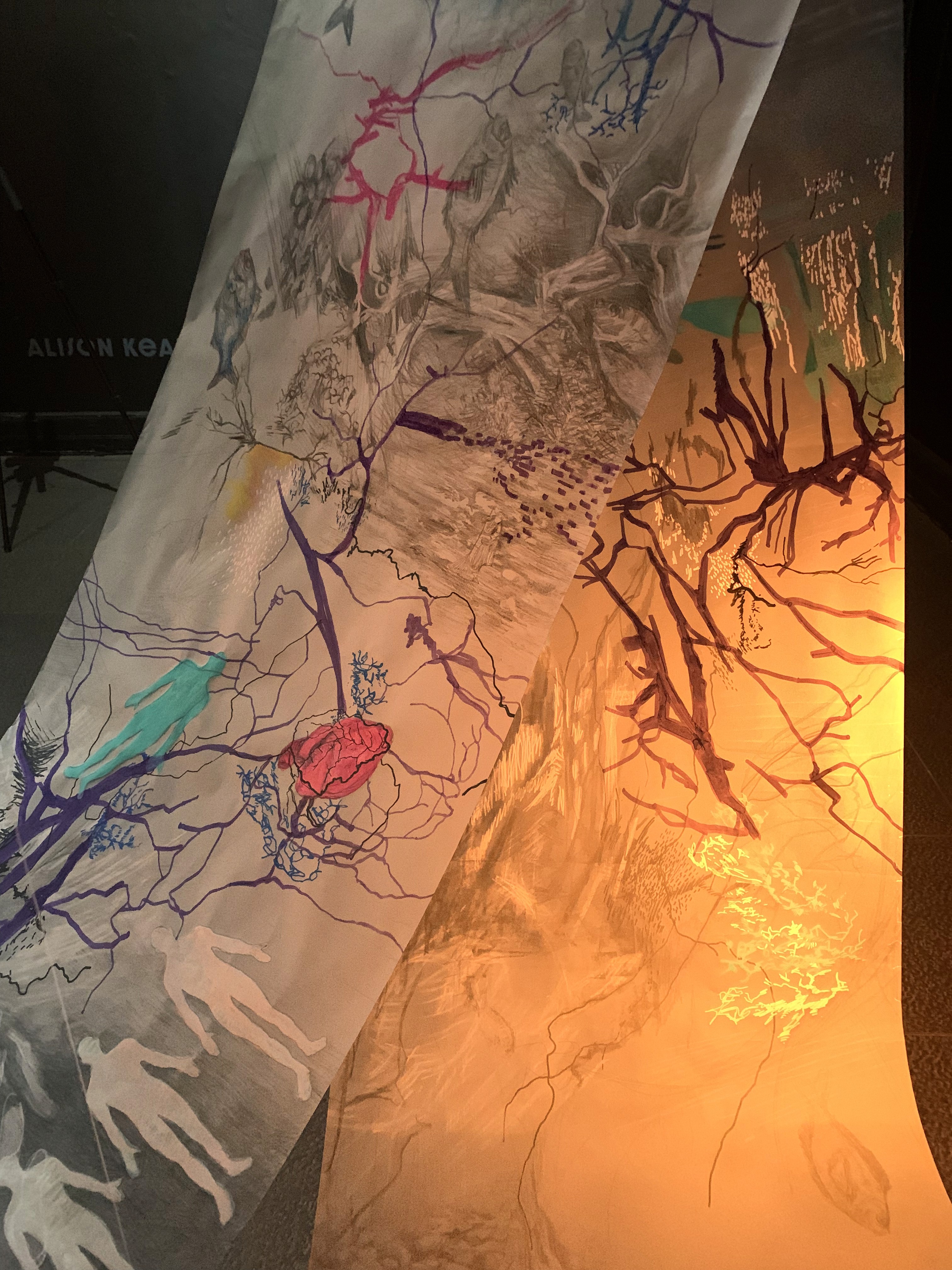
Confluence (2025) is a landscape-like immersive space where the sounds are partly mimetic and directly representative but also attempt to respond to, rather than shy away from, the disturbing aspects of the current riverine environment. For example, the mounds of plastic found across the Jukskei’s course and the drownings that occur far too frequently along it. Furthermore, the state of this river could well be considered a metric of coloniality both past and present, as its access, use, and the circumstances of those who live their lives along it, from gated communities to informal settlements where the inhabitants have no choice other than to add to the river’s pollution due to lack of services, are all bound up in the history of the land.
See www.soundartjourneys.co.za for more.
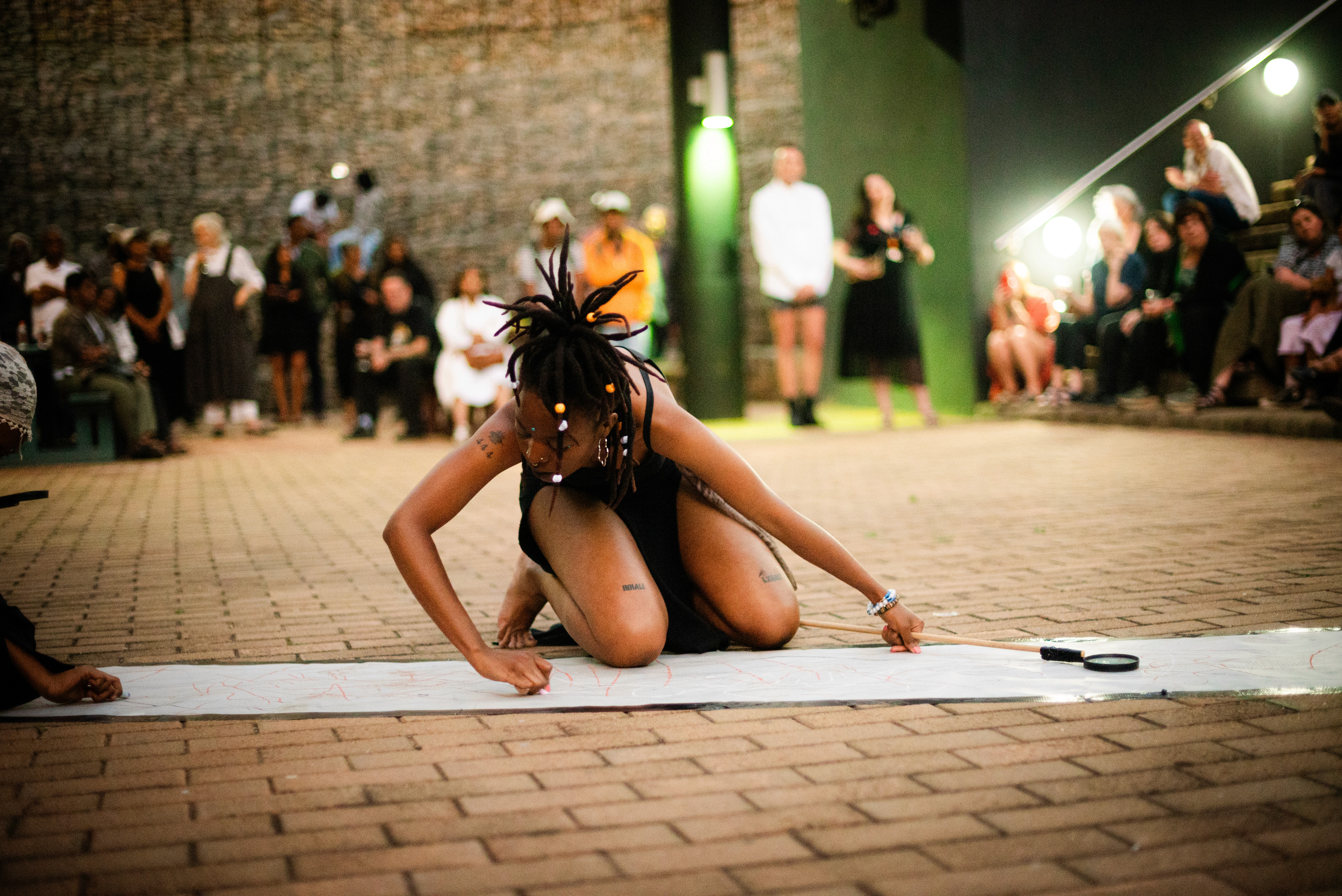
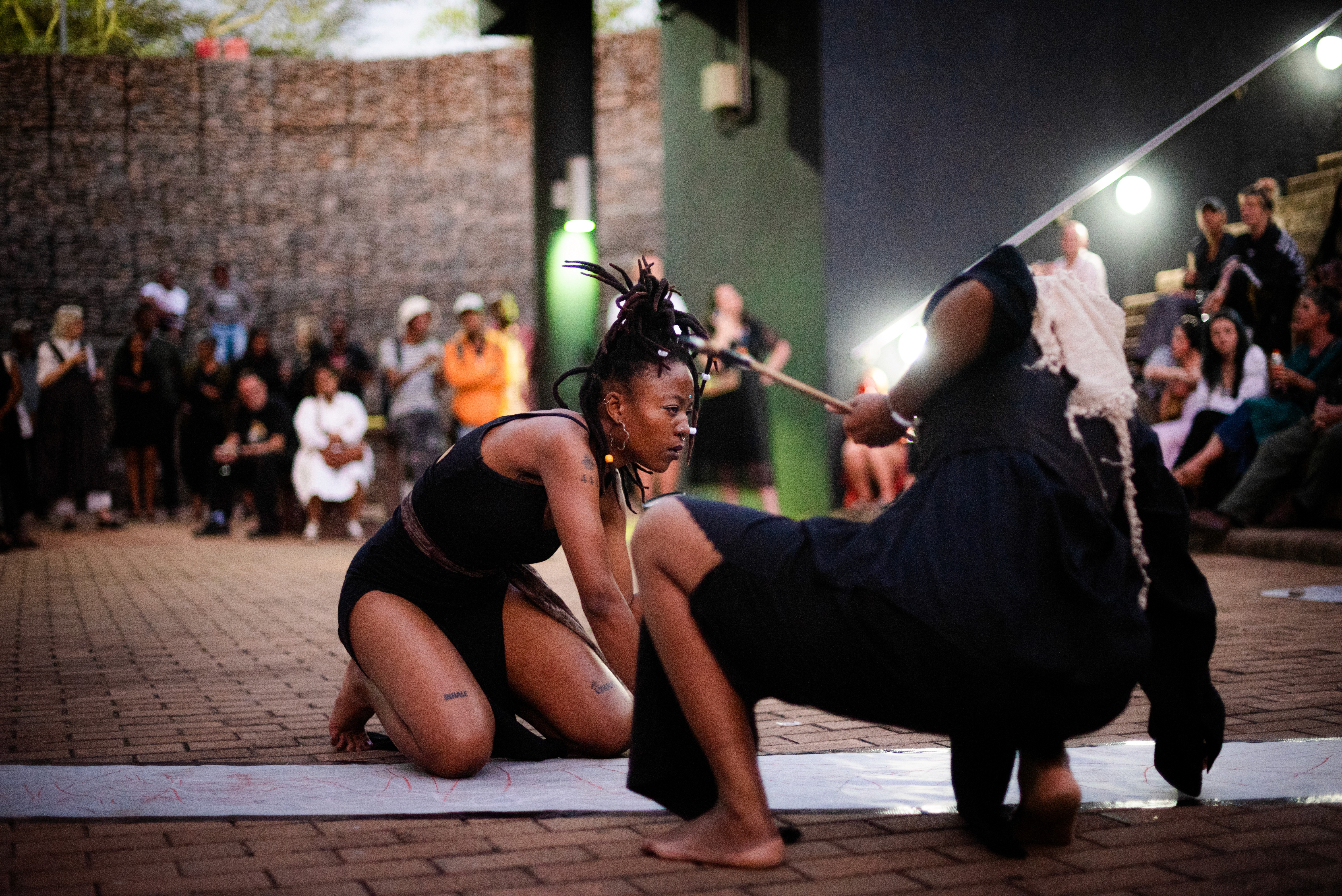
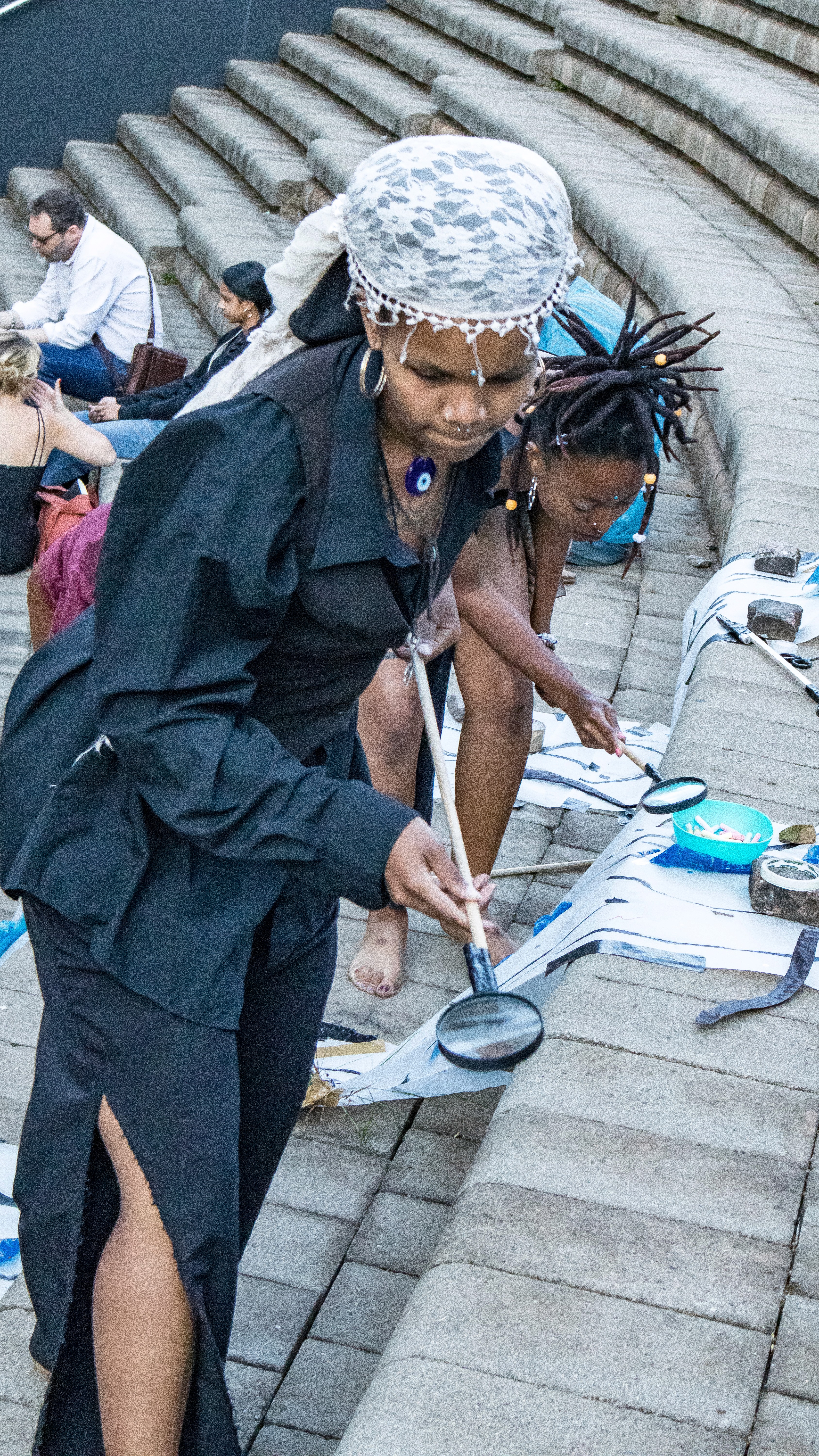
To accompany Confluence (2025), Cameron Harris and I developed an interactive sound-art performance work, titled The Sound of Drawing (2025) with performance artists Natalie Maqelepo and Nqobile Mkari. The work was performed on the opening night of “Impact is a Verb” curated by Farieda Nazier, FADA Gallery, 16 September 2025.
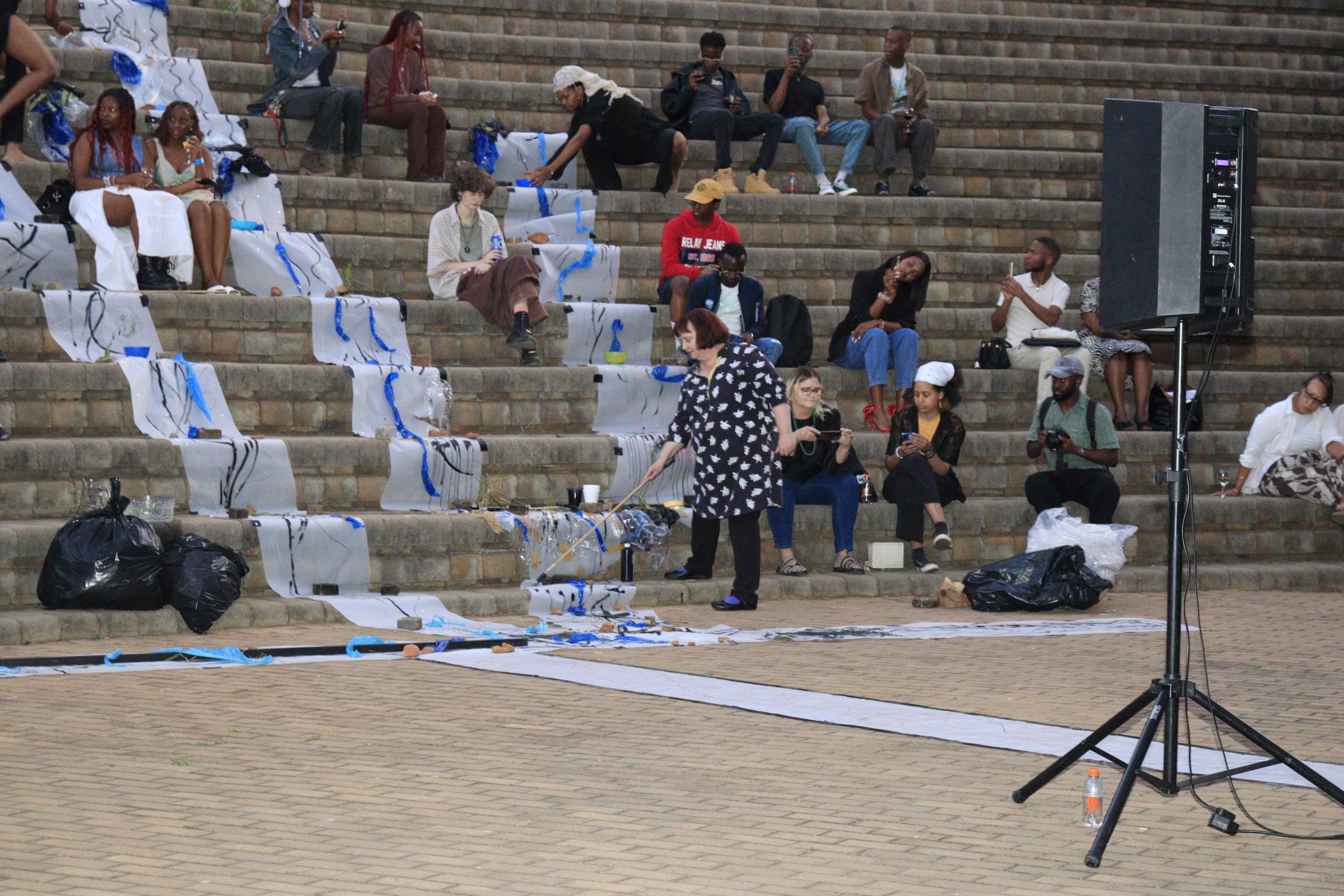
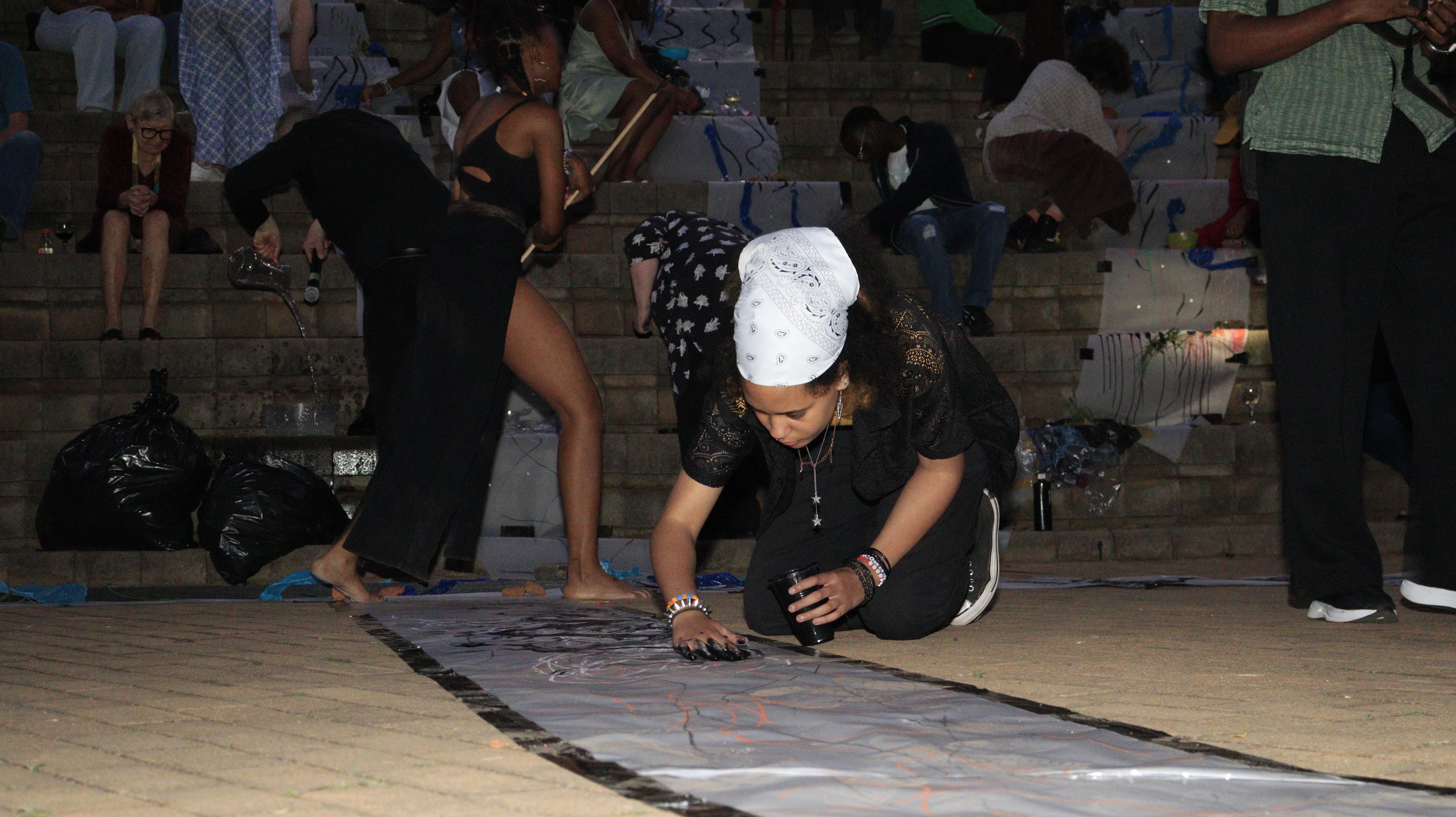
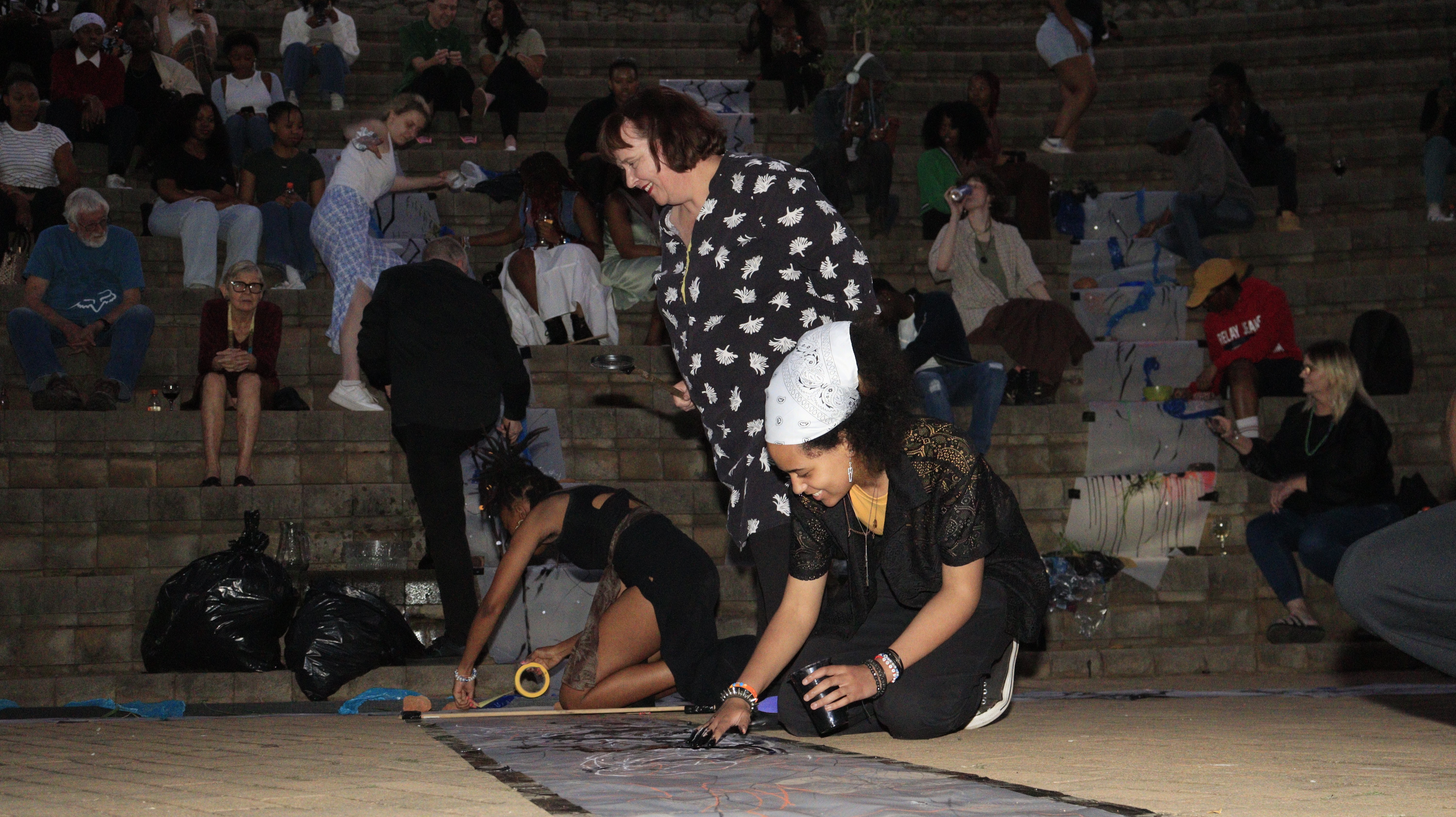
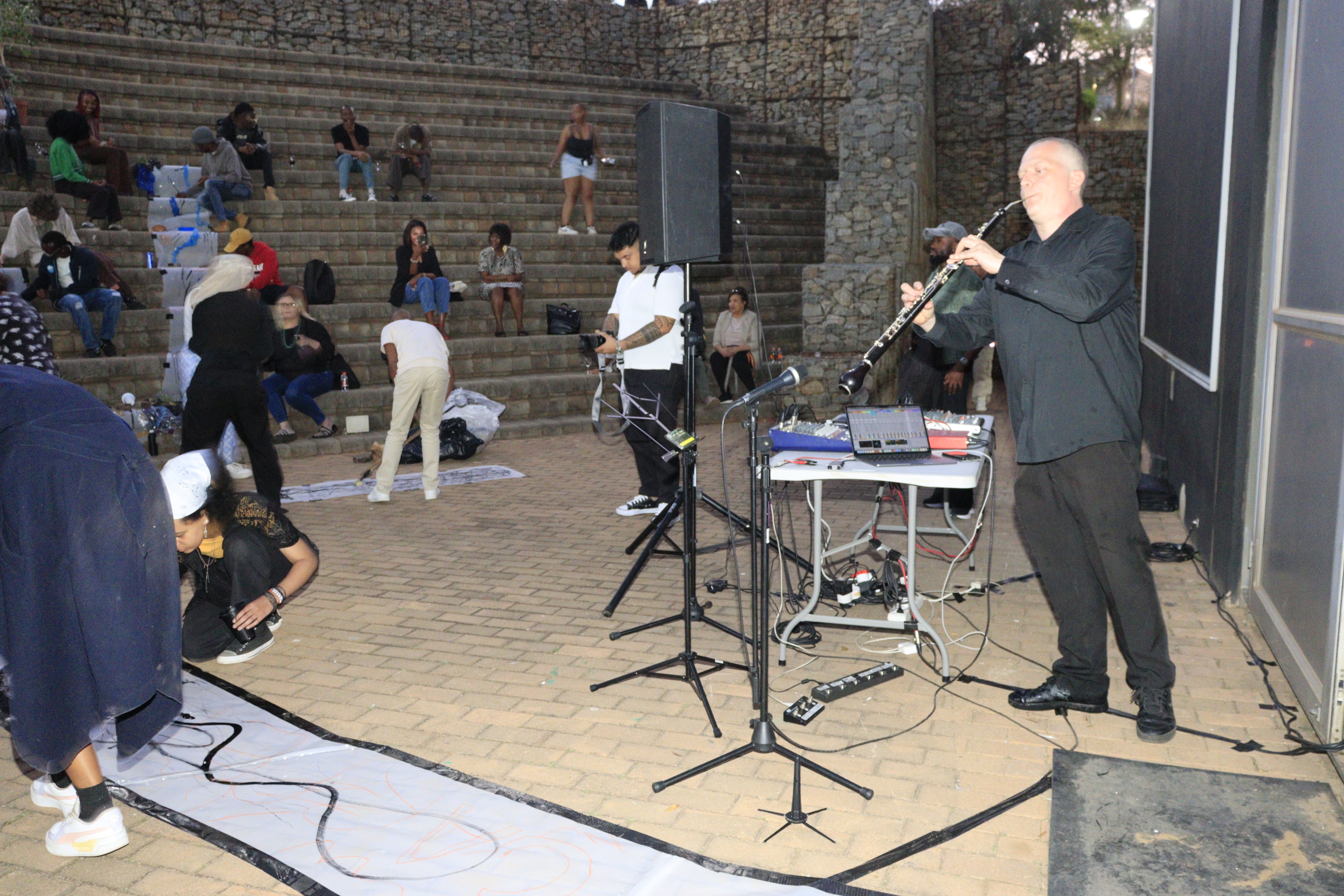
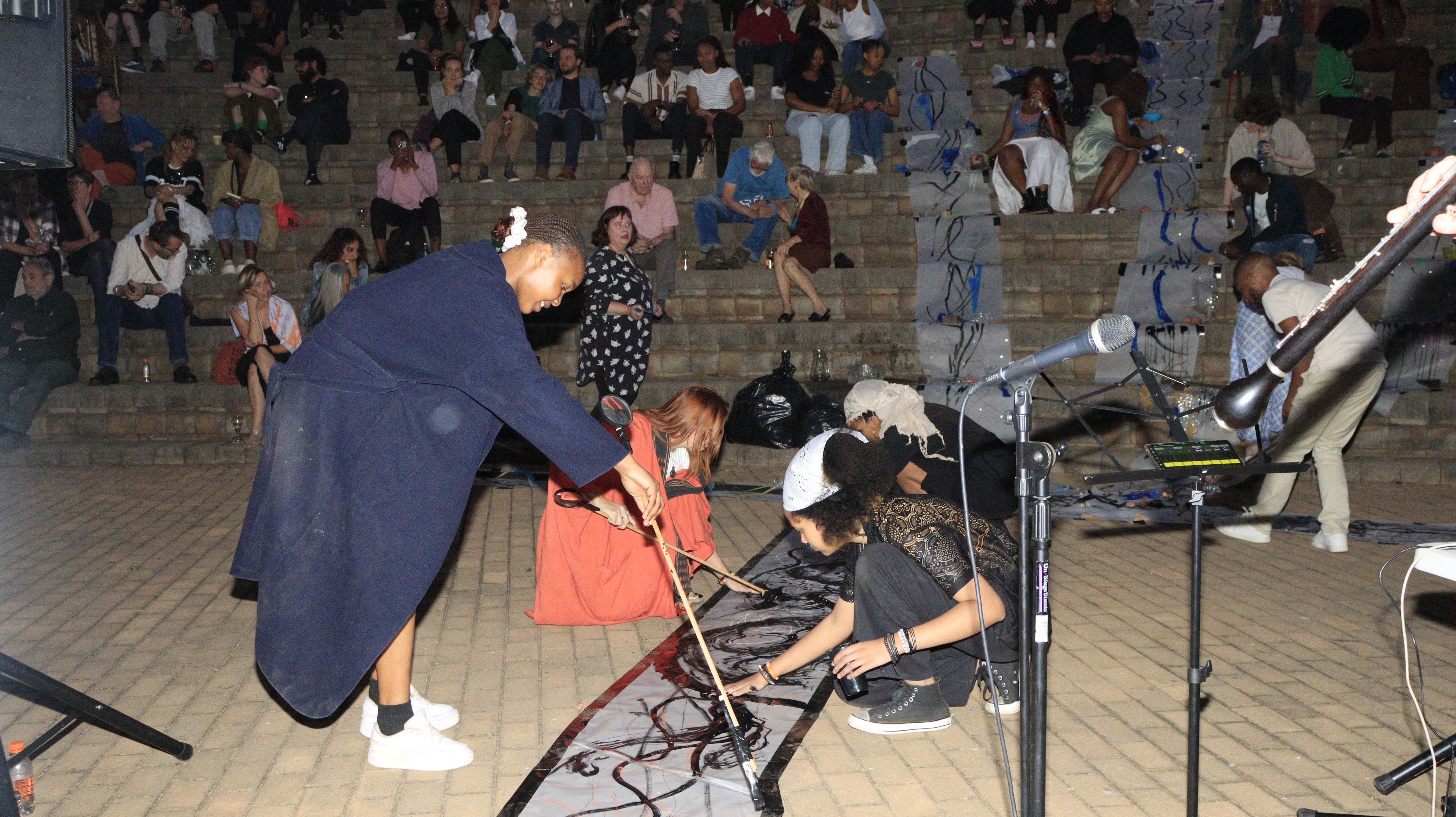
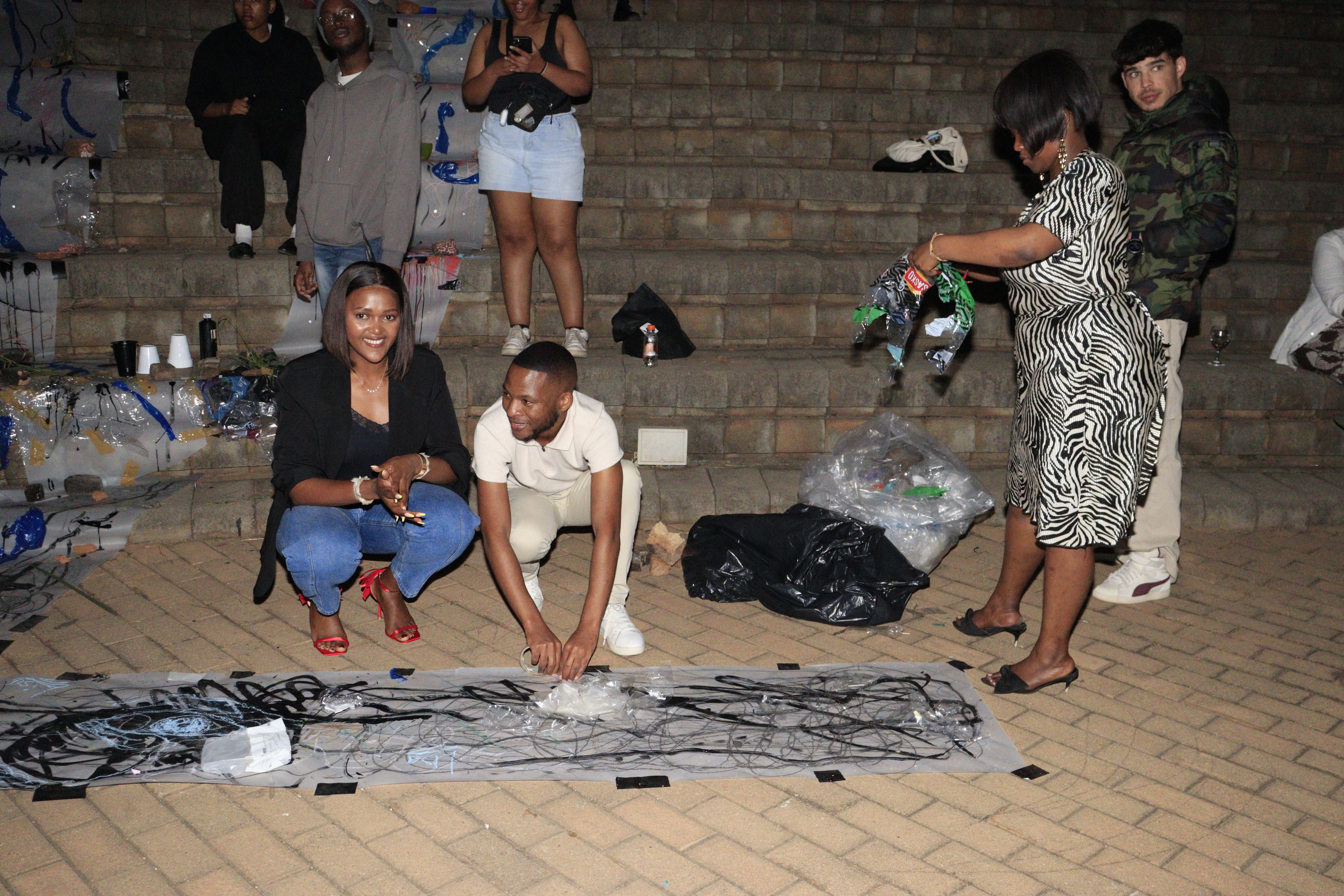
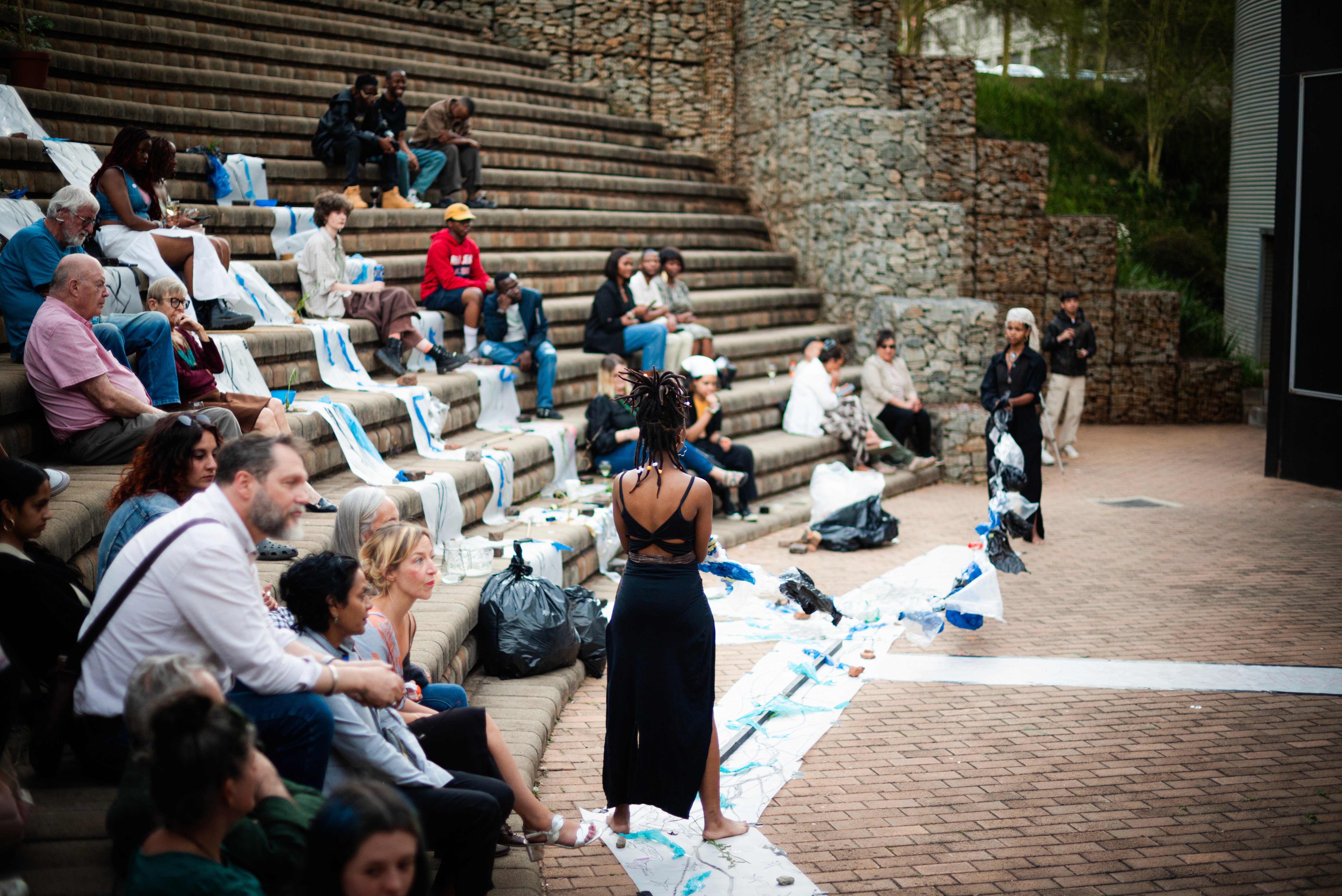
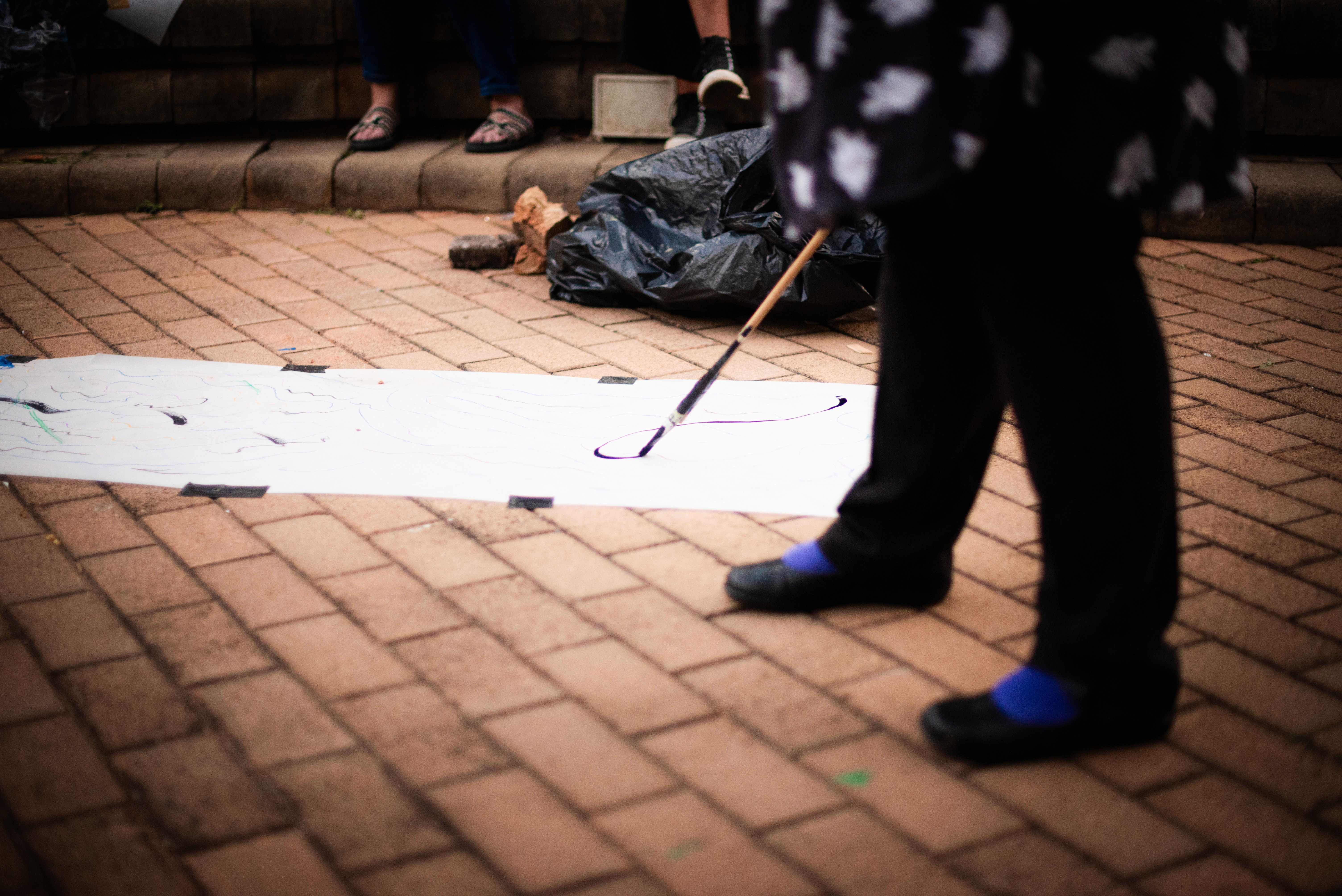
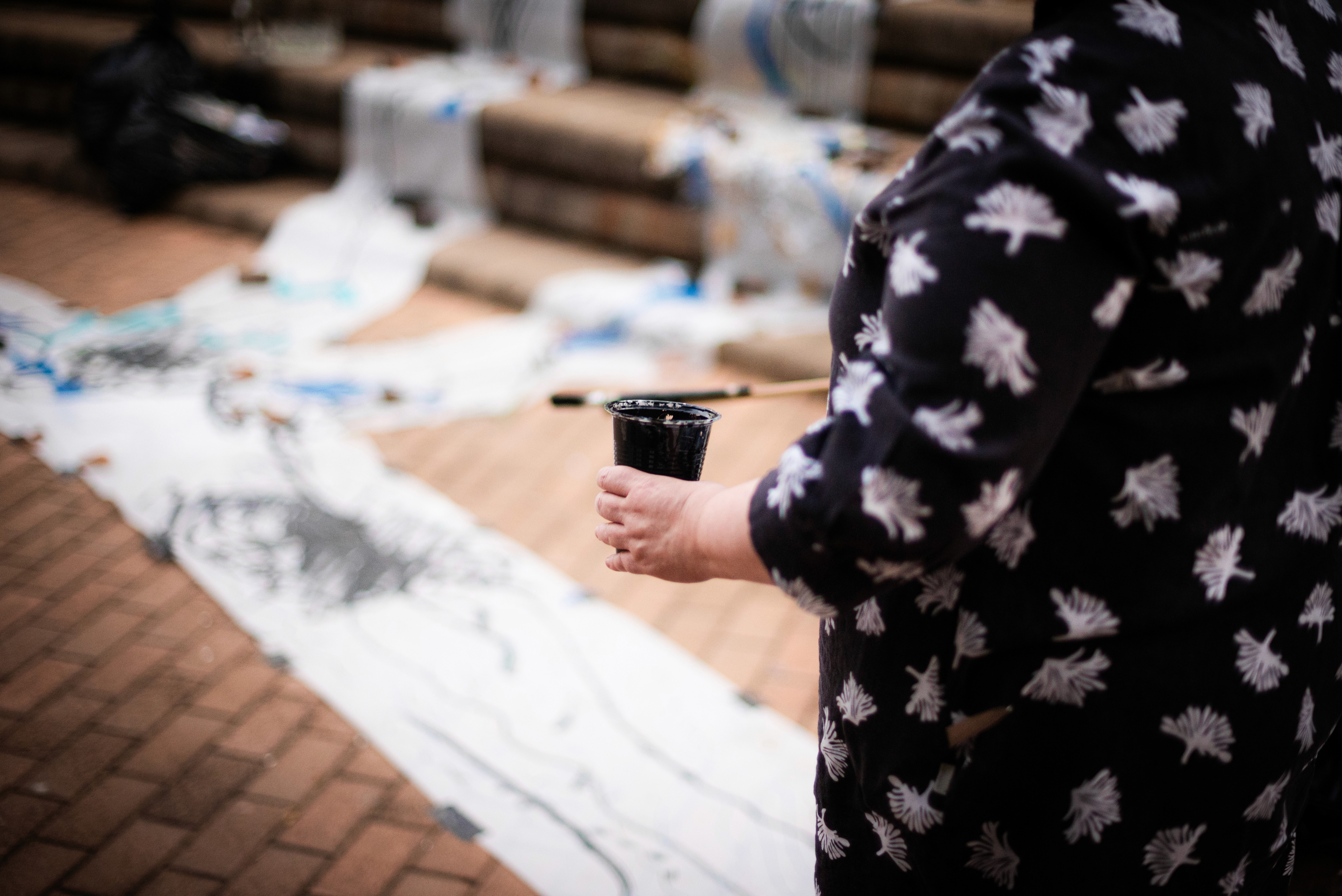
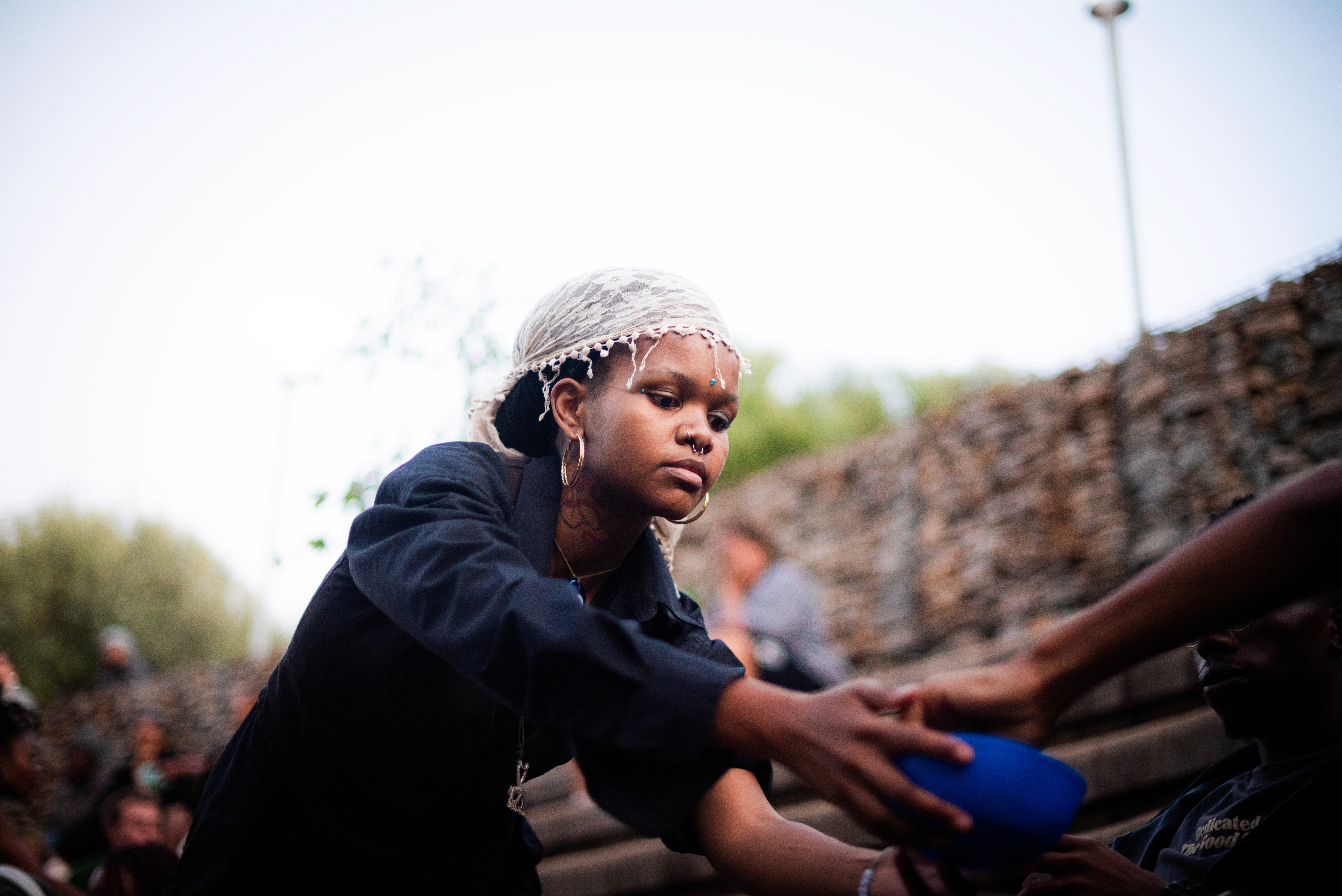
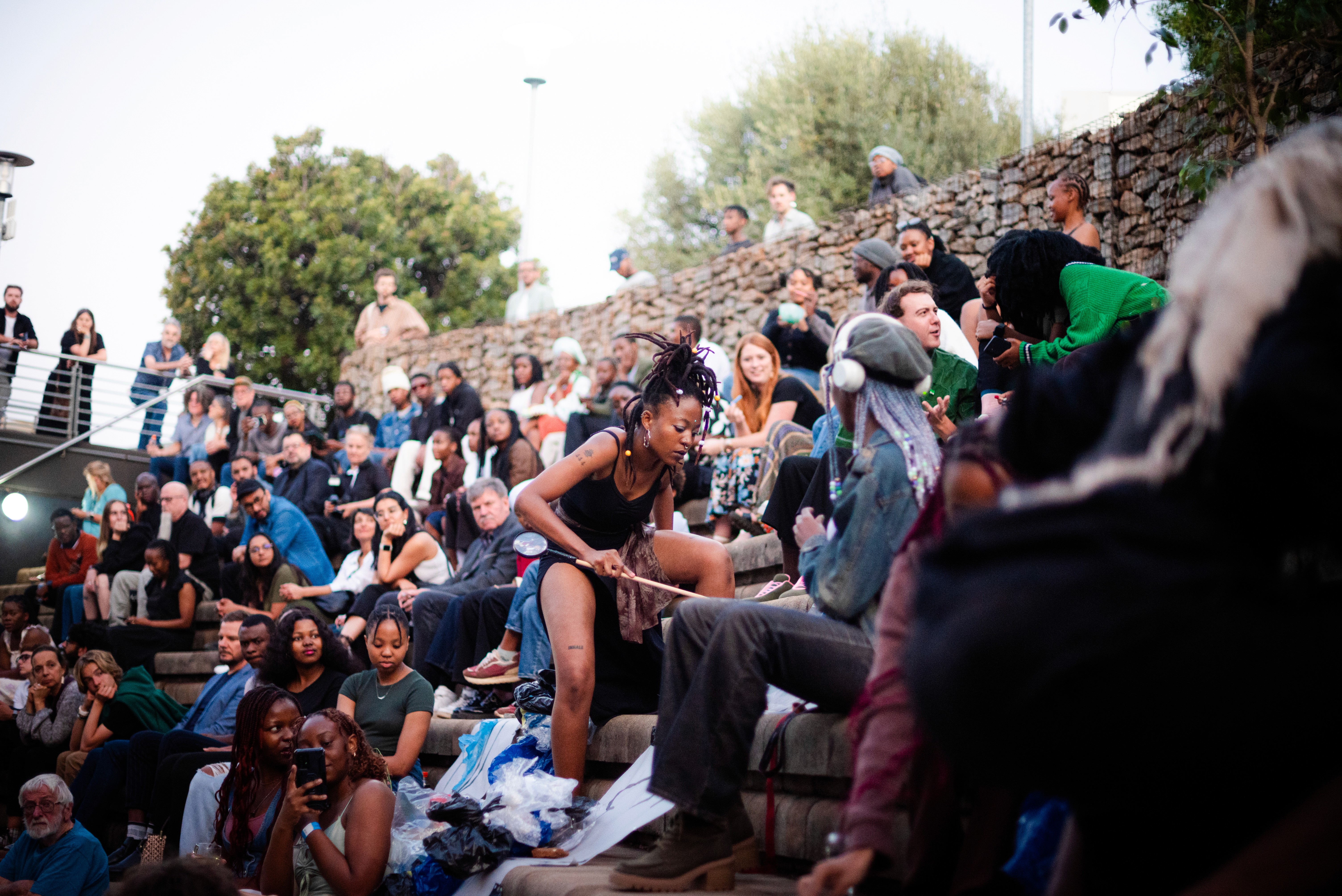
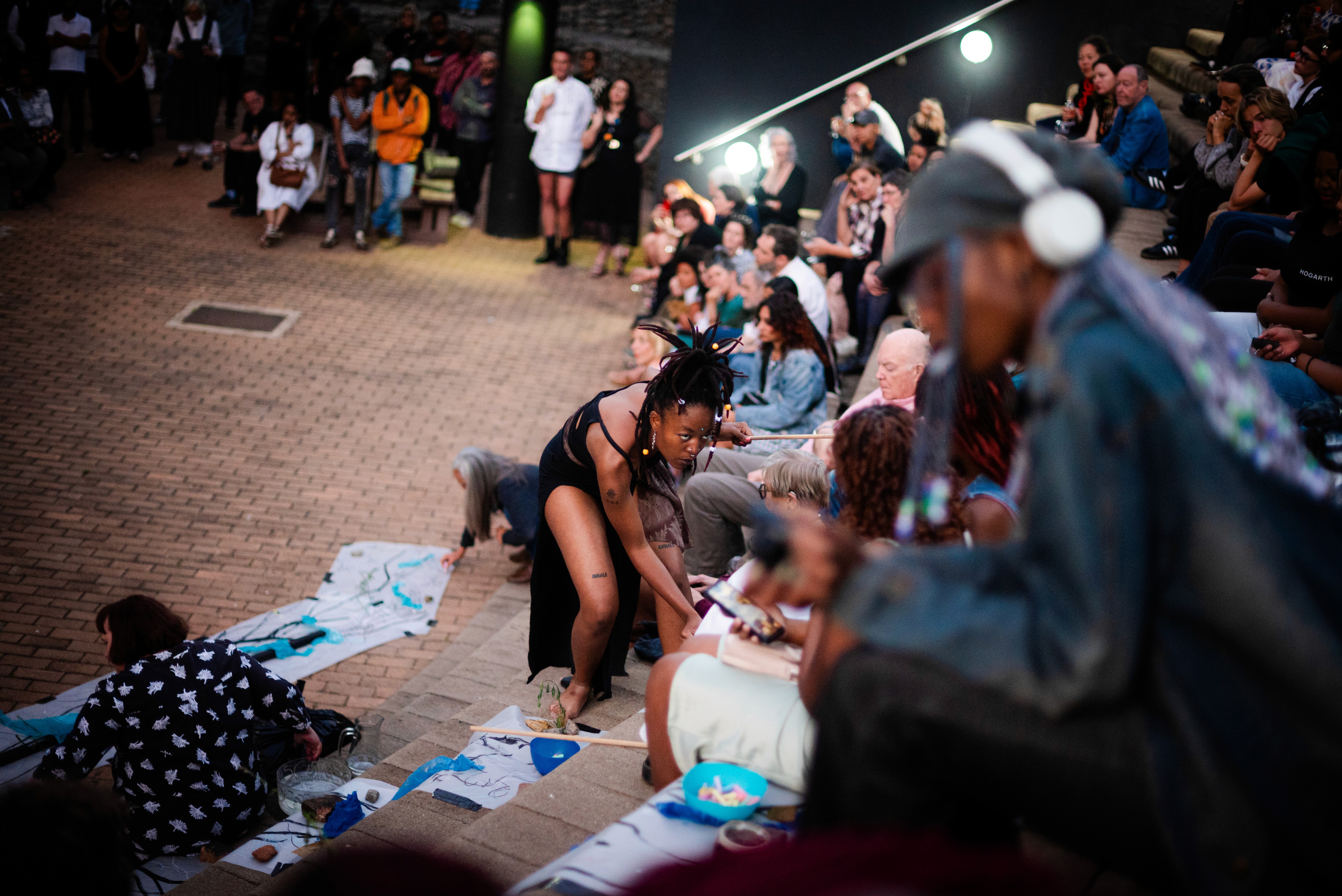
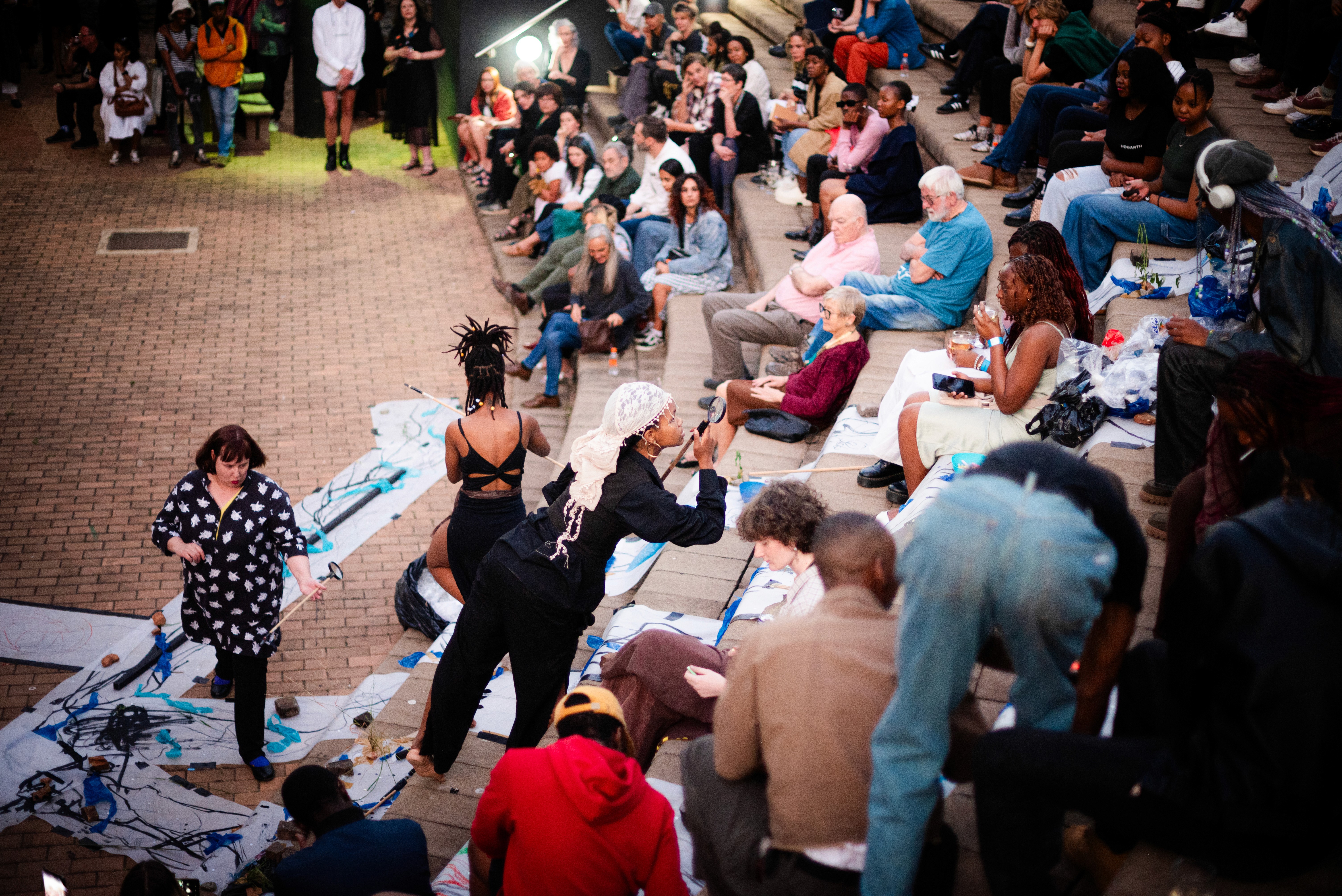
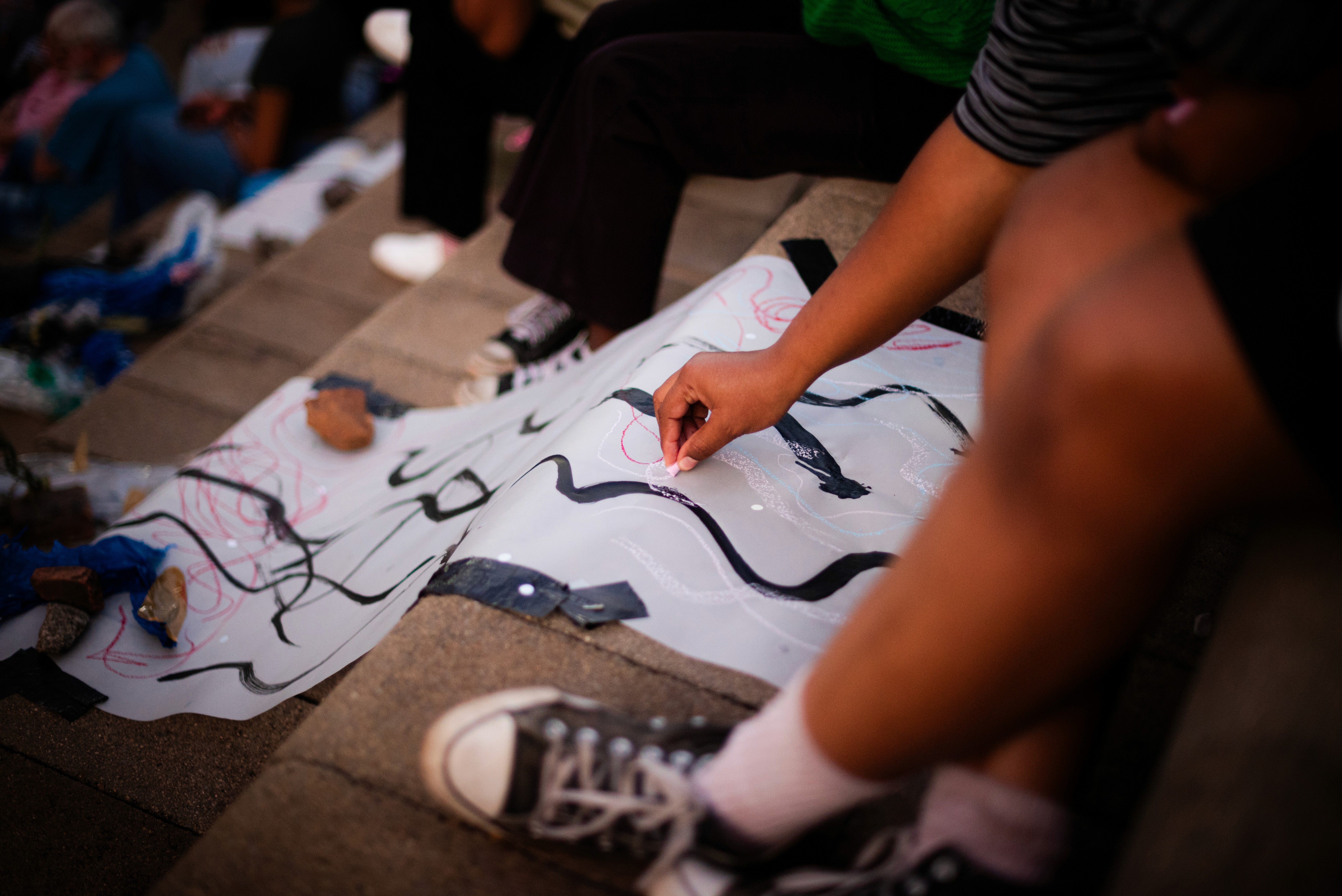
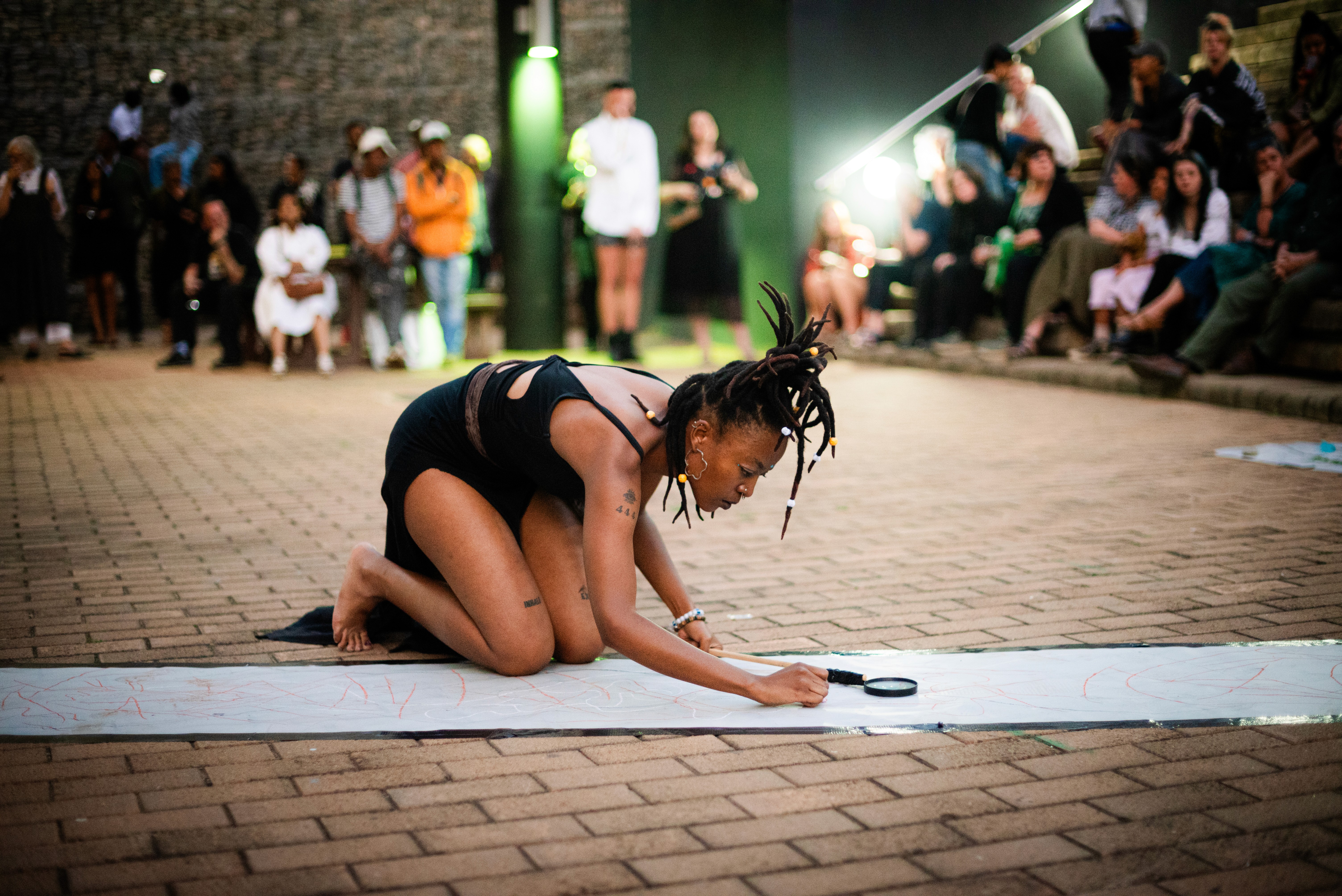
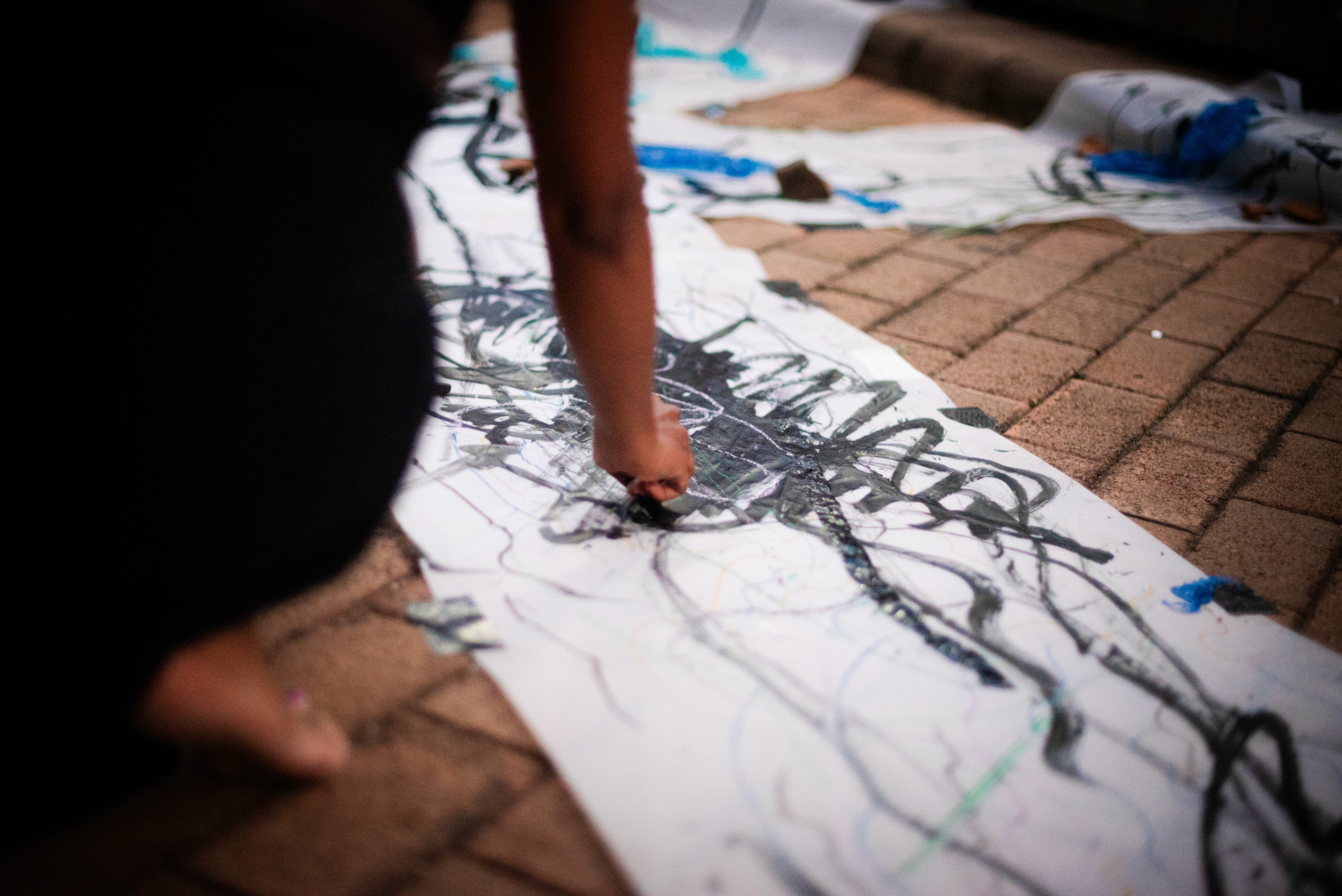
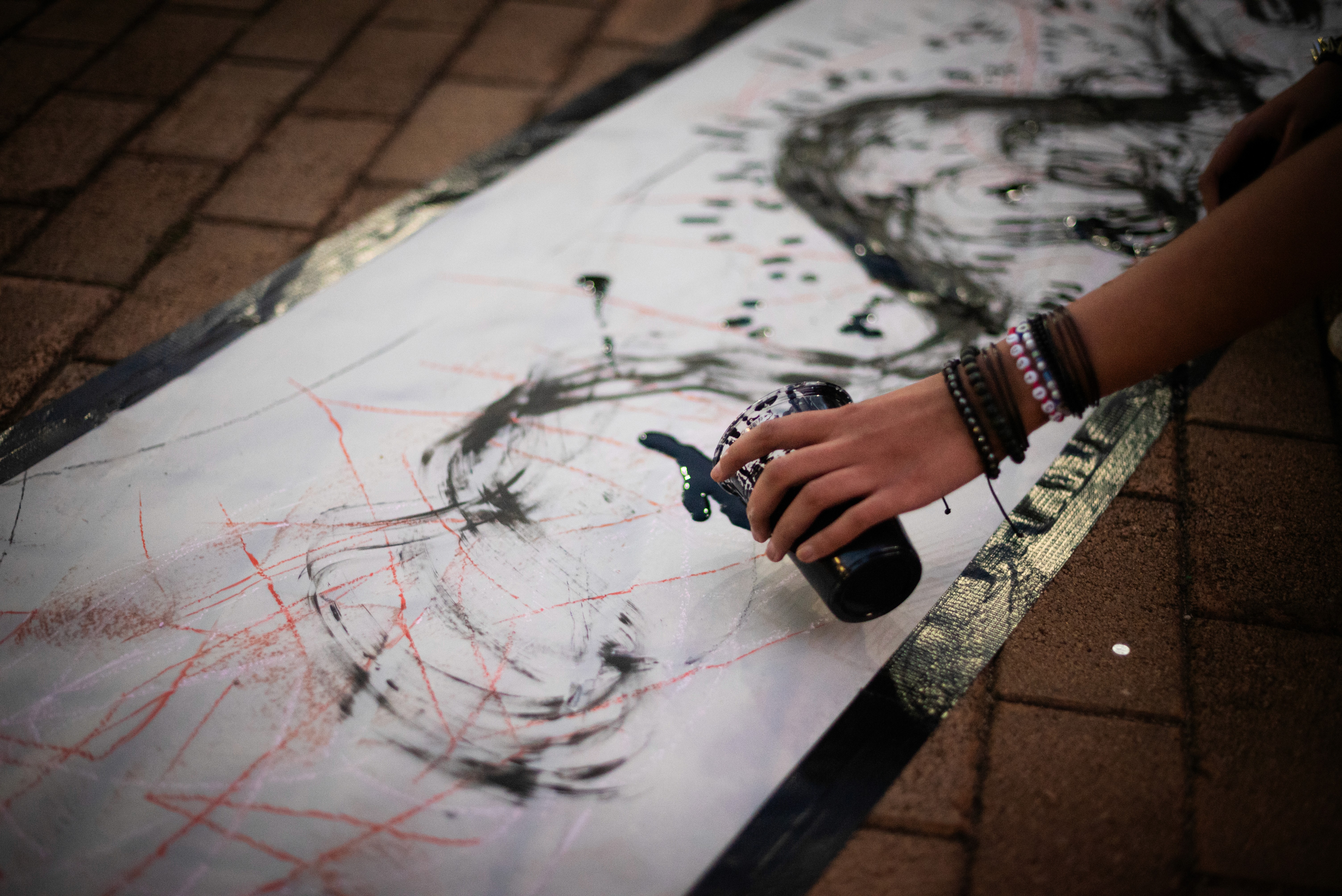
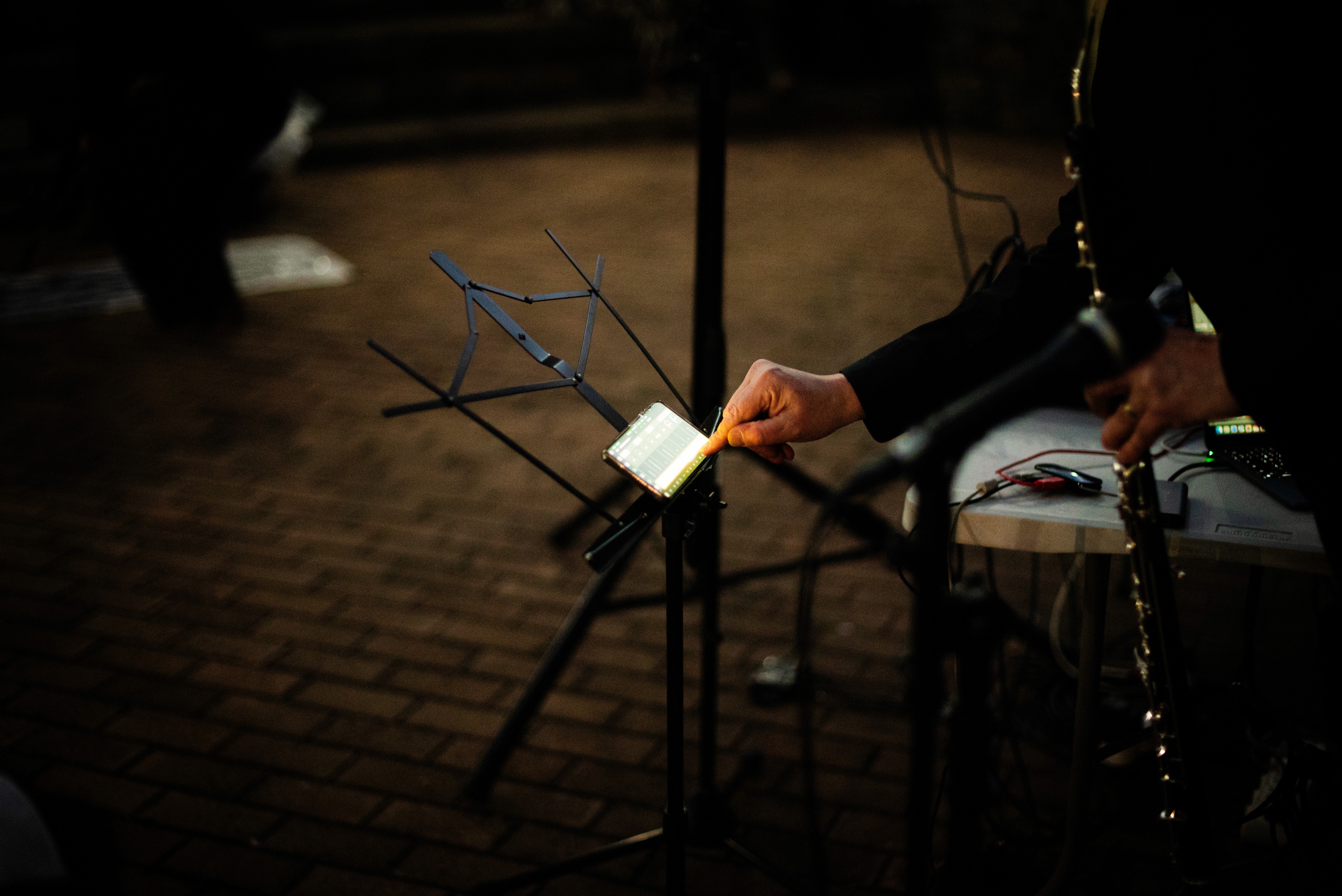
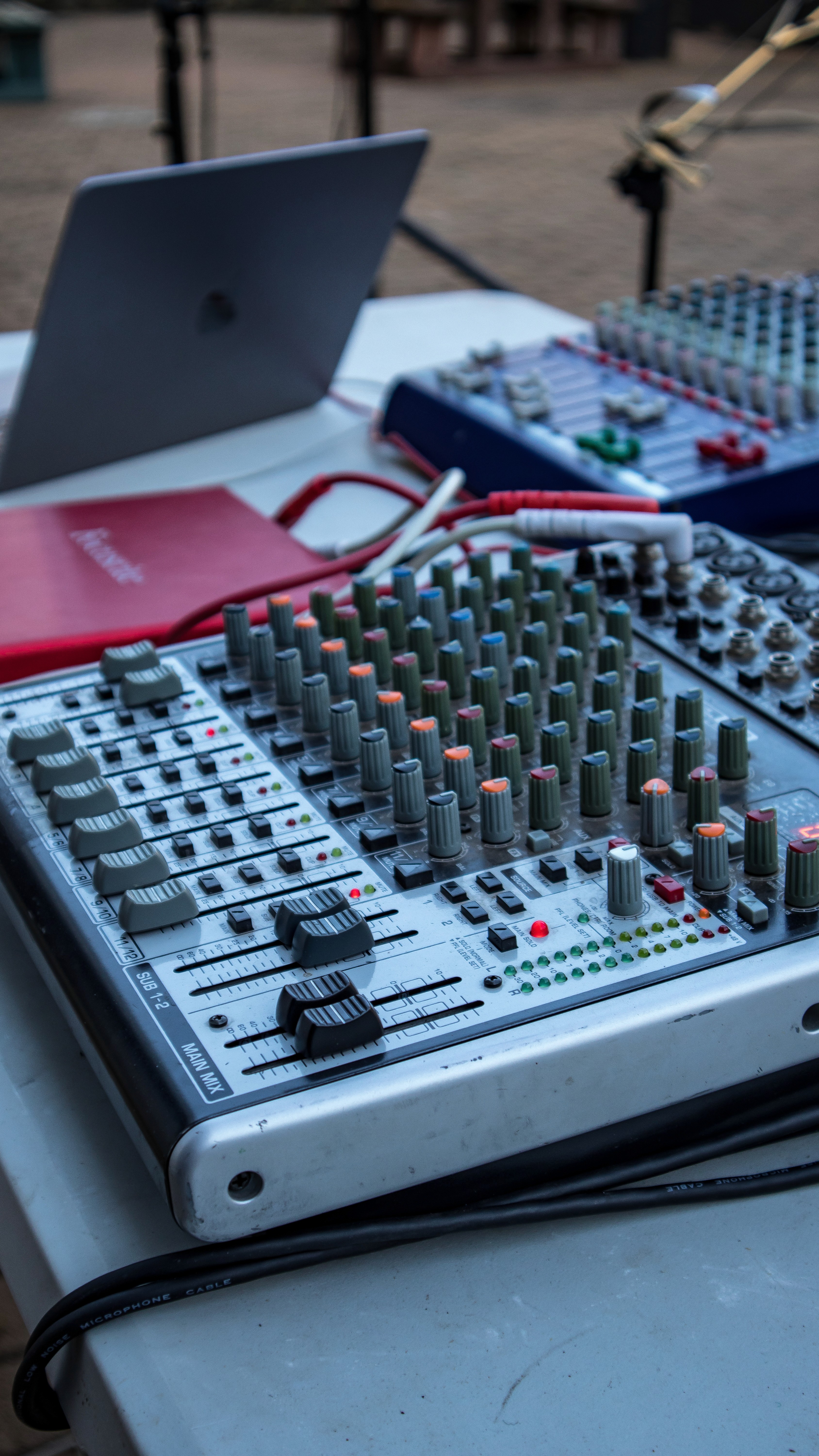
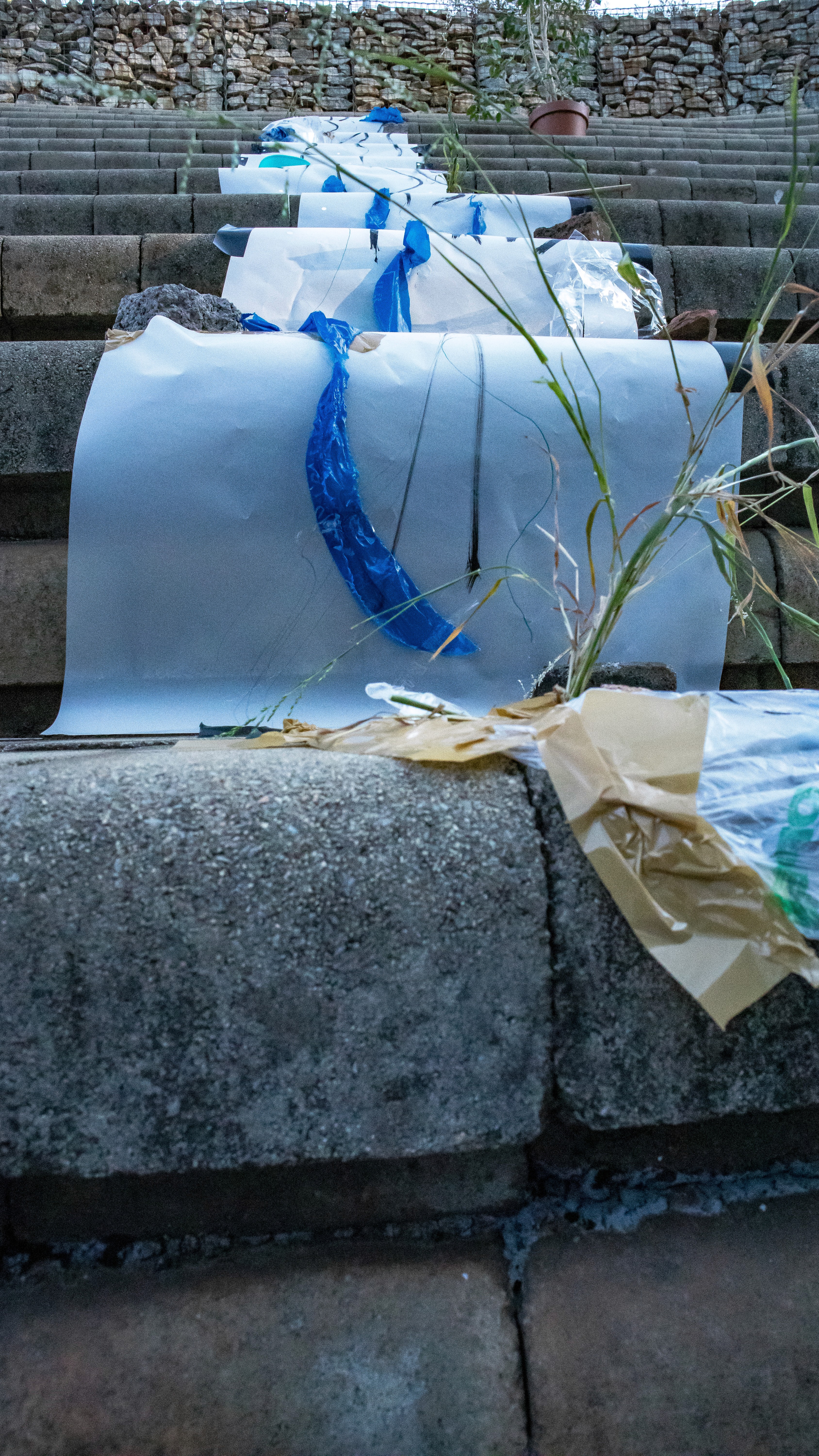
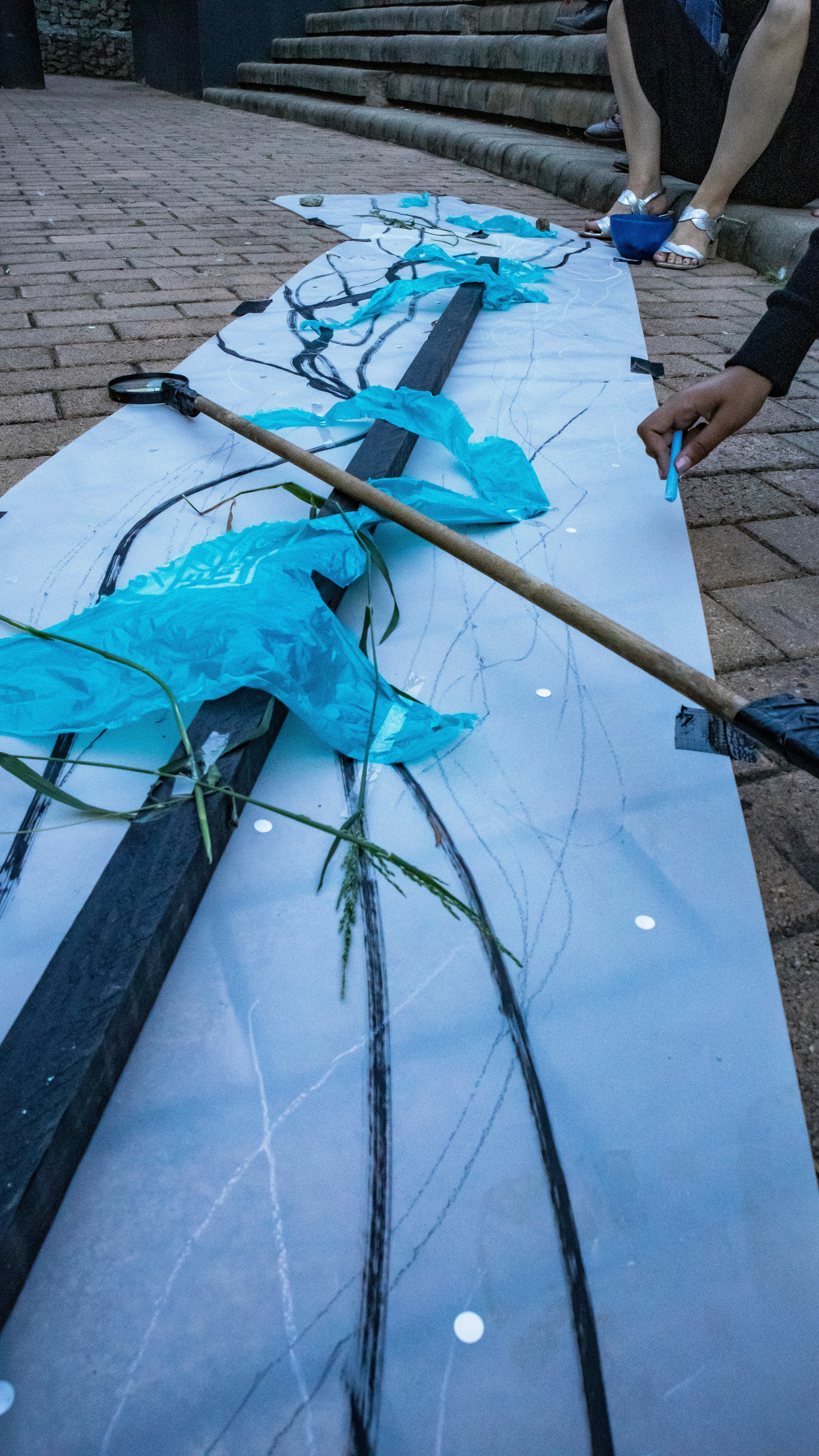
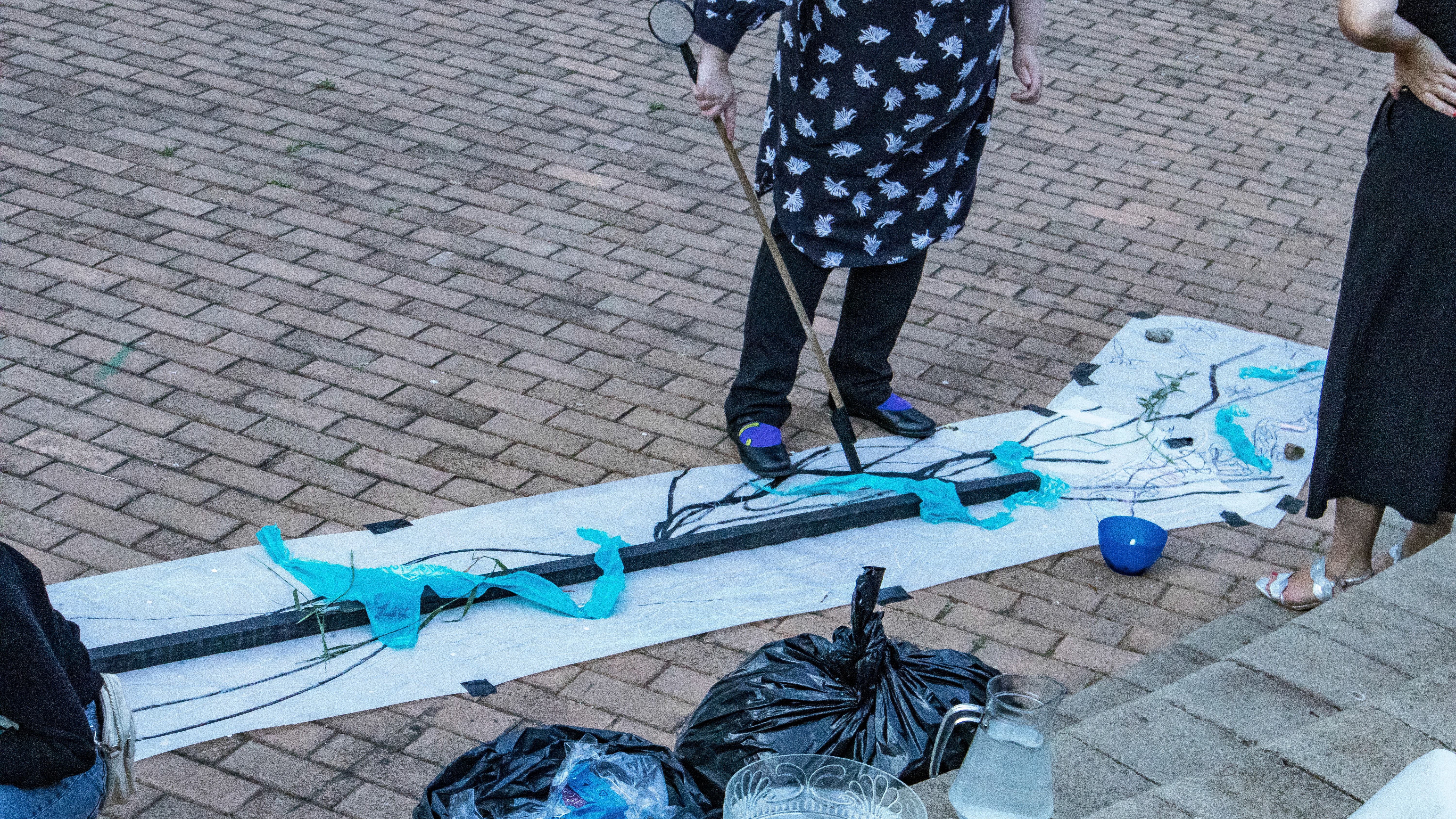
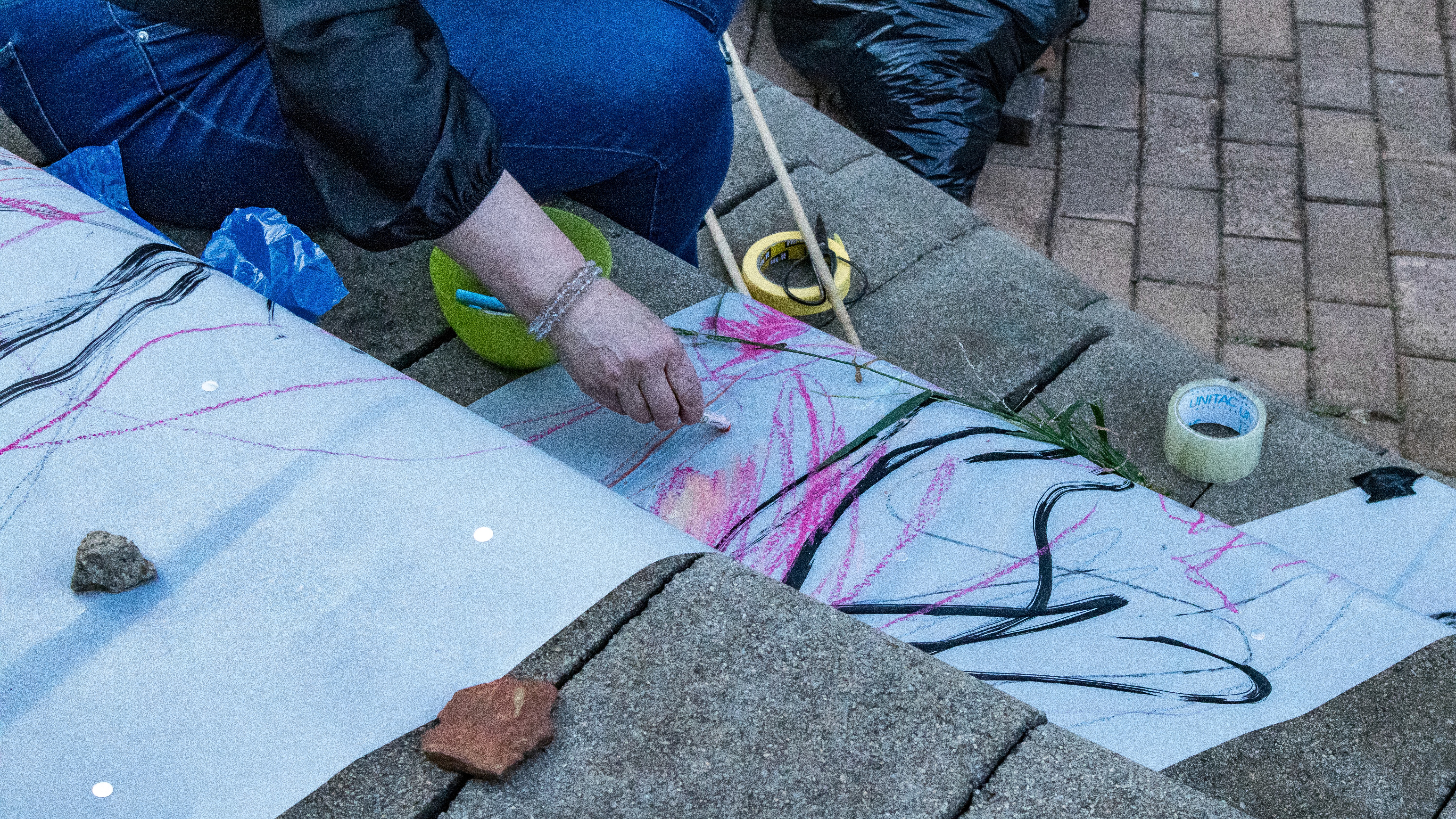
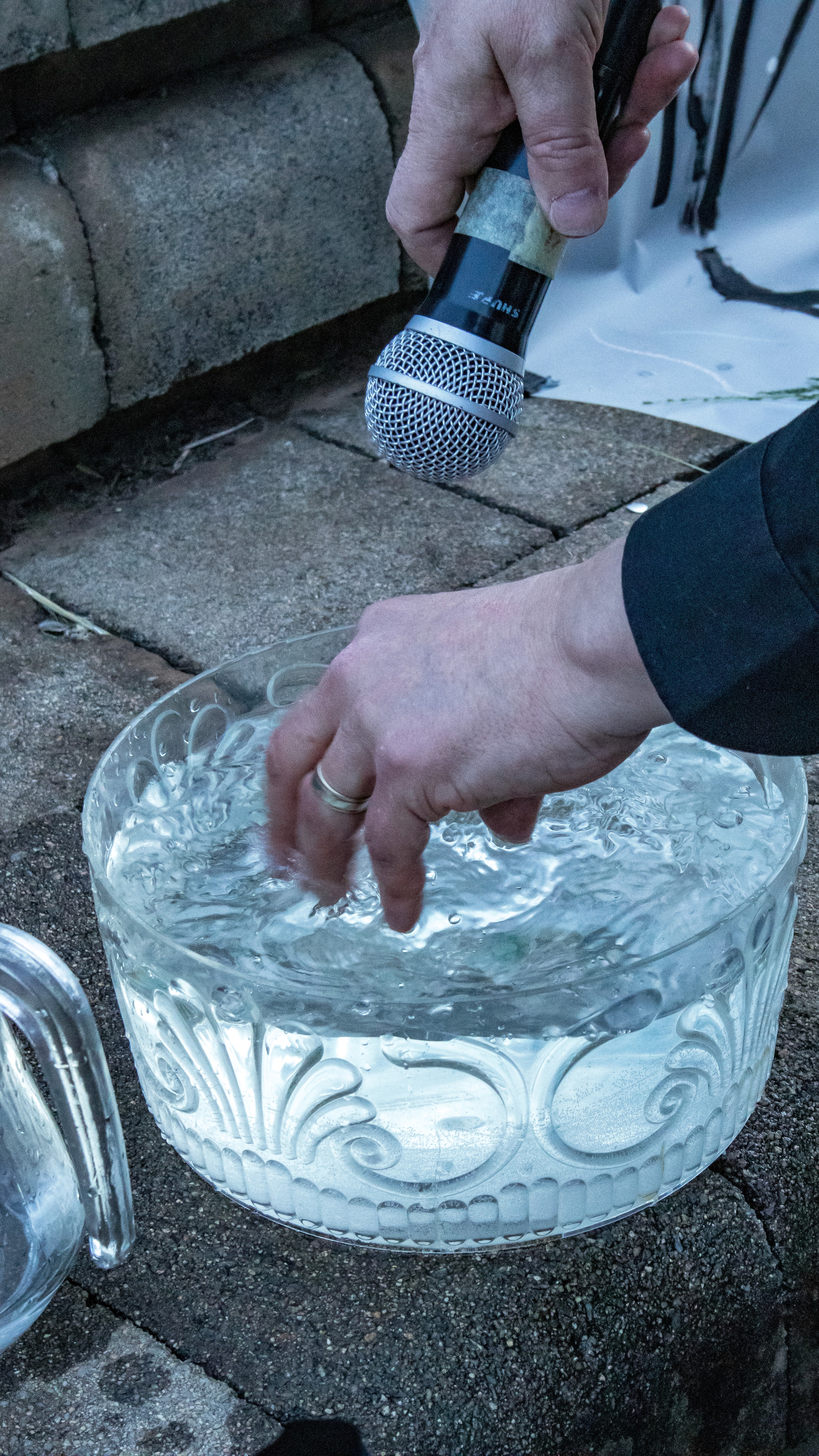
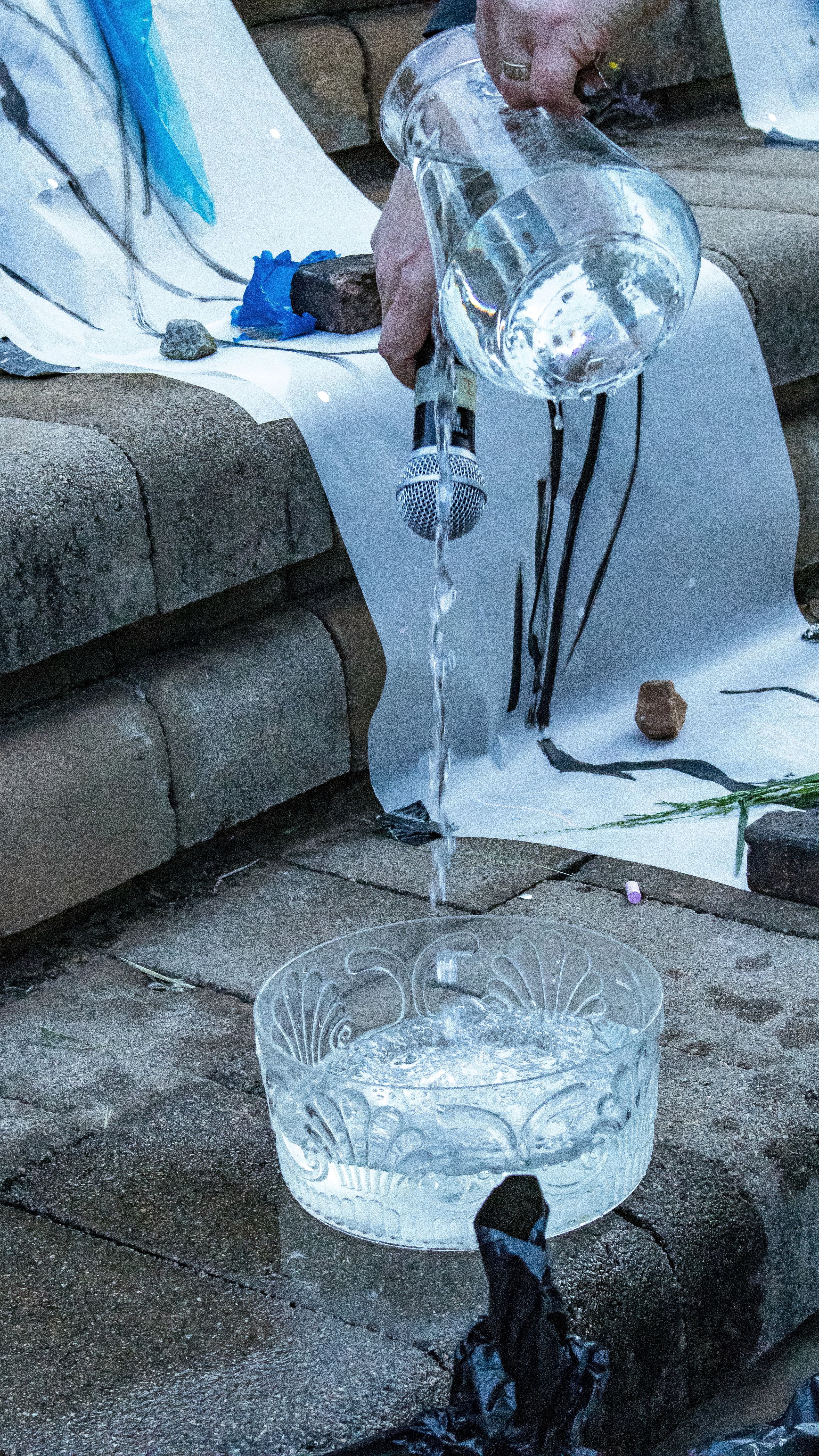
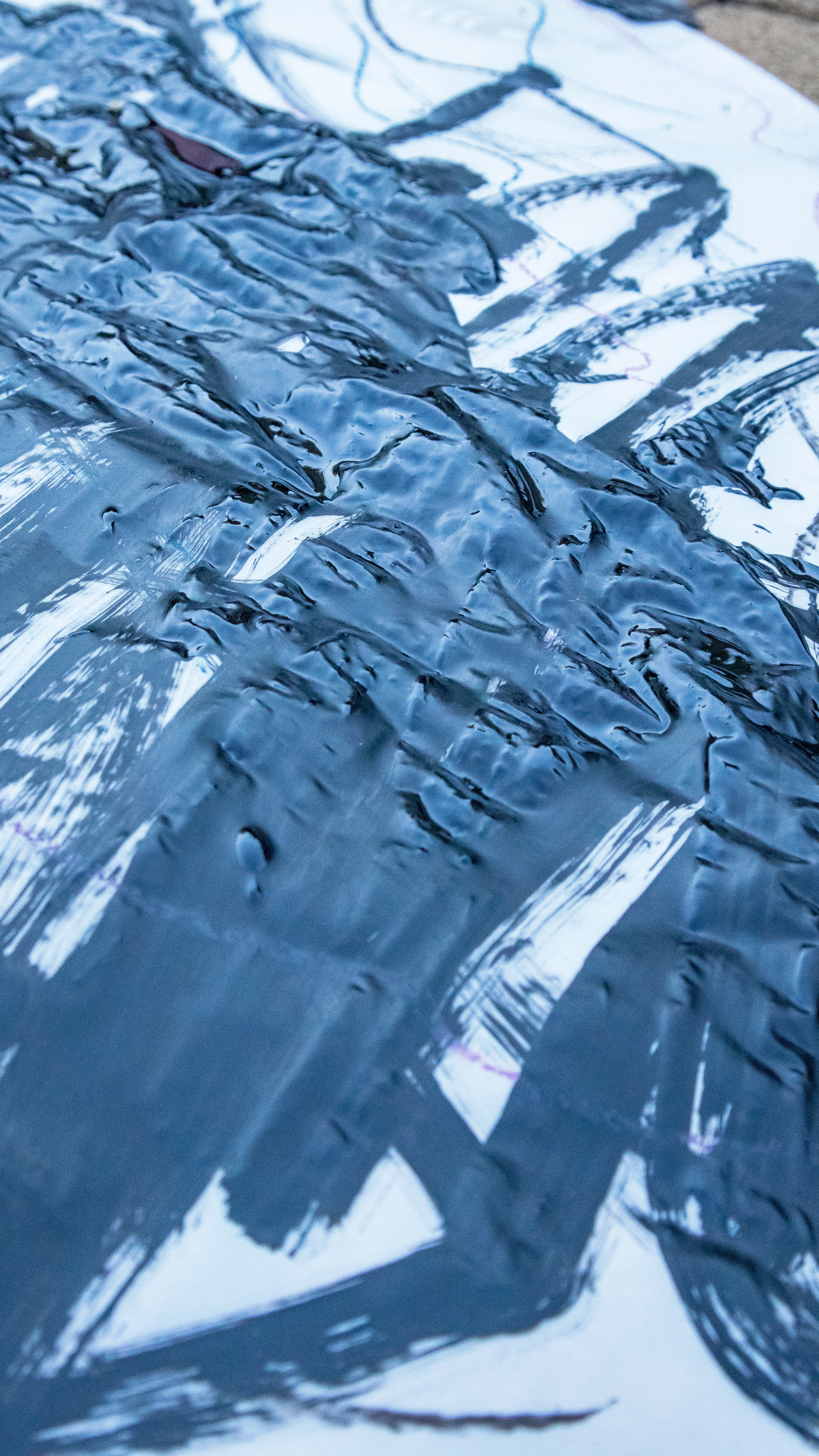
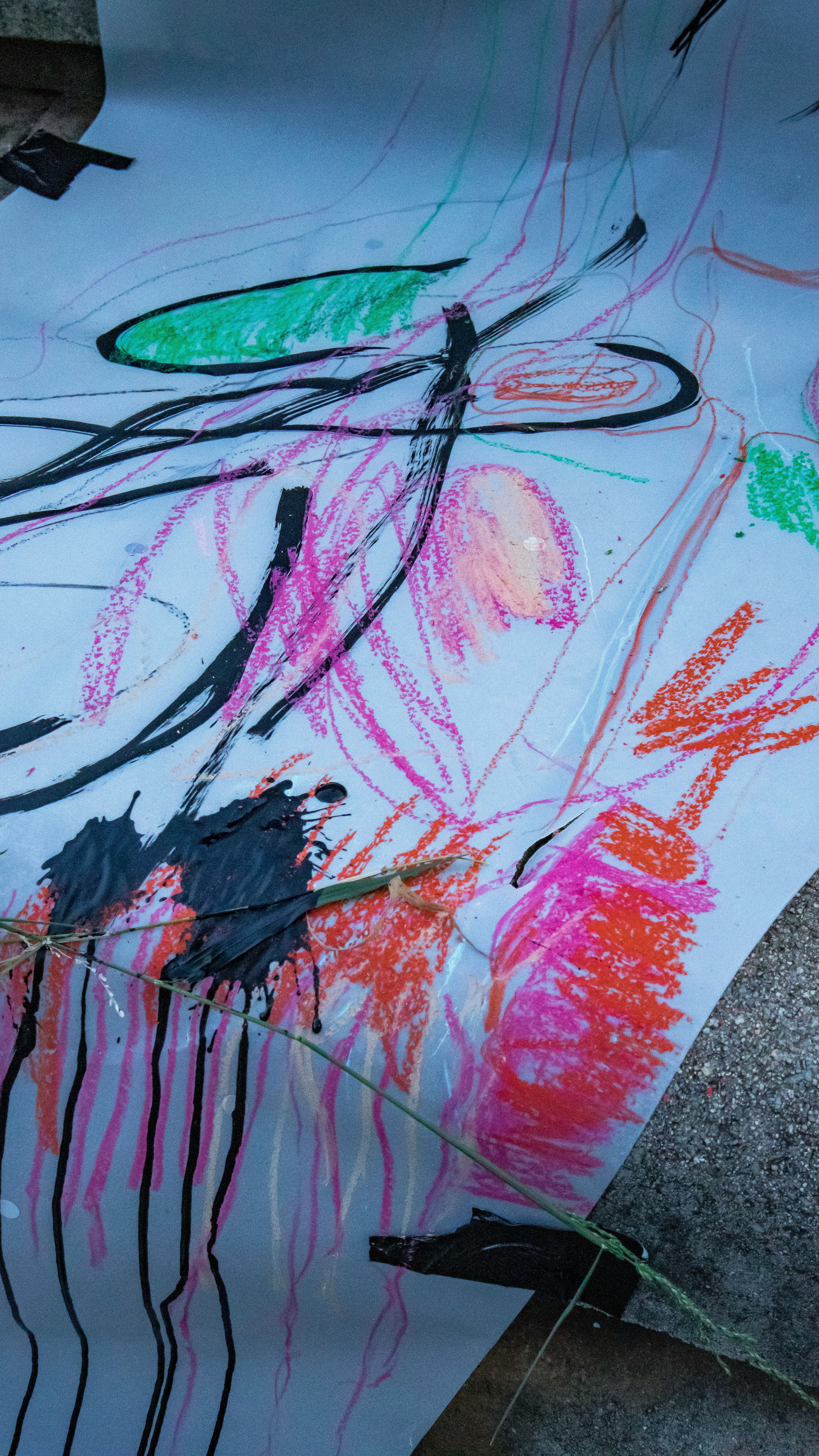
We created three paper tributaries, that appeared to flow down the steps of the atrium outside the FADA Gallery. The three tributaries converged in to one stream that led gallery visitors into the gallery, where Confluence was installed. We added plastics to the paper tributaries for colour, sound, and to represent the polluting of rivers. Natalie, Nqobile and Alison drew on the paper rivers, and tried to clean away the plastic pollution. A roaming mic was used to capture the sounds of the drawing performance. These sounds were synthesized in real time, on a mixing deck by Cameron Harris, who added sounds from playing an Oboe. The performance was a live presentation of the process Cameron, Gavin and Alison used to create Confluence. During the performance of “The Sound of Drawing”, audience members were invited to participate in adding marks to the paper river and clearing up the plastics. The roaming microphone captured the sounds of the audiences’ drawing, which were added to the emerging composition. The invitation to co-create the performance through interaction symbolized the need for individuals to come together to save our waterways.